

How to Shop Secondhand Online: What to Look For, What to Skip, and How to Make Each Platform Work for You
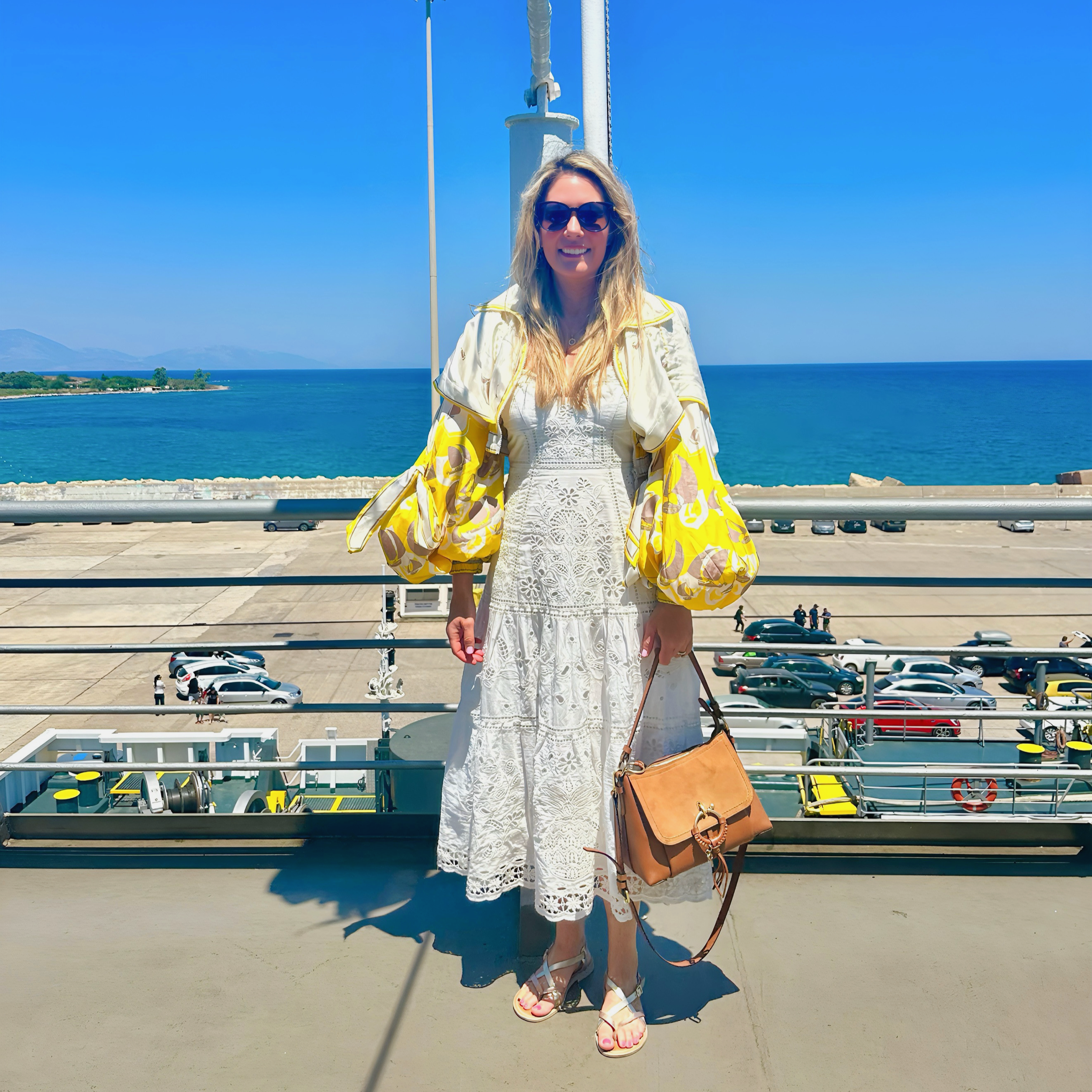
One of my favorite secondhand finds—a Zimmermann jacket that has become a staple in my travel wardrobe.
For years, I’ve found some of my best, most-worn pieces through secondhand shopping. In the mid-to-late 2000s, eBay was my go-to place for the brands I loved—Rebecca Taylor, Nanette Lepore, and Marc by Marc Jacobs. These labels were known for their beautiful fabrics, thoughtful design, and silhouettes that held up year after year. At the time, they were pieces I admired but couldn’t always buy at full price, and shopping secondhand made it possible for me to bring them into my wardrobe. Those early finds showed me that well-made clothing truly holds up, and that understanding still shapes how I shop today.
Over time, Poshmark became the platform I use most often, and it has brought some of my best finds. I’ve found new-with-tags items, replaced favorite pieces I had worn out, and sold the ones that no longer worked. A few of my favorite wardrobe additions came from Poshmark, including a vintage Saks Fifth Avenue wool cape I wore to a winter formal and a Zimmermann jacket—new with tags—from someone’s personal closet that remains one of my favorite pieces.
More recently, I’ve turned to The RealReal for higher-end pieces where authenticity matters. Two of my favorite Zimmermann finds arrived new with tags, and I added a Burberry scarf in excellent condition. Additionally, I browse local consignment stores for accessories and wardrobe staples, and I’ve used ThredUp—their clean-out bag process makes it easy to send in items you no longer want.

A reminder that the pieces you love most are often the ones that work in real life.
The resale world has changed a lot since my early eBay days, but one thing has remained the same: secondhand shopping works best when you know what you’re looking for. That clarity makes the process easier and helps you bring in pieces you’ll actually wear. Over the years, a few habits have helped me navigate the platforms confidently, and they continue to guide the way I shop today.
Start With a Short List
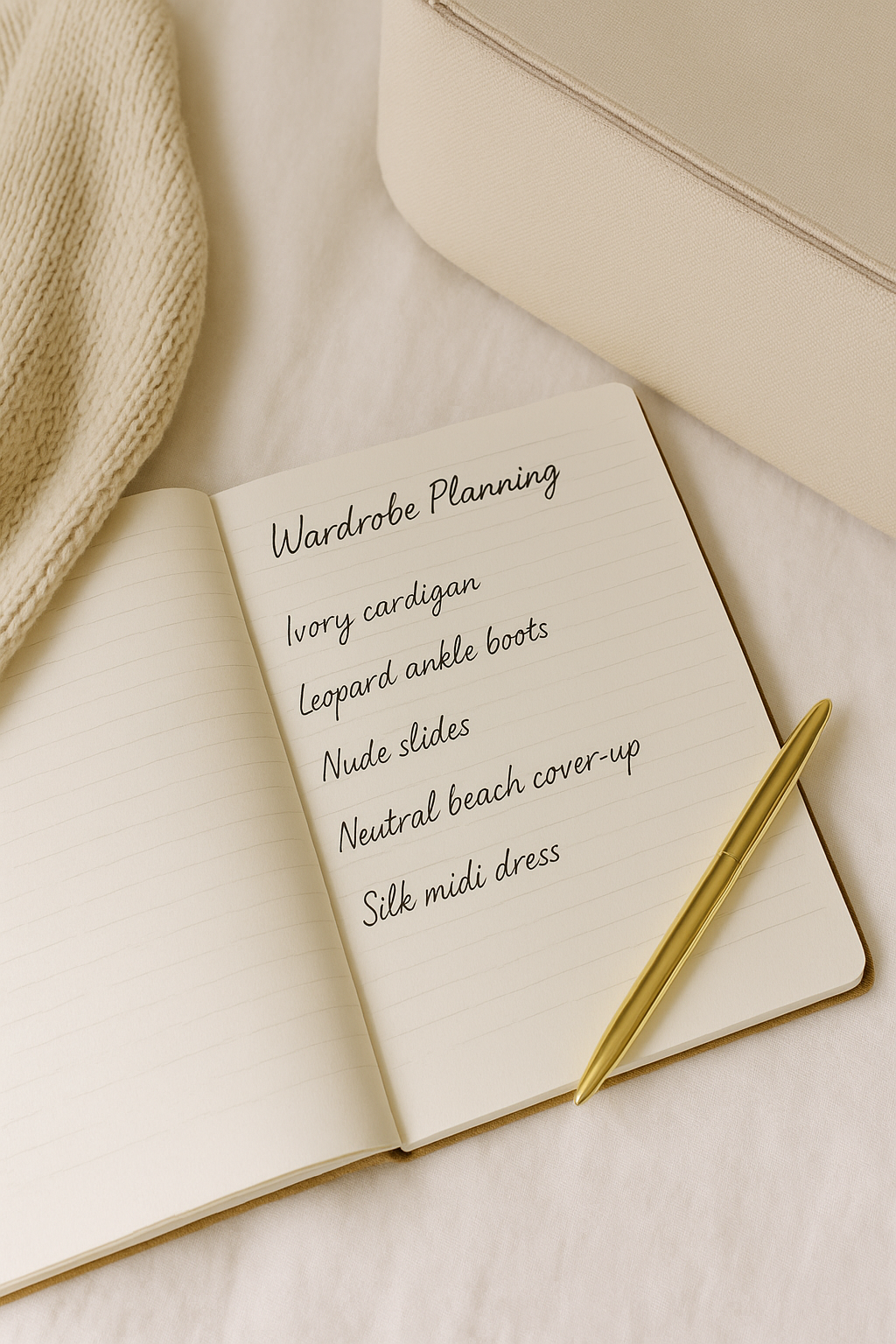
Thoughtful planning always comes before the search.
Before I open any platform, I jot down five to seven items I would genuinely wear. This might be a linen day dress, a cotton knit layer, sandals in a tone I already know works, or a replacement for something I reach for constantly.
I always begin by looking in my closet first. Understanding what I already own makes it easier to see the gaps—pieces that would support my lifestyle, items I know I would reach for often, or something I admired a season or two ago but didn’t purchase at full price. Many of those pieces eventually appear on Poshmark or The RealReal at a better price, and having them on my list keeps the search focused.
A short list helps guide the process and prevents the kind of browsing that leads to impulse purchases.
What I Look For When Shopping Secondhand
Accurate Measurements
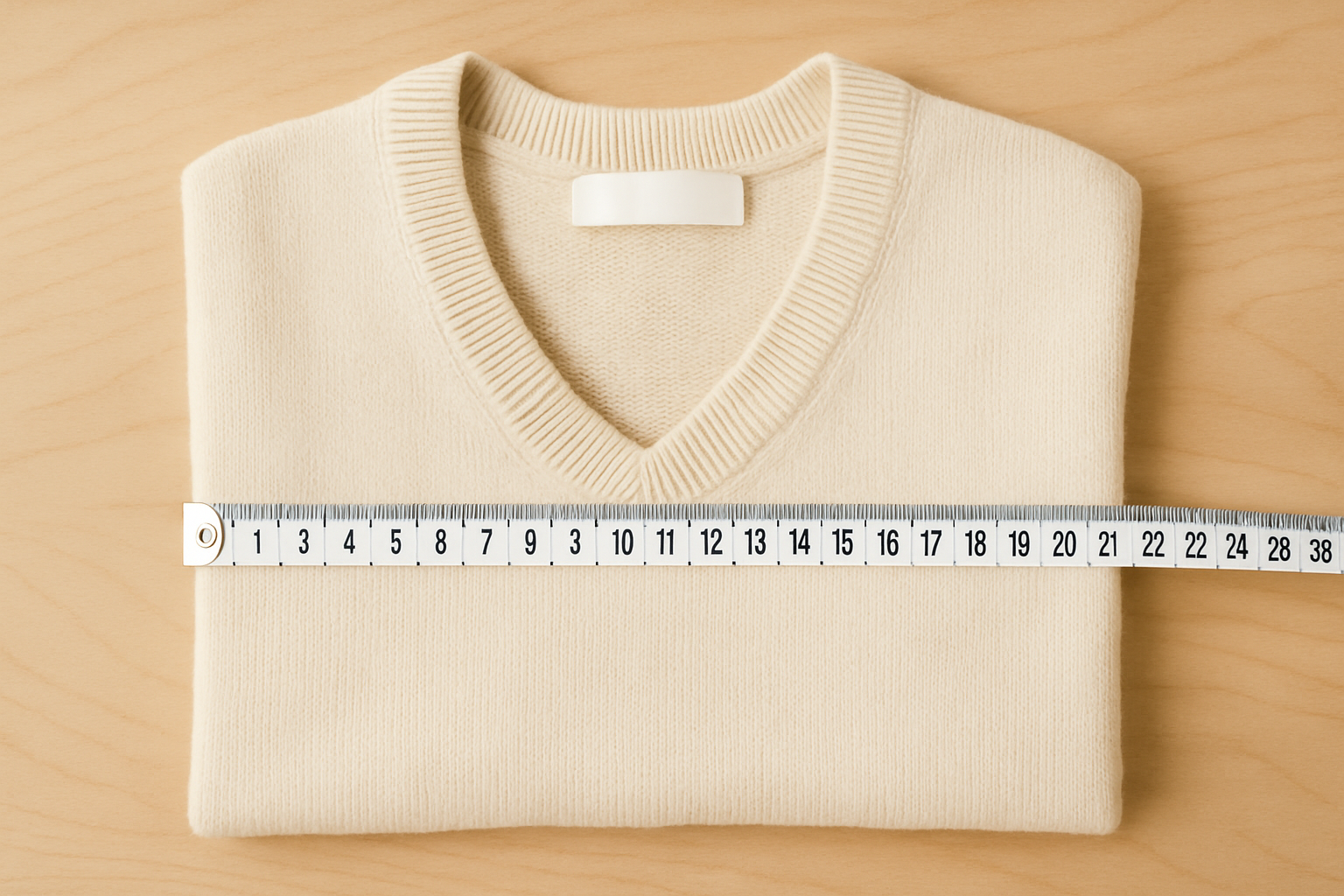
Checking actual measurements—like width and length—helps ensure a perfect fit when buying secondhand.
Sizing varies widely across brands, so measurements—bust, waist, hip, length, inseam, rise—tell you far more than the number on a tag. I compare them to a similar piece I already own, and I often ask sellers specific fit questions, such as whether the item runs true to size. It’s especially helpful when the piece is from a brand I’ve worn before or something I tried on in store previously.
Fabric Content
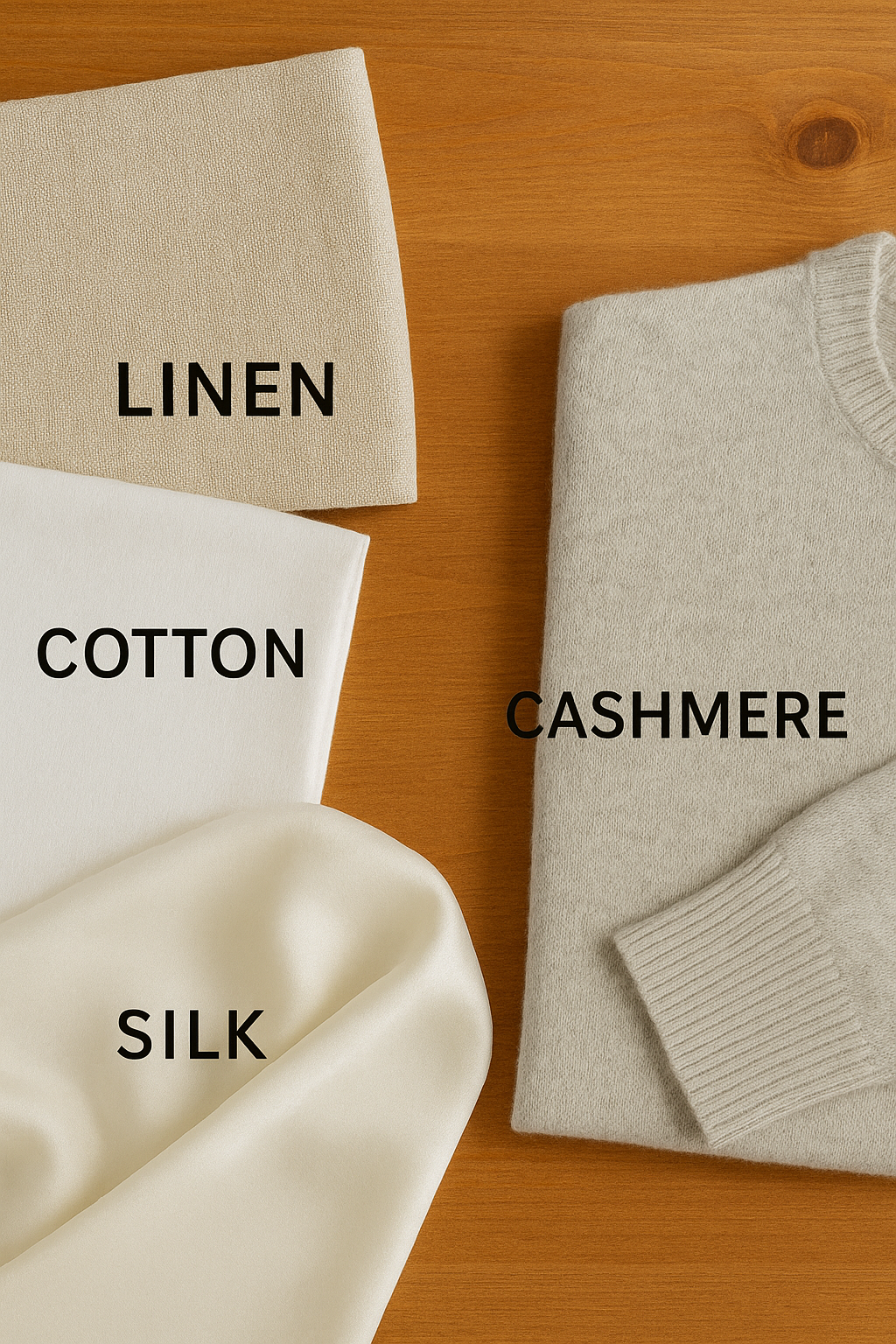
I look for natural fibers first—they breathe better, feel better, and hold up over time.
Fabric tells you a lot about how well a piece will wear over time. I prefer natural fibers like linen, cotton, silk, wool, and cashmere. They tend to hold up better and are much more breathable.
Condition Rating
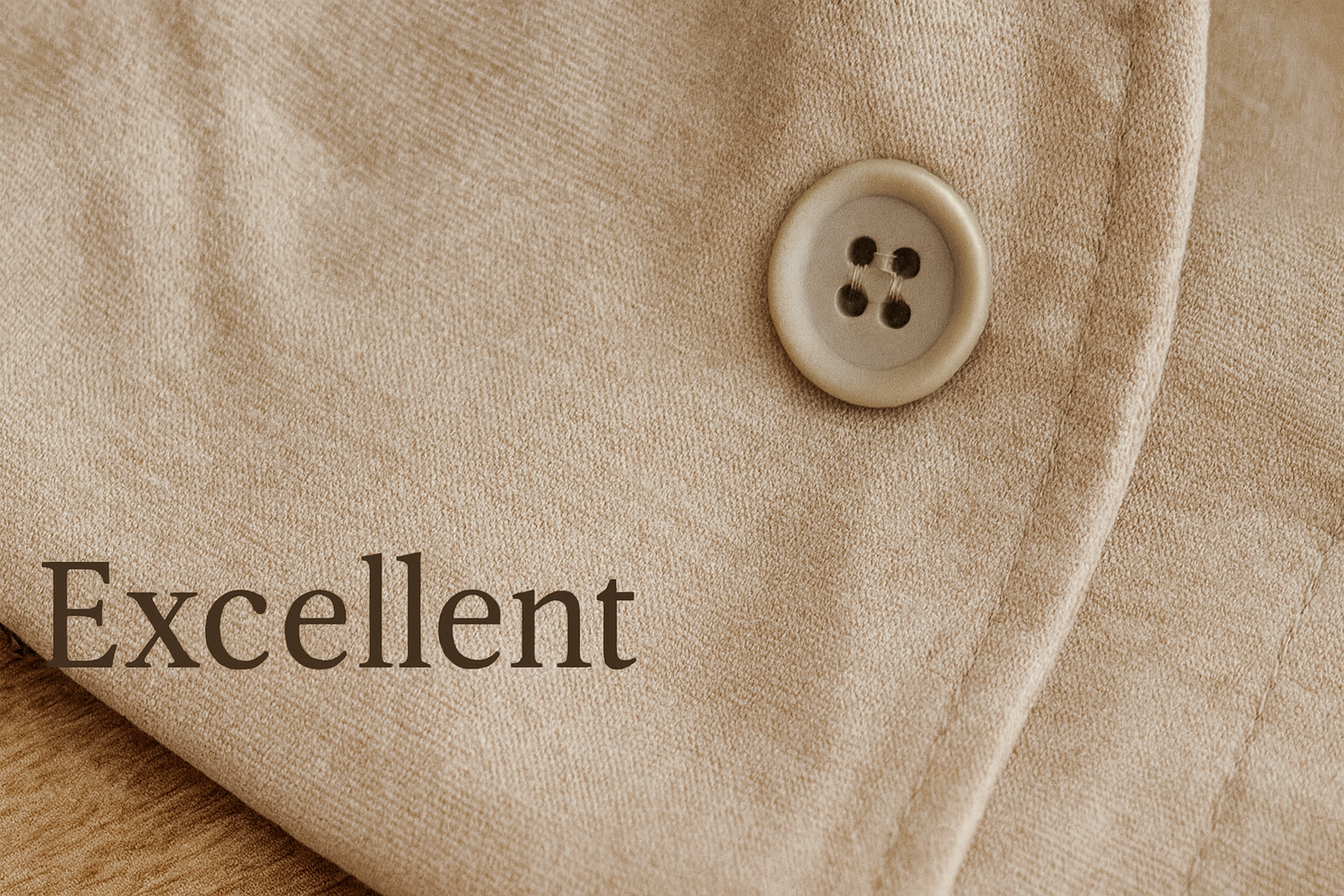
Small details tell the full story of condition.
My go-to categories are:
New With Tags
New Without Tags
Excellent
Very Good
“Good” often means visible wear, and the pricing rarely makes sense unless the piece is inexpensive and made from a durable material. When a listing includes a flaw, I look closely at how noticeable it is and whether it’s something I could fix myself or ask a tailor to repair easily. Small issues—like a loose button, a minor seam repair, or a faint mark—can bring the price down significantly, and if they’re easy to address or unlikely to show, the piece may still be worth considering.
Clear Photos
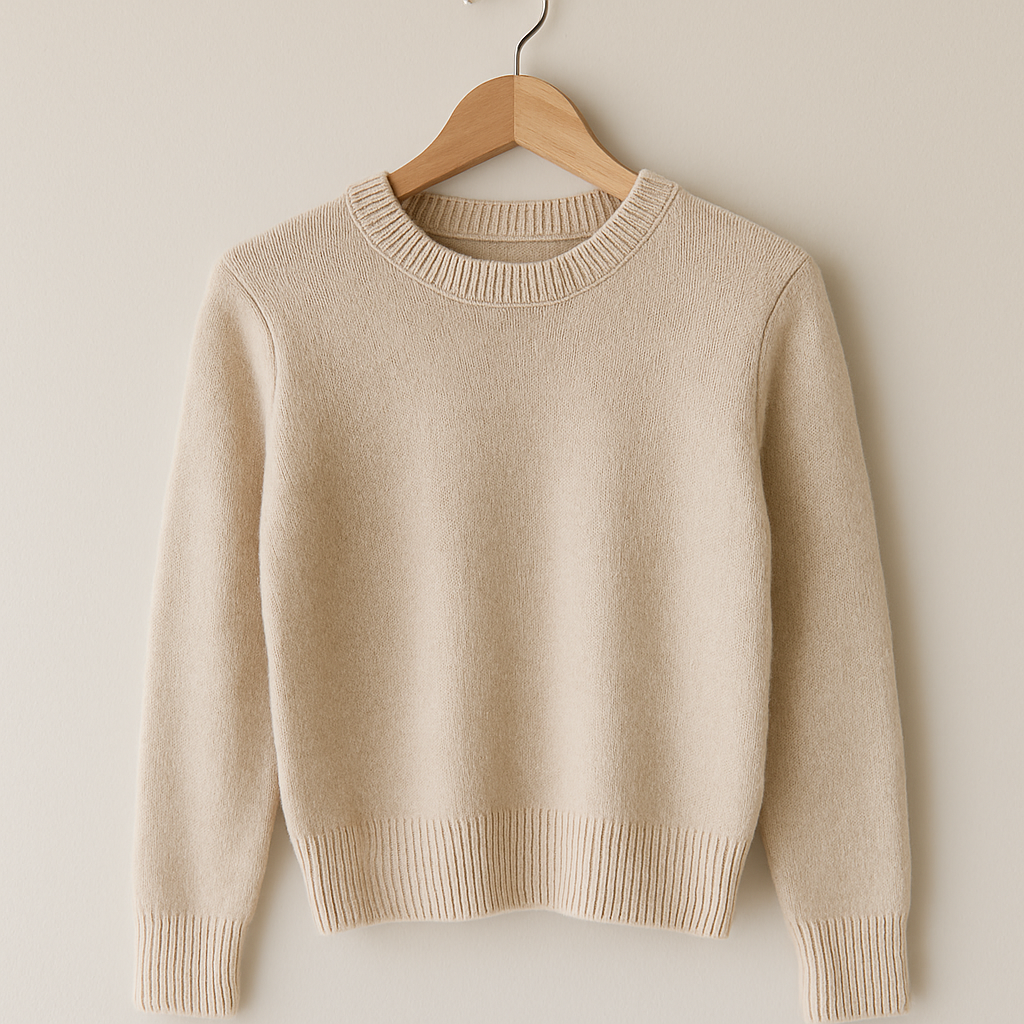
Listings with clear front and back views—and close-ups in good light—are always the most reliable.
I look for clear, well-lit photos that make it easy to see the item’s condition and authenticity. Good listings usually include:
Overall front and back views
Close-ups of fabric texture
Care tags and fabric content
Brand labels for authenticity
Buttons, zippers, and hardware
Any areas that might show wear
I avoid listings with blurry images or lighting that makes it hard to tell what you’re buying. Sellers should show (and clearly describe) any flaws such as pilling, small stains, loose threads, or snags. If anything is unclear, I always ask questions or request additional photos before purchasing.
The Criteria I Rely On
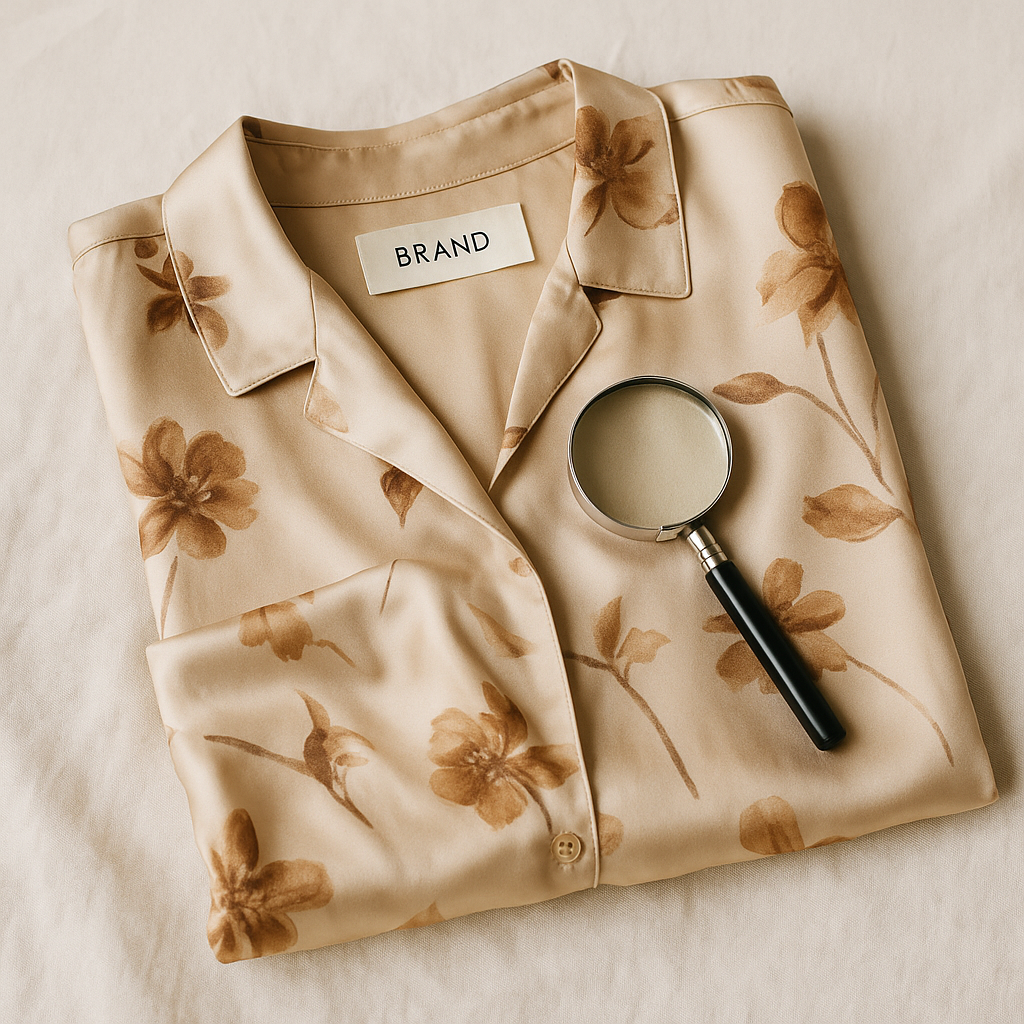
A closer look at the details helps me decide whether a piece truly meets my criteria.
These habits have helped me avoid most disappointing purchases:
I look for brands and silhouettes that already fit me well (and pieces I’ve tried on before are even better).
I ask the seller where designer items were originally purchased.
I check stitching, lining, tags, and fabric texture.
I prefer natural fibers whenever possible.
I compare details to the brand’s website when authenticity matters—and if anything seems questionable, I pass.
I skip listings when communication is slow or vague.
How I Use Each Platform
A glimpse at the kinds of pieces I often source secondhand, depending on which platform works best for the search.
The RealReal
What I search for: investment pieces and anything where authenticity matters
Strengths: consistent condition grading, clear fabric details, and helpful photos
Note: many items are final sale unless you pay a significant return fee, so knowing your size in each brand is important.
Poshmark
What I search for: mid-range brands, sandals, sundresses, coverups, lightweight knits, and pieces still in current collections
Strengths: large selection, many new-with-tags items, and easy communication with sellers
Note: fakes do exist—actual photos of the item (not just stock images) are important, and in my experience, personal closets tend to be more reliable than mass sellers.
eBay
What I search for: older seasons, rare pieces, discontinued styles, and occasionally non-clothing items
Strengths: a huge range of inventory across many categories
Note: quality varies widely, so clear photos and accurate measurements matter. As with any resale site, be mindful of fakes—always look for actual photos of the item, photos of the tags, and ask questions if anything is unclear. When in doubt, trust your instincts and move on.
Vestiaire Collective
I follow listings on this platform and see strong options for handbags, rare pieces, and anything where authentication is essential. I haven’t purchased yet, but I continue exploring and learning more about how the platform works.
ThredUp
A good source for basics and approachable price points. Their clean-out bag process is one of the easiest: they send you a large bag, you fill it with items you’d like them to sell (or that you’re comfortable having donated), and then return it using the prepaid label. ThredUp will list what they can sell and donate anything they can’t, which makes it a convenient way to pass along pieces you no longer need.
What I Avoid
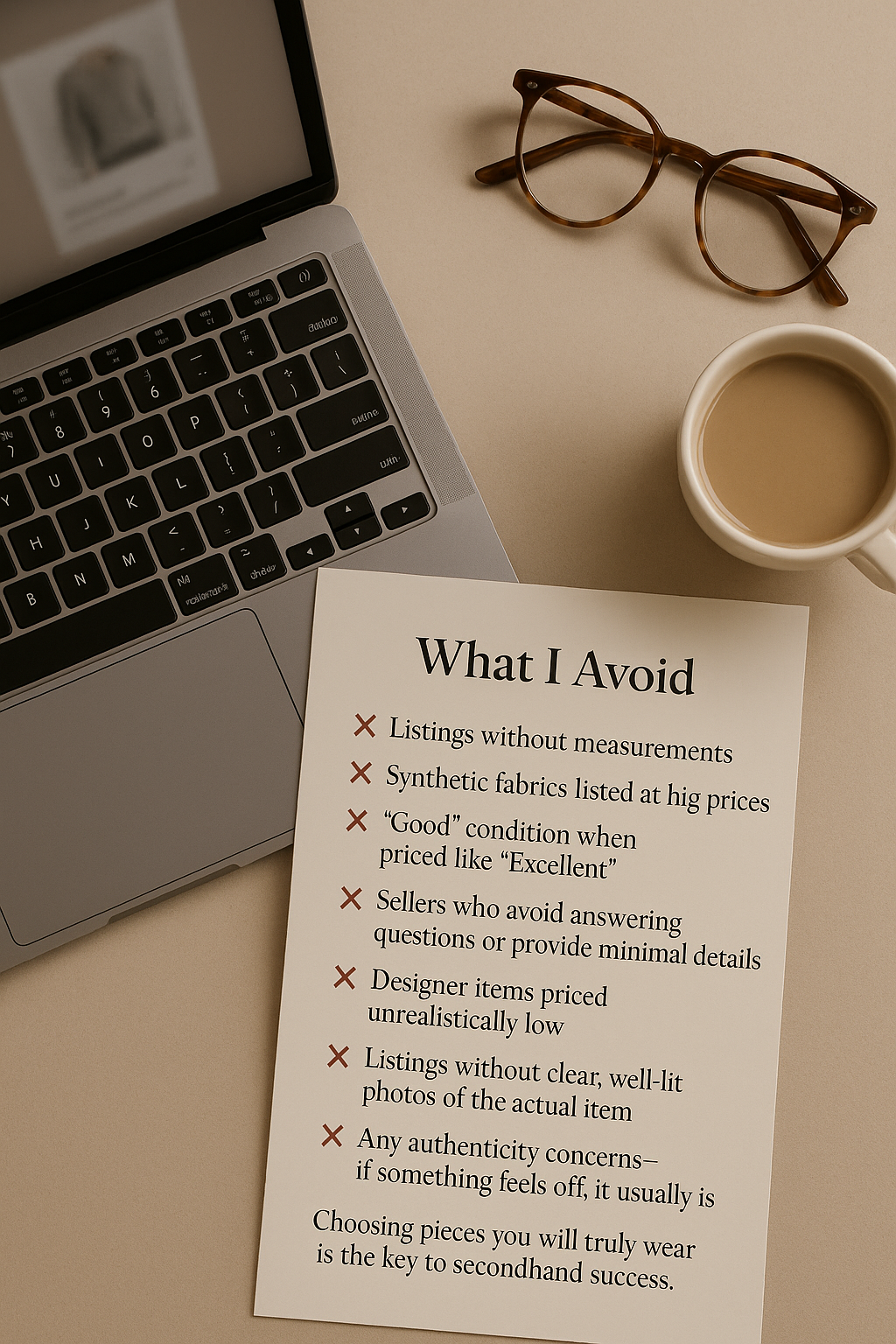
A quick guide to what I always avoid when shopping secondhand — from unclear photos and missing measurements to unrealistic pricing and authenticity red flags. Smart filters lead to better finds and a wardrobe you truly love.
Listings without measurements
Synthetic fabrics listed at high prices
“Good” condition when priced like “Excellent”
Sellers who avoid answering questions or provide minimal details
Designer items priced unrealistically low
Listings without clear, well-lit photos of the actual item
Any authenticity concerns—if something feels off, it usually is
Silhouettes I already know don’t work for me
Pieces that sound appealing but don’t fit my actual lifestyle
Choosing pieces you will truly wear is the key to secondhand success.
Use Saved Searches and Alerts
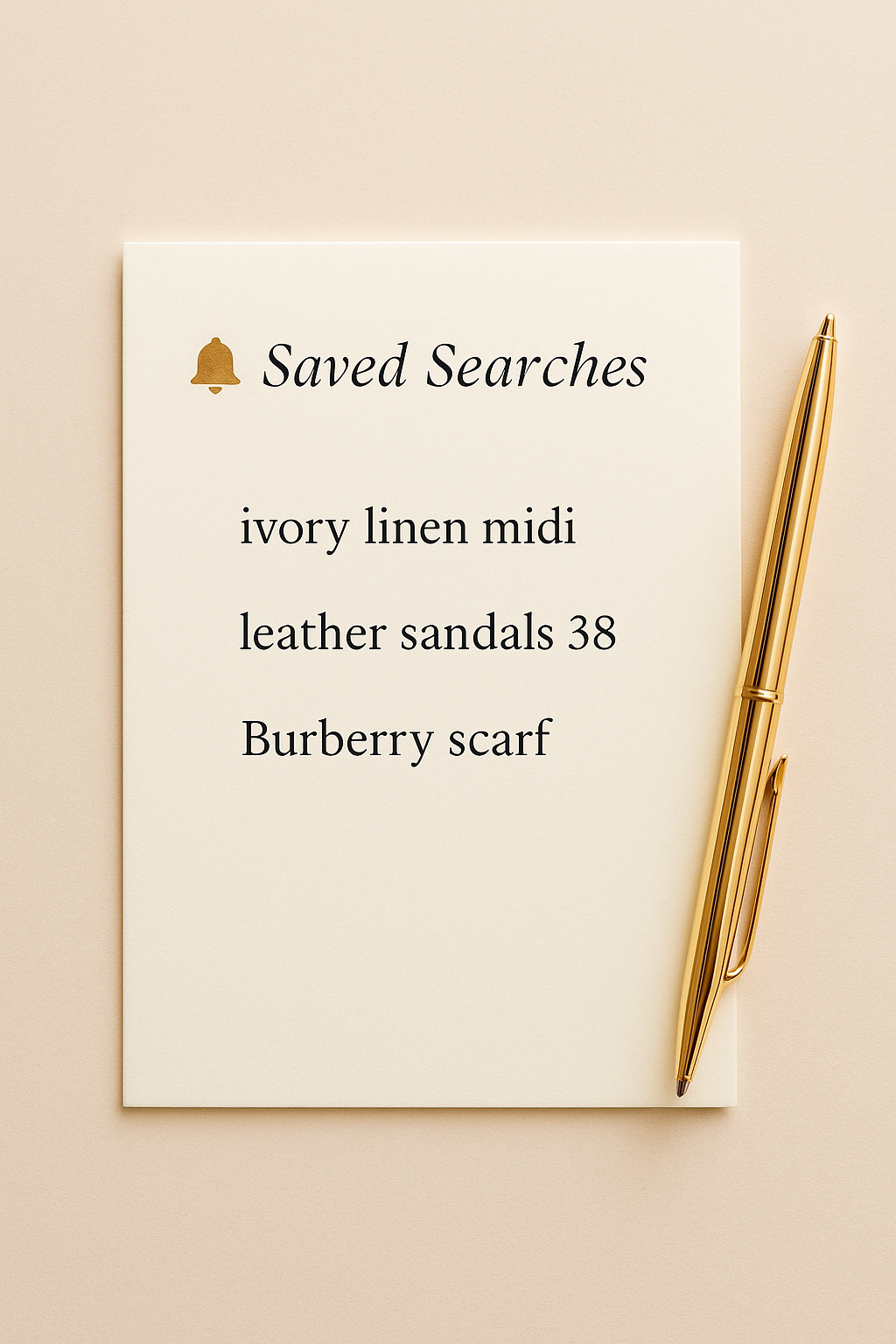
Saved searches help me track the pieces I truly want—so new listings appear the moment they’re available.
Saved searches simplify the process and help you find the pieces you’re actually looking for. I set alerts for items on my list after taking inventory of my closet—pieces that would fill a gap, work for my lifestyle, or are things I admired in past seasons. For example:
“ivory linen midi”
“leather sandals 38”
“Burberry scarf”
When new listings appear, they show up automatically, which keeps the search manageable and aligned with what I want to add to my wardrobe.
Flight 2 Fashion Takeaway
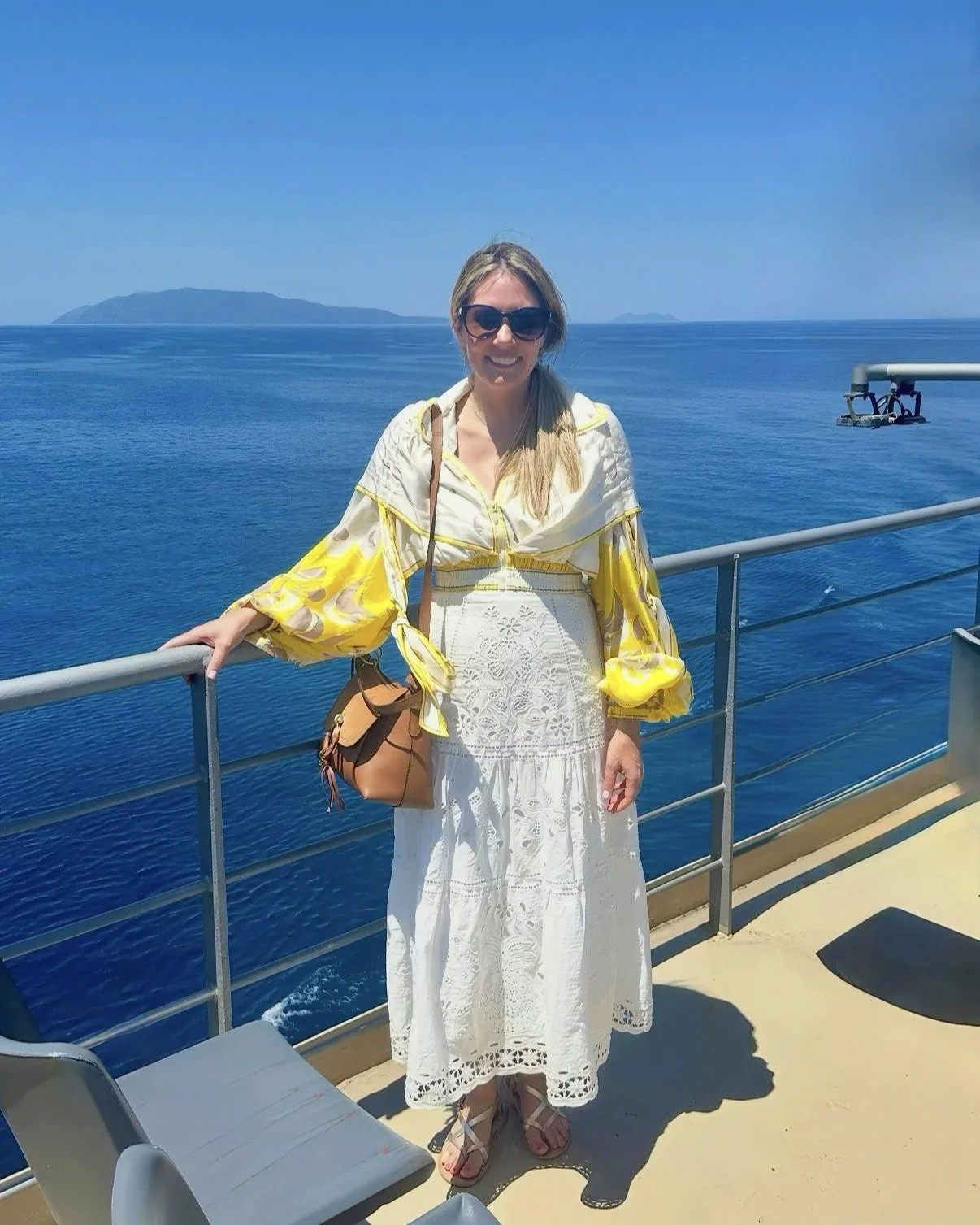
A snapshot from one of my favorite travel days—proof that pieces you truly love will go everywhere with you.
Secondhand shopping isn’t about adding more; it’s about finding well-made pieces that fit your style, your climate, and your daily life—at a fair price. It’s also a more sustainable way to shop, allowing you to bring thoughtful pieces into your wardrobe without contributing to mass consumption. Some of my most-worn items came from secondhand platforms, and they’ve lasted because they were well-made to begin with.
A simple approach and a few dependable habits make secondhand shopping both practical and enjoyable.
What pieces would you love to find secondhand this year?
✨ Interested in reading more? Explore the [Inspiration Gallery] for seasonal color palettes, outfits, and mood boards to guide packing and for inspiration. You can also read the guide Holiday Style: How to Look Festive Without Buying a Whole New Wardrobe. and the guide about Wardrobe Investments: How to Choose Pieces that Last.
