

What to Pack for a Ski Trip
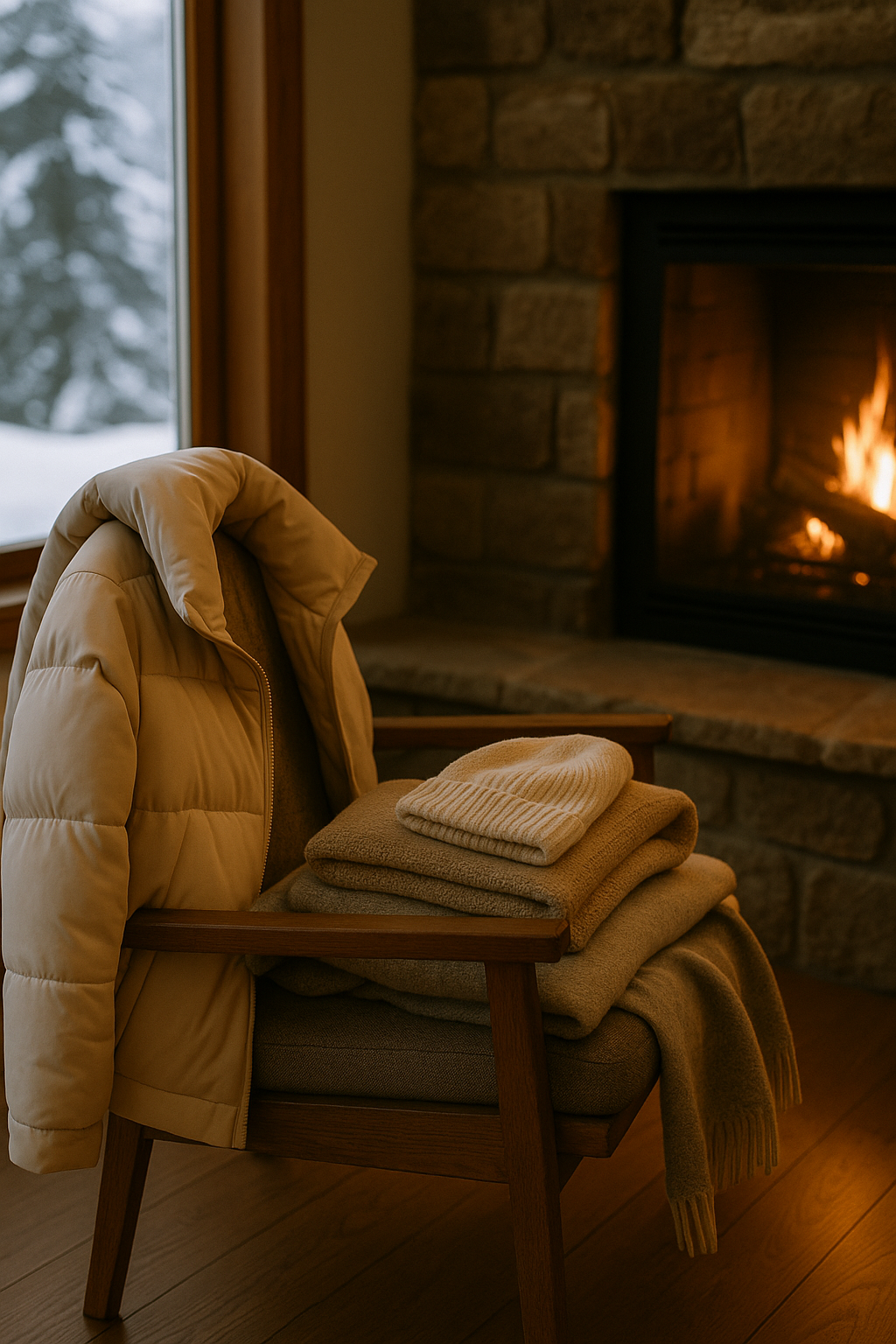
A thoughtful ski weekend starts with warmth, ease, and less excess.
I grew up skiing in the winter — weekends, vacations, and ski racing after school at a small local hill. We practiced at night and raced during the week or on the weekends. It was always cold, but it was still fun because I knew how to dress for it.
Once you’re warm, you experience winter differently. Being outside feels refreshing instead of uncomfortable, and you enjoy the fresh air rather than counting the minutes until you can go back inside.
That’s still how I think about packing for a ski trip today:
get the layers right, choose real materials that actually keep you warm, and then add the pieces that fit your style.
You don’t need a huge ski wardrobe or a big budget — most of what keeps you warm is simple, well-made, and lasts for years.
That mindset shapes exactly how I pack for a ski trip.
Warmth comes first — always — and style follows once the foundation is right.
Here’s how I approach packing so I stay warm, comfortable, and still feel like myself on the mountain.
1. Base Layers (Where Warmth Starts)
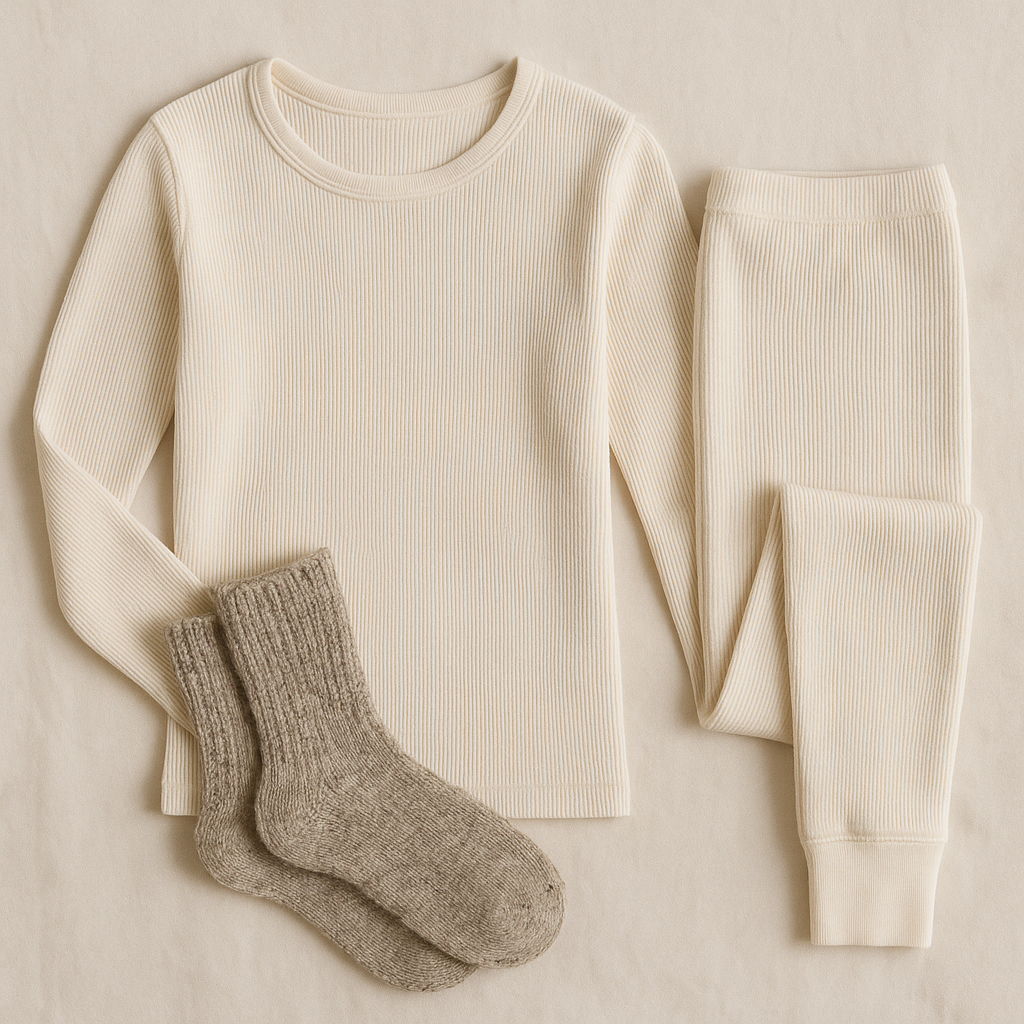
Base layers are the foundation of staying warm on a ski trip.
If your base layer isn’t warm, nothing else matters. I learned that early on from skiing in cold, windy conditions.
My base layers were always simple and consistent:
long underwear top and bottom
wool ski socks
a fitted long-sleeve layer that sits close to the body without adding bulk
I always preferred natural fibers because they stay warm, breathe well, and feel comfortable against the skin. One or two good sets are enough.
Once your base layers are right, you can focus on adding warmth and style with sweaters and outer layers.
2. Mid Layers (Warmth and Style)
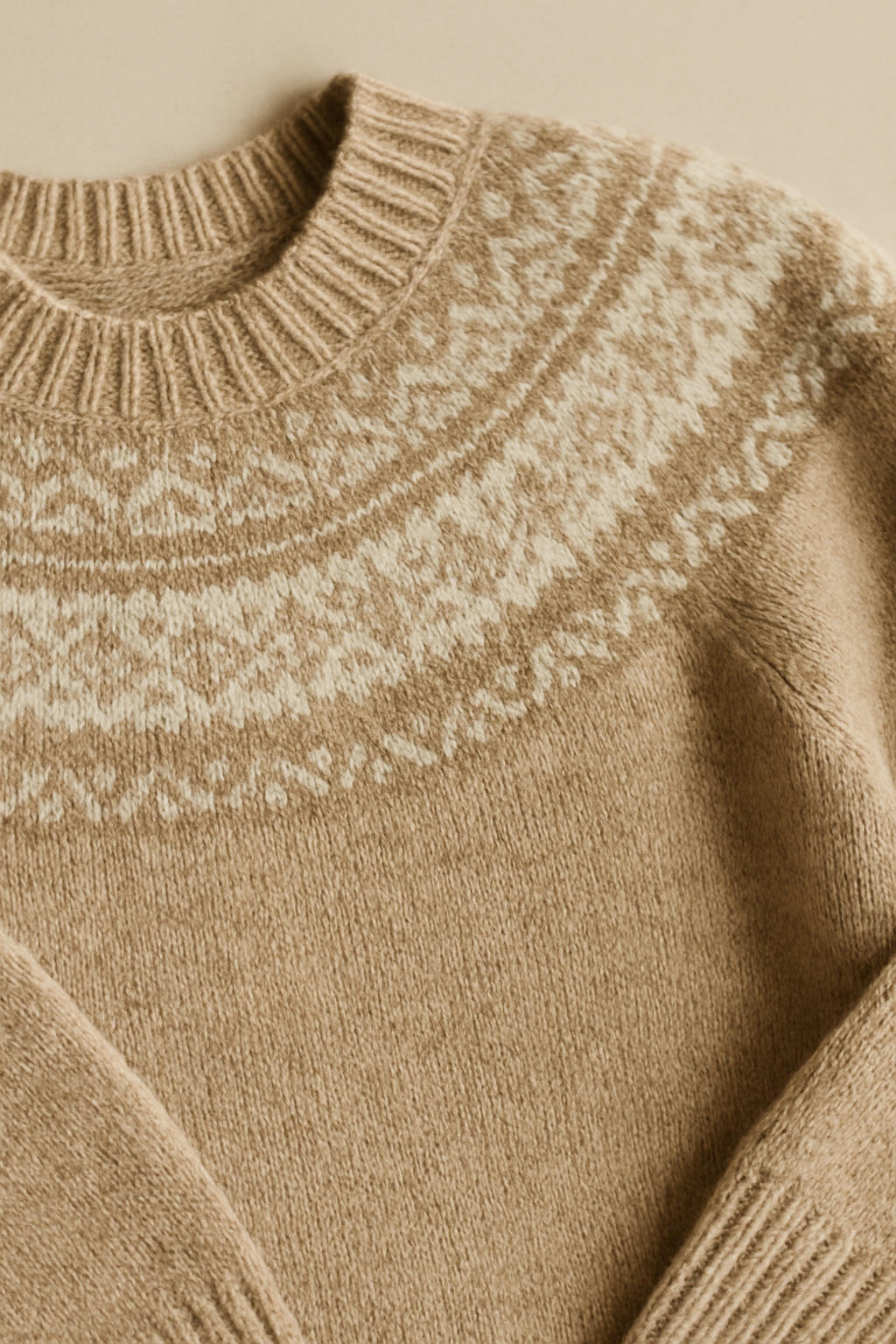
A pretty wool sweater adds warmth and style
Mid layers are where you add warmth while also bringing your personal style into your ski wardrobe.
I would pack:
a wool or cashmere sweater
a warm fleece or half-zip
a lightweight insulated layer, if needed
This is the layer where quality really shows. Knits made from real materials like wool and cashmere keep you warm, breathe well, and hold up year after year. They’re also the layers that shape how your outfits look beyond the slopes.
Mid layers can be simple and versatile — solid colors, neutrals, and classic shapes — or they can add personality through pattern and texture. Nordic and fair isle knits, subtle stripes, color blocking, or other timeless patterns all work beautifully.
You don’t need many. One or two well-chosen mid layers provide warmth, reflect your style, and become pieces you’ll reach for long after the trip is over.
3. Outerwear (Warm First, But Not Boring)
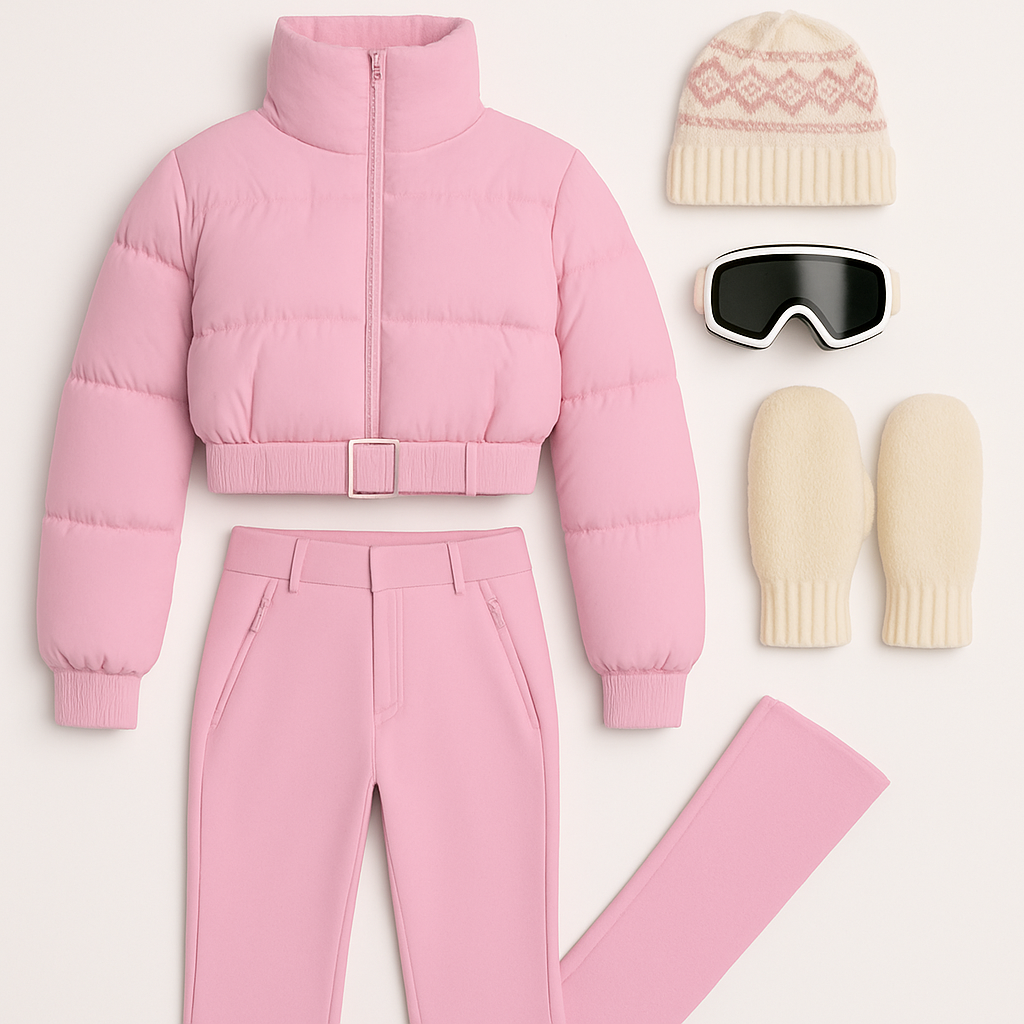
A warm ski outfit doesn’t have to be boring.
Your jacket and pants matter more than anything once you’re on the mountain. They need to keep you warm and comfortable in wind and snow — and the good news is, they can still look great. You don’t have to sacrifice style for warmth.
You’ll need:
an insulated ski jacket
ski pants or bibs — or a ski suit
mittens — warmer than gloves
a warm hat
goggles
a neck warmer or balaclava
I’ve always worn a jacket and pants, but ski suits can be a great option too. Whatever you choose, make sure it’s insulated, not just a thin shell. Many jackets note the temperatures they’re designed for, which can be helpful when you’re deciding what will actually work.
In my experience, mittens make a real difference. Keeping your fingers together makes it easier to stay warm, especially if you use hand warmers. Fingers and toes are usually the first to get cold, and warmth there matters more than you think.
A neck warmer is another small piece that makes a big difference — especially in wind or light snow. Even when your jacket is zipped to the top, there’s often a gap between your goggles, hat, and collar. A neck warmer protects your nose and cheeks and keeps cold air from sneaking in.
4. The Small Things That Make a Difference
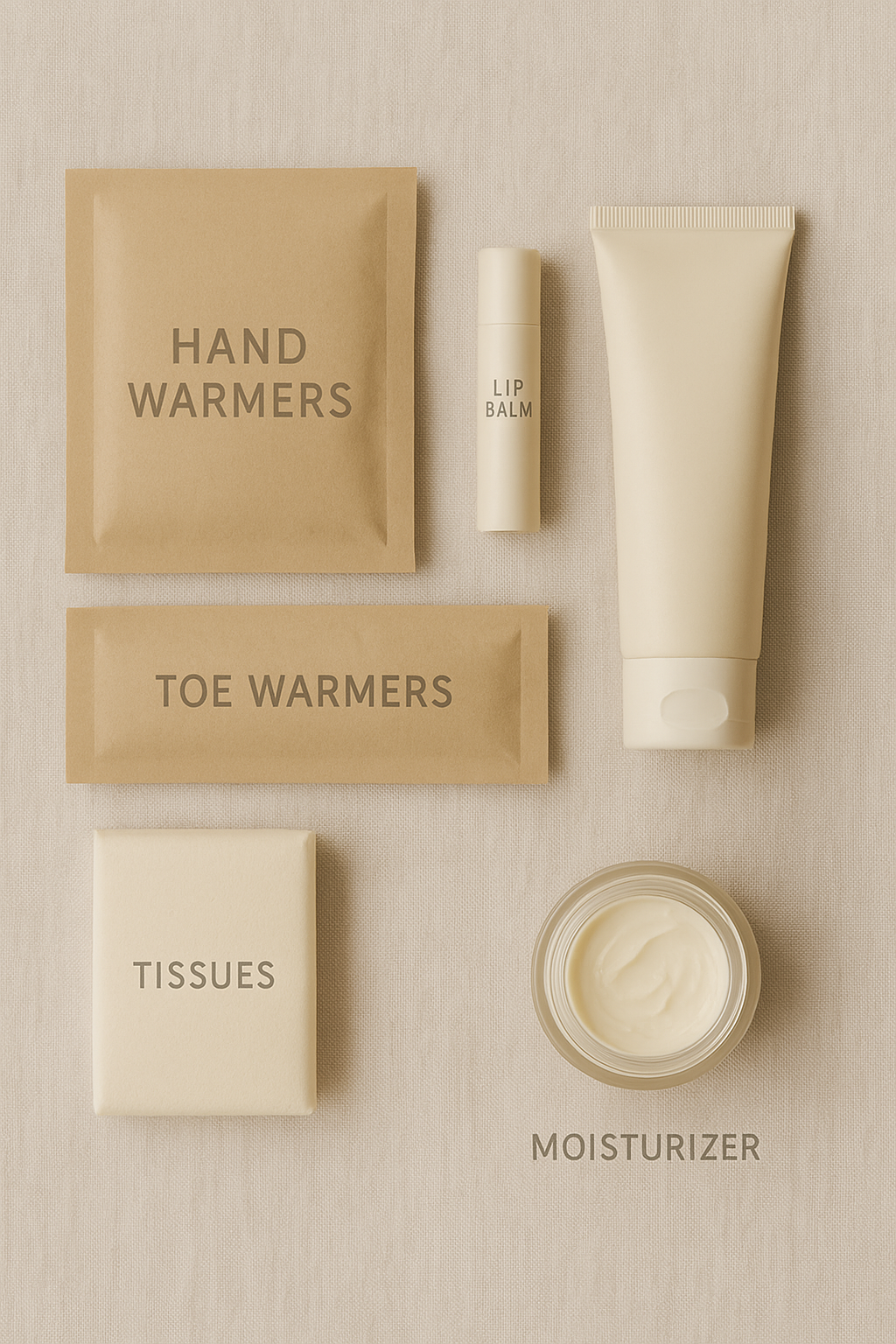
Small things that make a long ski day more comfortable.
Small details can make a long ski day much more comfortable. They aren’t exciting, but they matter.
hand warmers
toe warmers
lip balm
sunscreen
tissues
moisturizer
Your fingers and toes are usually the first to get cold, and once they are, the rest of your body follows. Hand warmers are easy to keep in a pocket and can be slipped inside your mittens to warm your hands quickly. Toe warmers are especially helpful during breaks at the lodge, when you’re standing around and not generating much heat.
Cold air is drying, and wind only makes it worse. Lip balm and moisturizer go a long way in keeping lips and hands comfortable after a day on the mountain.
Sunscreen is easy to forget in winter, but it’s important. Sun reflects off the snow the same way it reflects off sand, so your face and any exposed skin can still burn — especially on bright days or during spring skiing.
These small additions don’t take up much space, but they make being outside longer far more enjoyable.
5. Après Ski (Warm, Simple, Comfortable)
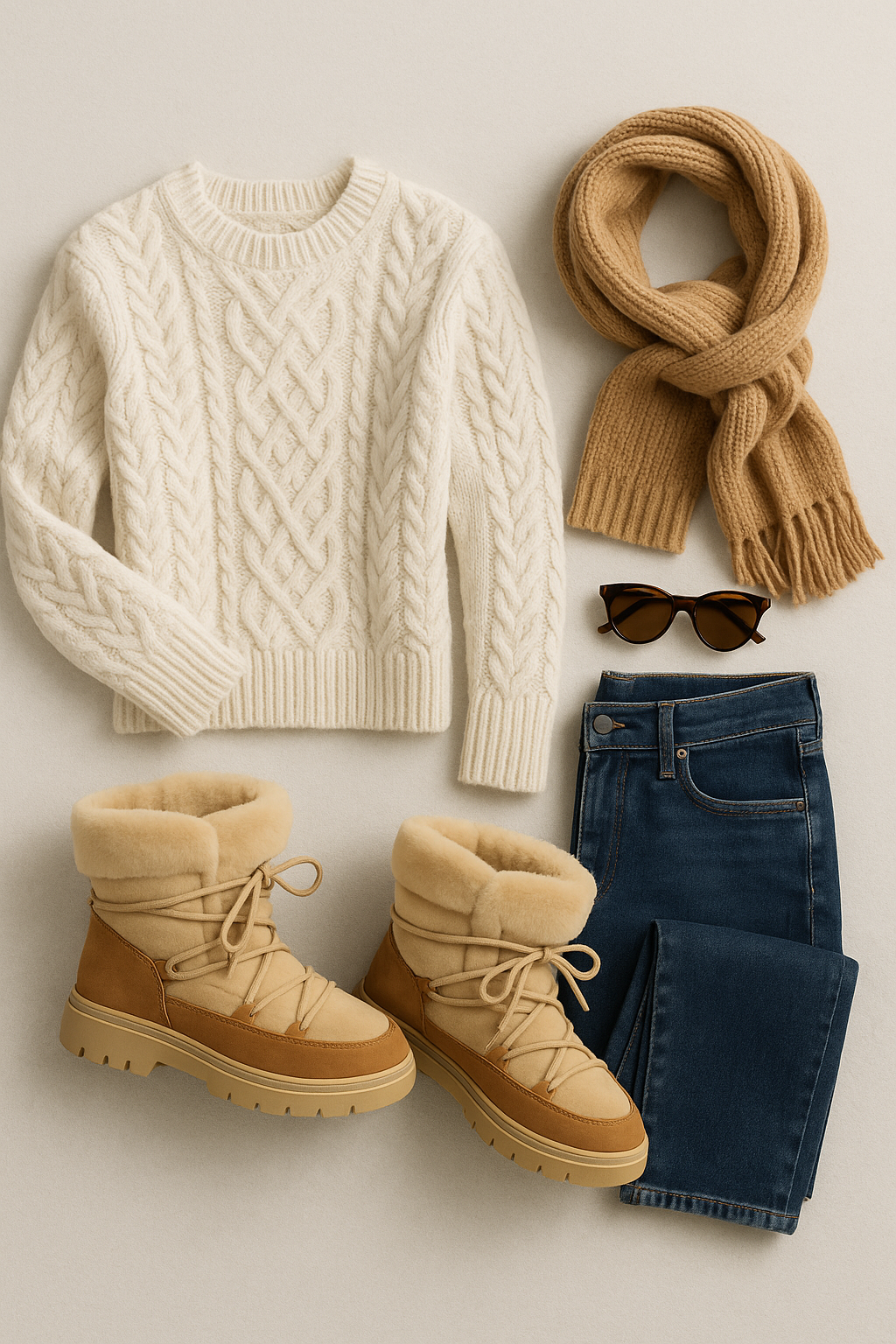
Après ski is about being warm, relaxed, and comfortable — not dressing up. A few cozy pieces you already love go a long way.
Après doesn’t need its own wardrobe. A few warm, comfortable pieces you already love work perfectly.
I’d bring:
jeans or warm leggings
a cozy sweater or knit you’d normally wear on a winter day
comfortable cold-weather boots that can handle snow
warm socks
your ski jacket or a puffer
sunglasses
Après ski is about being warm, relaxed, and comfortable — not dressing up. There are plenty of cold-weather boots that are practical in snow but still look polished and feel good to wear. Pair them with a sweater you already packed for skiing, add jeans or leggings, and throw on a scarf.
That’s really all you need. Comfortable, pulled together, and ready to enjoy the rest of the day without changing everything.
6. What You Can Borrow, Rent, or Buy Secondhand
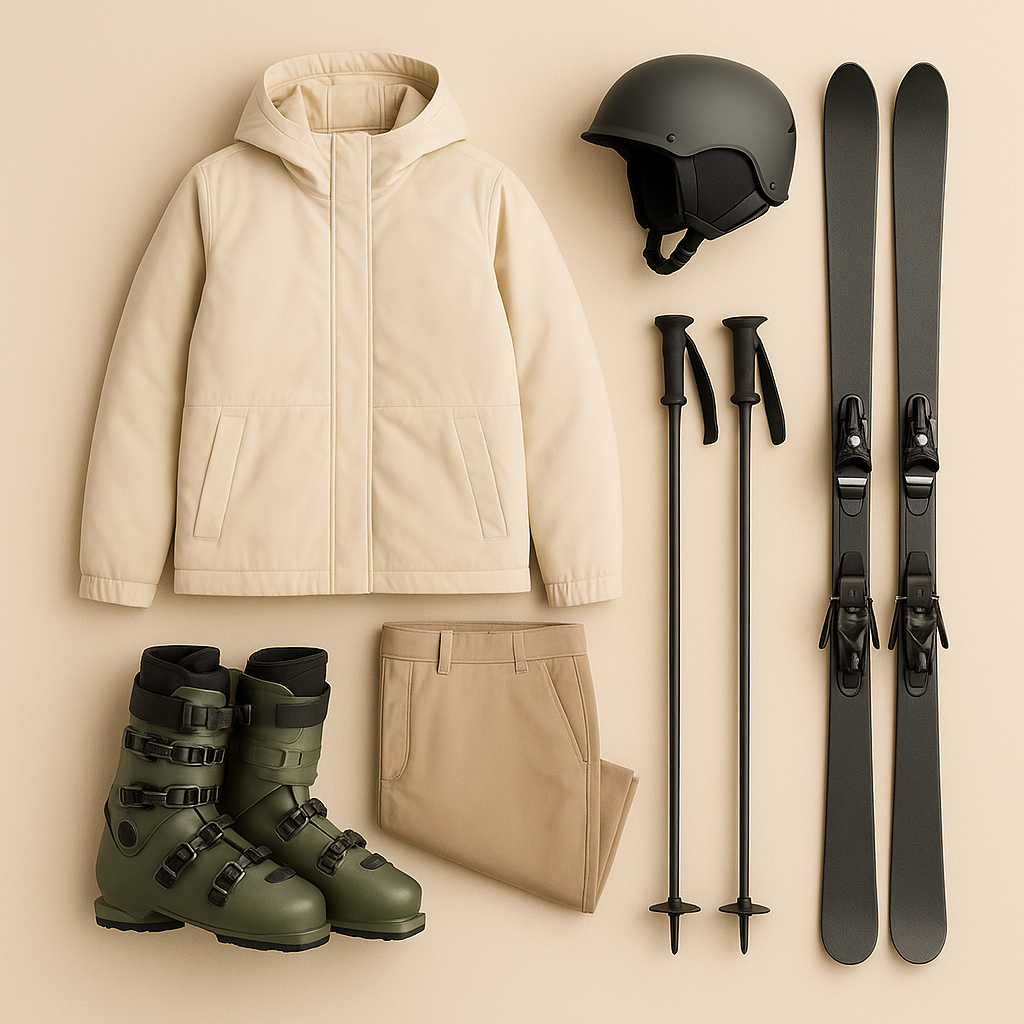
Borrow what you can. Rent what you’ll only use once. Buy secondhand for the pieces you plan to keep.
You don’t need to buy everything new. Ski gear can be expensive, and many people only use it a few times each year.
If you’re skiing occasionally, it often makes the most sense to rent your ski gear, either in advance or once you arrive at your destination. This typically includes skis, poles, and boots, and it saves you from storing bulky equipment the rest of the year.
You can also consider borrowing or renting:
jackets or parkas
ski pants or bibs
helmets
For pieces you want to own, secondhand is a great option—especially if you don’t live in a cold climate and won’t use them often. Snow pants, insulated jackets, and sweaters are often available in excellent condition.
Secondhand marketplaces are also a good place to look for quality knitwear, like wool or cashmere sweaters, that you’ll wear both on and off the mountain.
Ski gear is built to last, which means secondhand options are often in great shape and a smart, practical choice.
7. A More Sustainable Way to Pack
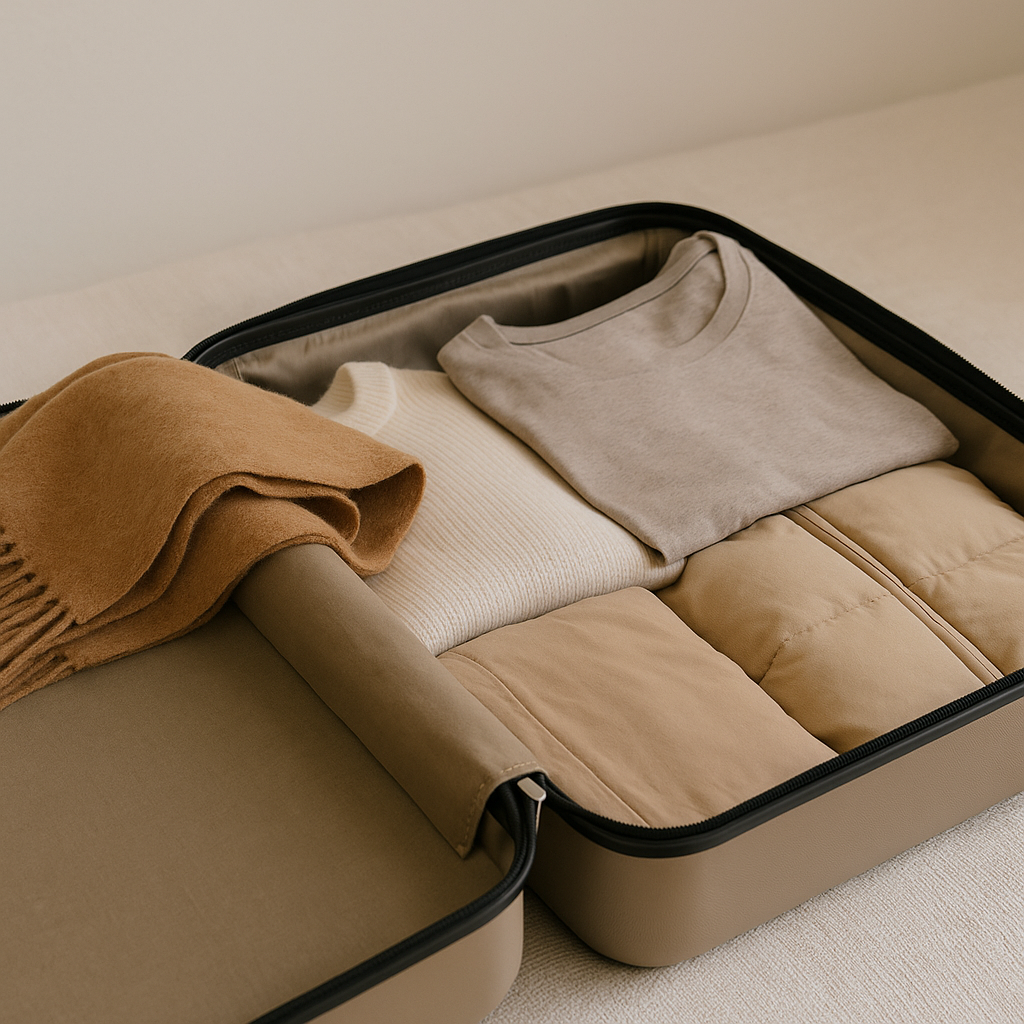
Warm first, then style — and both are completely doable.
The more I think about dressing for cold weather, the more I prefer natural fibers — wool, cashmere, down alternatives, and thicker cotton layers. They keep you warm, hold up well over time, and can be worn long after the trip is over. That matters when you’re trying to avoid buying pieces that only get used once.
A ski trip doesn’t require a huge wardrobe.
It just requires the right layers, a warm jacket, and a few pieces you genuinely enjoy wearing.
Warm first, then style — and both are completely doable.
Where to Find These Pieces
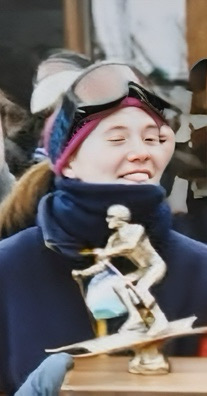
Me, during my ski racing days. Staying warm was never optional — it was the whole point.
Me, during my ski racing days. Staying warm was never optional — it was the whole point.
If you’re missing something for a ski trip, these are reliable places to start:
For ski equipment (rent):
Local ski shops at your destination or rental services booked in advance for skis, boots, and poles.
For outerwear and snow gear (secondhand):
Patagonia Worn Wear
Poshmark
The RealReal
These are good places to look for insulated jackets, snow pants, bibs, and ski suits — especially if you don’t need cold-weather gear often.
For sweaters and mid layers (secondhand):
Poshmark
The RealReal
Wool and cashmere sweaters are often available in excellent condition and can be worn long after the trip is over.
Ski apparel is built to last, which makes secondhand options a practical and more sustainable choice.
✨ Looking for inspiration? Visit the [Inspiration Gallery] for destination moods, color palettes, and outfit collections
✨Interested in reading more? Check out: How I Pack Layers for a 3 Day Weekend , ThreeThings I Pack for a Fall City Trip, and The ThreeThings I Pack for Thanksgiving.
✨ Packing well is only one part of traveling thoughtfully. If you want to plan trips that feel less rushed and more intentional, you might also enjoy → How to Plan a Trip That Matches Your Travel Style.
