

How to Create Your Personal Style Direction for the Year Ahead
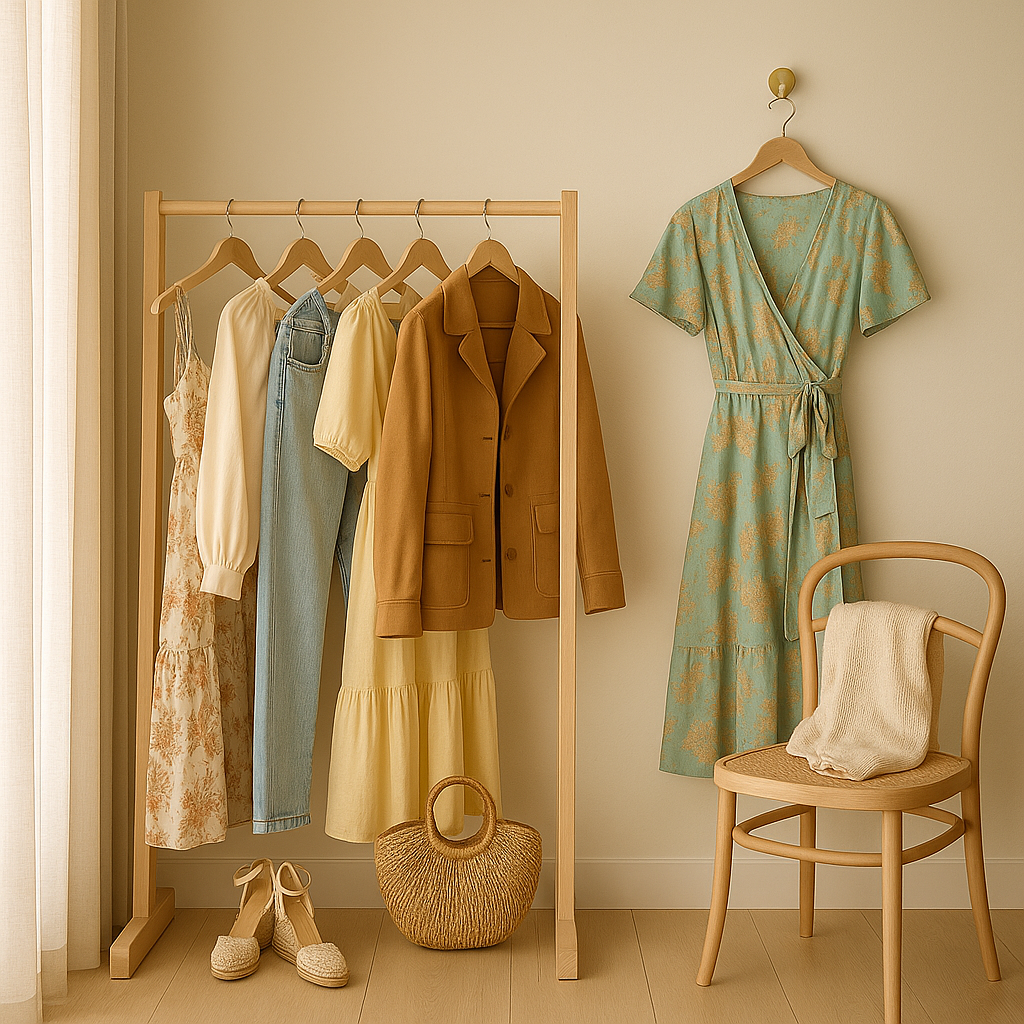
Your style direction starts with the pieces you already love — the ones you reach for without thinking.
A guide to dressing with clarity, buying less, and building a wardrobe that supports your life.
Most style frustration doesn’t come from owning the “wrong” pieces — it comes from not knowing what truly works for your life. Your routine, your coloring, your proportions, and your comfort level all shape the pieces you naturally reach for without even thinking. When you start to recognize those patterns, everything shifts. You wear more of what you already own, make more strategic purchases, and your closet begins to support you because it reflects what you need. Your wardrobe becomes consistent, useful, and effortless to work with.
This idea ties naturally into How to Look Fabulous for a Good Price, where I talked about curating quality staples on a budget. This guide goes a bit deeper and helps you clarify your personal style so you can recognize what belongs in your wardrobe and wear more of what you already own.
1. Start With the Life You Actually Live
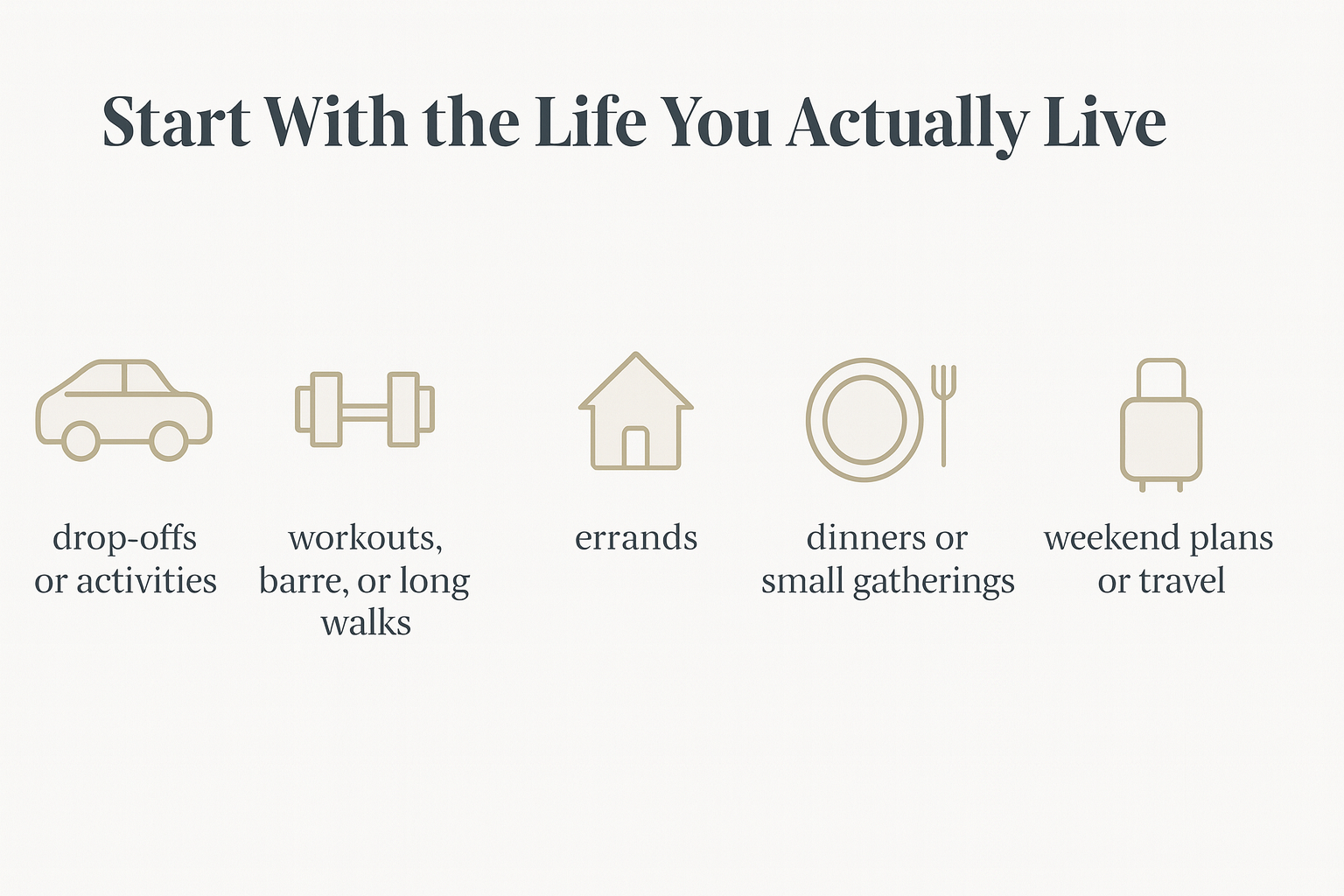
Before adding anything new to your closet, take a clear look at what your days require — rather than planning your wardrobe around rare occasions or once-a-year events.
Consider your weekly routine:
work or professional commitments
drop-offs or activities
workouts or long walks
errands
time at home
dinners or small gatherings
weekend plans or travel
These are the moments your clothes need to support.
Then notice what you naturally reach for — the pieces you wear most often, the ones always in the wash, or the items you throw on without thinking because they work. Whether that’s dresses, knits, denim, or activewear that fits your schedule, these patterns show you what you really wear in daily life.
Your real lifestyle is the foundation of your personal style direction. It reveals what belongs in your wardrobe and helps you make choices that support the way you live.
2. Choose a Few Words That Give Your Style Some Direction
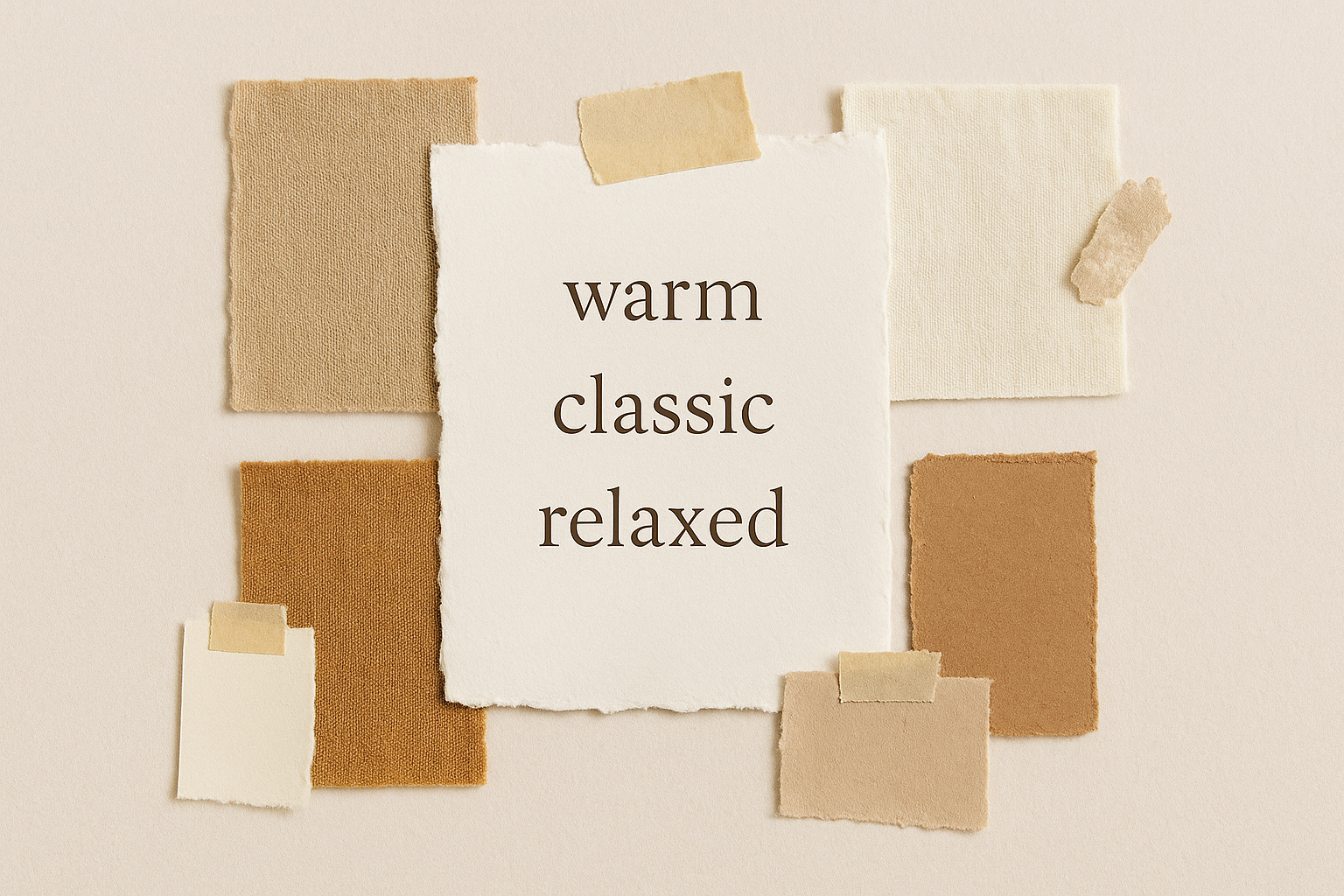
A simple reminder that a few thoughtfully chosen words can guide your entire wardrobe.
Once you understand your routine, it helps to choose a few straightforward words that describe the overall direction of your style. These are clear descriptors that keep your wardrobe focused.
A few examples: warm, feminine, relaxed, classic, clean, structured, simple, tailored.
Choose the two or three that genuinely reflect how you dress most days. These words can help you stay consistent when you’re editing your closet or deciding whether a new piece makes sense for your wardrobe. If something doesn’t line up with the direction you’ve chosen, it usually won’t become something you wear often.
This quick exercise can give you more clarity about what belongs in your wardrobe.
3. Know the Silhouettes That Work For You
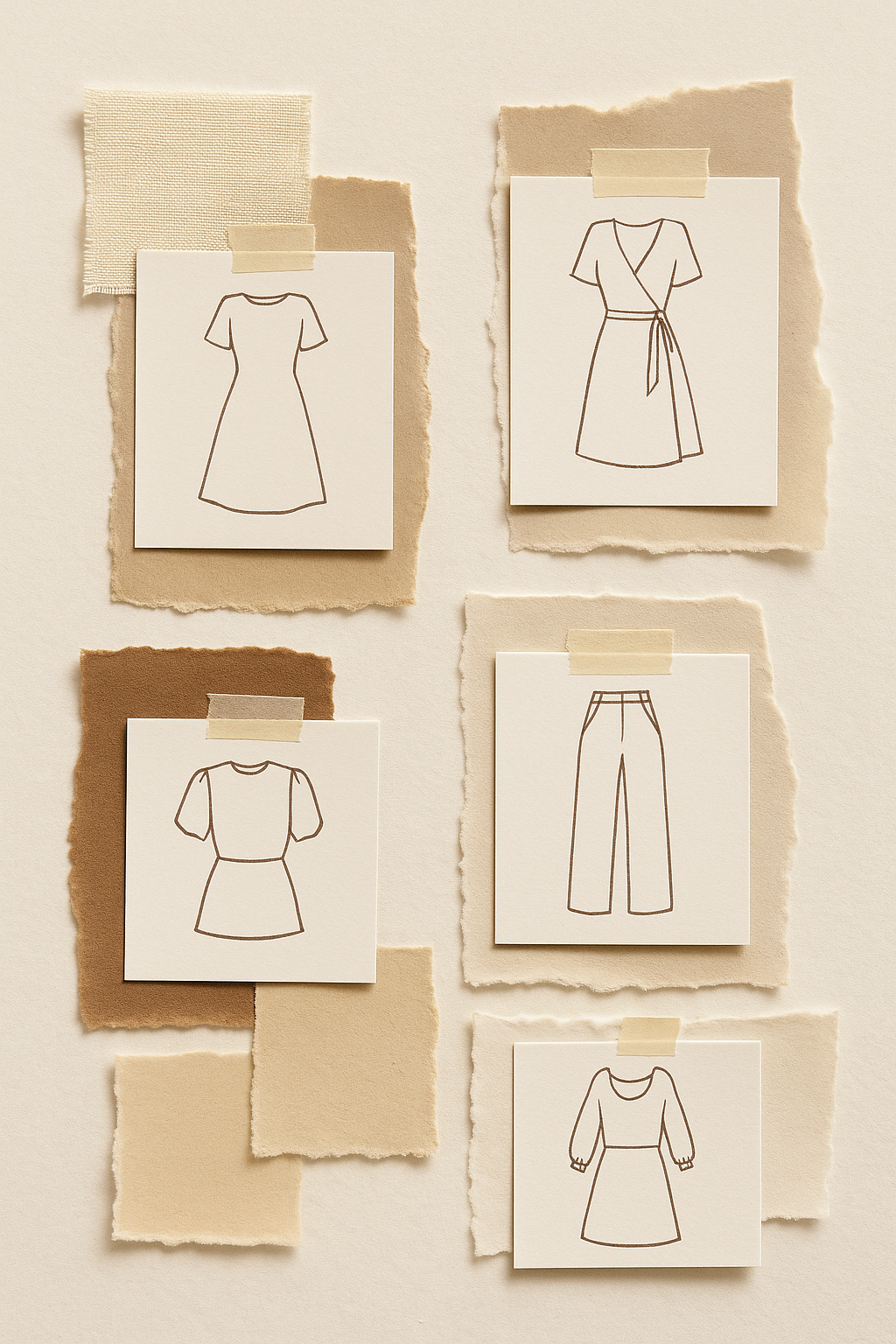
Your most-worn pieces usually share certain silhouettes — noticing that pattern helps guide your style.
One of the easiest ways to avoid unnecessary purchases is to understand which silhouettes genuinely work for you.
Think about:
the dress shapes you feel best in
sleeve styles that you prefer
the pant styles you consistently return to
the cuts you tend to skip without hesitation
Noticing these patterns helps you avoid buying pieces that seem appealing in the moment, but never end up being worn. When you understand the silhouettes that work for you, you’ll find it much easier to build a wardrobe you love wearing and avoid buying pieces you won’t use.
4. Use Color Intentionally
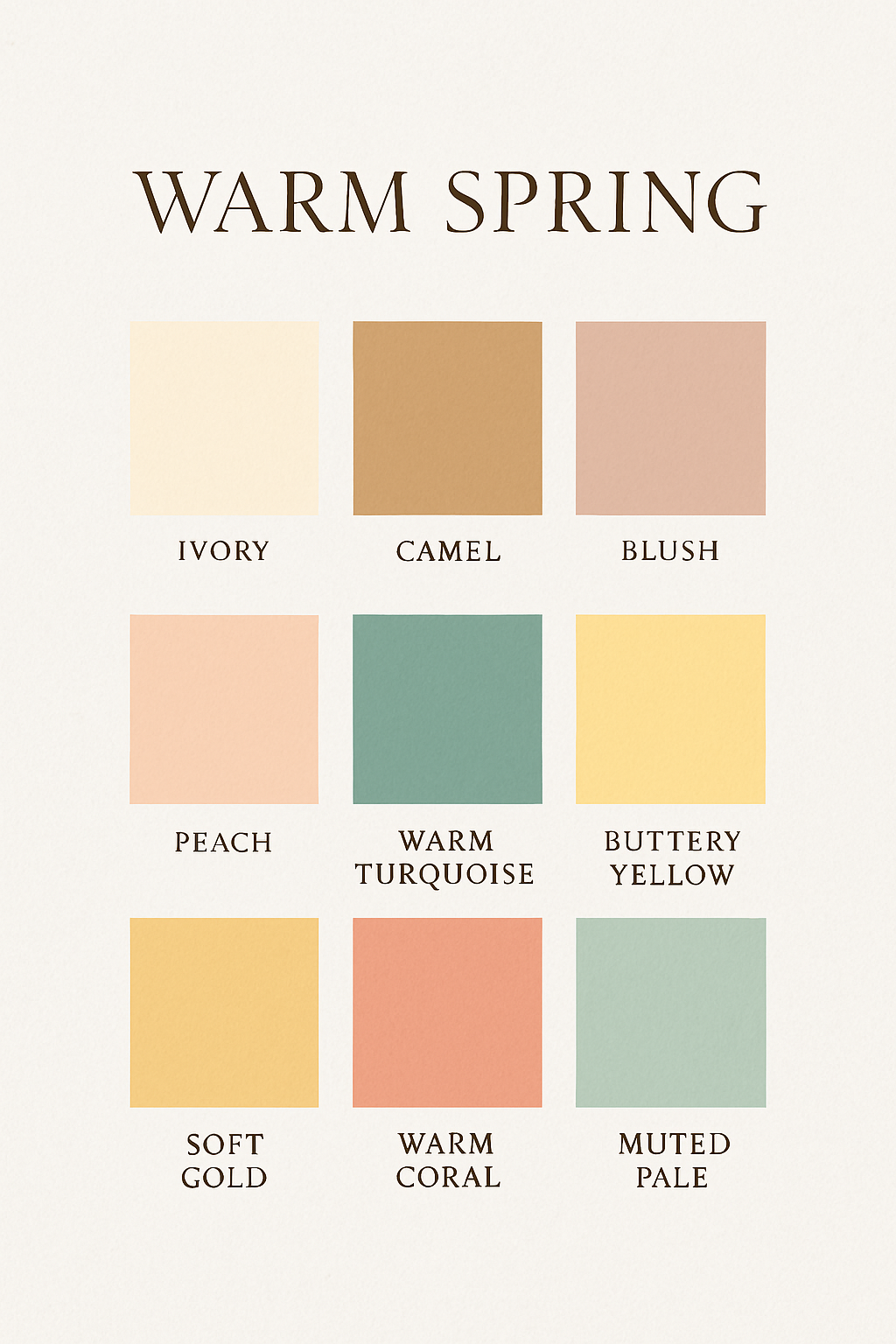
These are the shades that tend to brighten Warm Spring complexions—ivory, camel, blush, peach, warm turquoise, buttery yellow, soft gold, warm coral, and muted pale. Seeing your colors in a simple grid makes it easier to spot what already works in your closet and keep future choices consistent.
Color plays a quiet but important role in building a cohesive wardrobe. When you know which tones brighten your complexion, you feel more confident in what you’re wearing — and getting dressed, mixing pieces, and choosing what to add becomes clearer.
Look at the colors you naturally gravitate toward. If warm tones like ivory, camel, blush, peach, warm turquoise, buttery yellows, or soft golds flatter you, that becomes a natural palette to build around.
A consistent palette helps you:
put outfits together quickly
mix pieces easily
avoid buying items that end up sitting in your closet
choose pieces you enjoy wearing
repeat what works
The colors you select in your wardrobe are up to what you feel best in and should reflect what you enjoy wearing.
5. Build a Mood Board That Reflects You
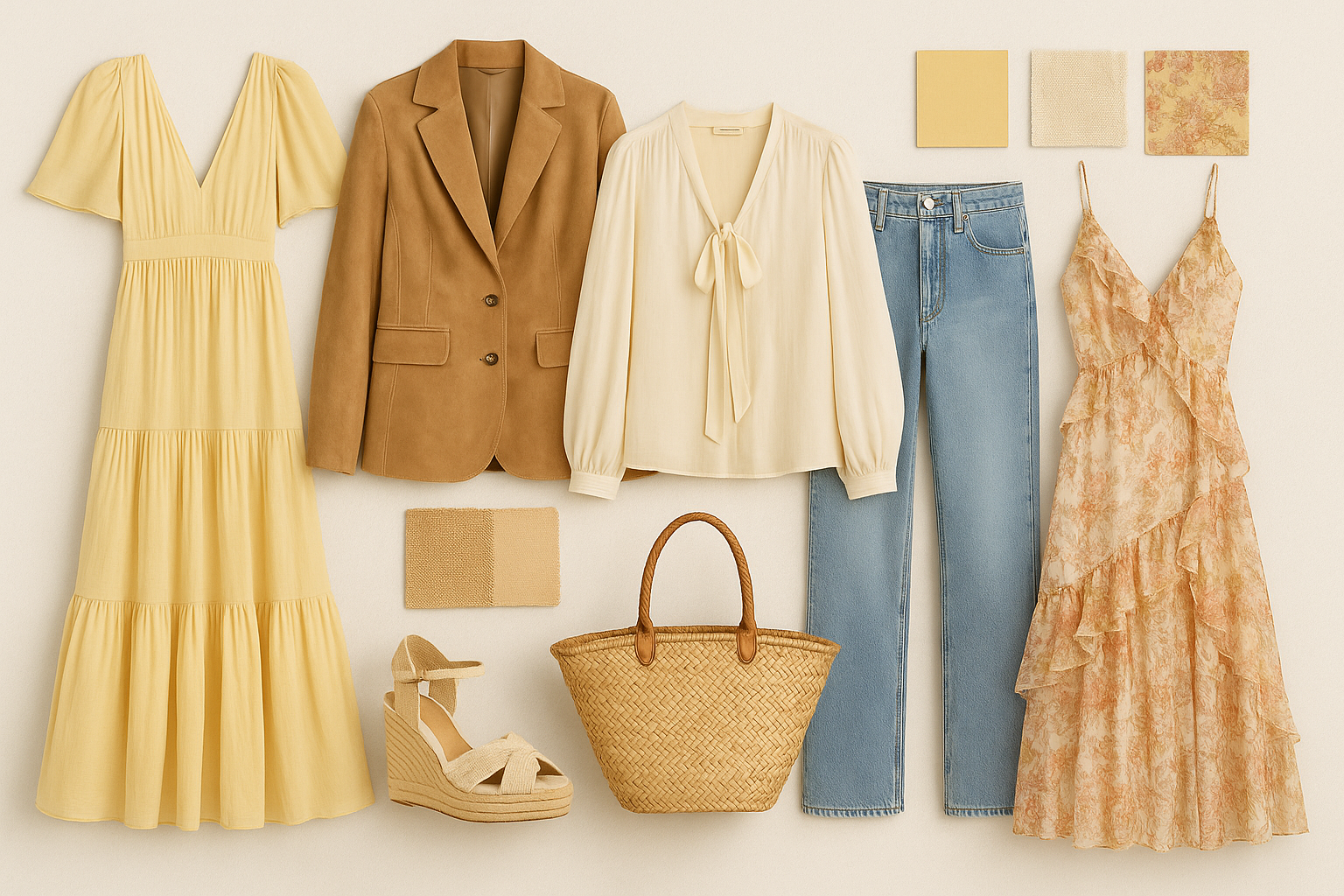
Your mood board should reflect the real you — the colors you reach for, the textures and silhouettes you love, and the pieces you’re excited to wear.
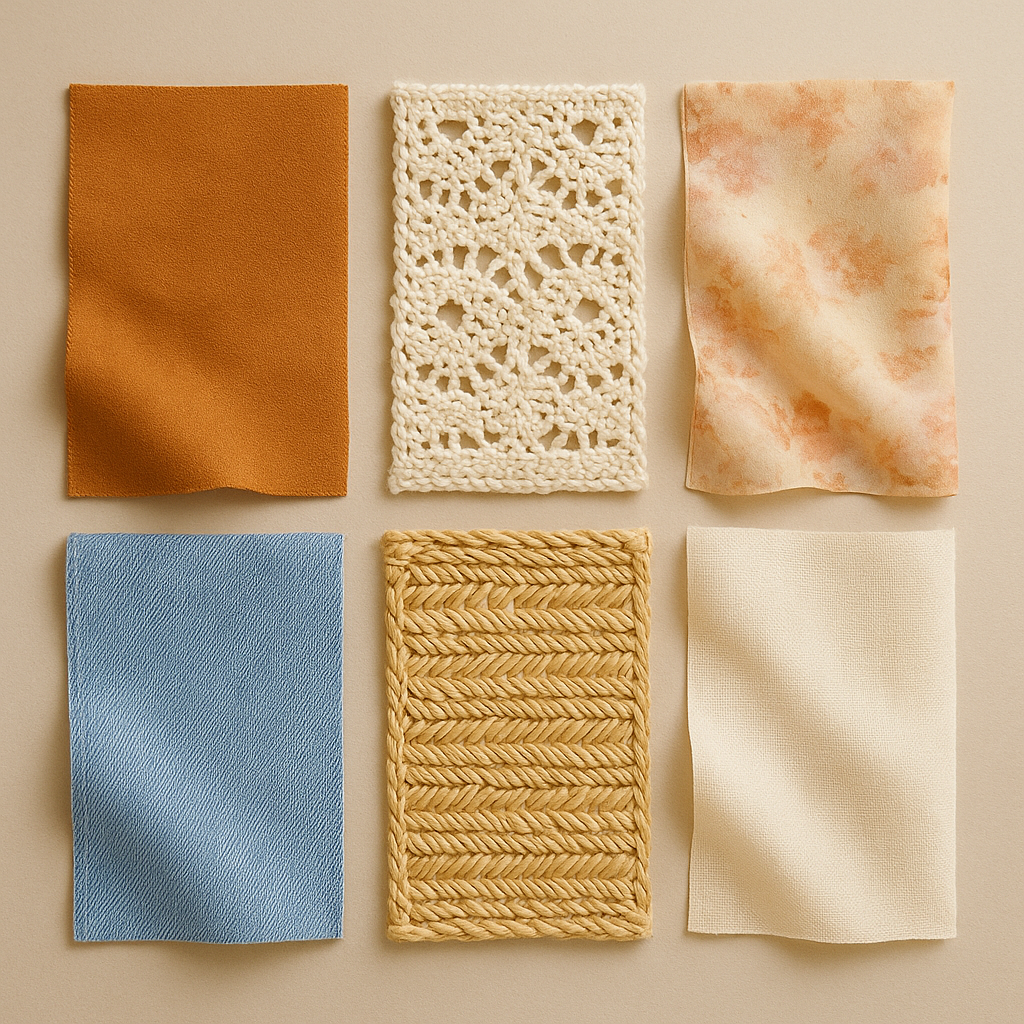
A focused blend of textures and hues that capture the essence of your style direction.
A mood board becomes useful when it reflects your real life and consists of silhouettes, colors and textures you love.
Keep it simple:
choose 10–12 images
focus on outfits you would realistically wear
stick to silhouettes that work for you
stay within your color palette
pay attention to textures and pieces you reach for often
Then look for the patterns:
Do your best silhouettes show up repeatedly?
Are the colors consistent?
Do you gravitate toward dresses, denim, or knits?
Does the tone match the style direction you chose?
If you want a seasonal example, my Holiday Mood Board post: Holiday Style-How to Look Festive Without Buying a Whole New Wardrobe shows how a mood can guide outfits for a specific time of year. This guide builds on that idea for long-term clarity.
6. Create a Few Outfit Formulas You Can Rely On
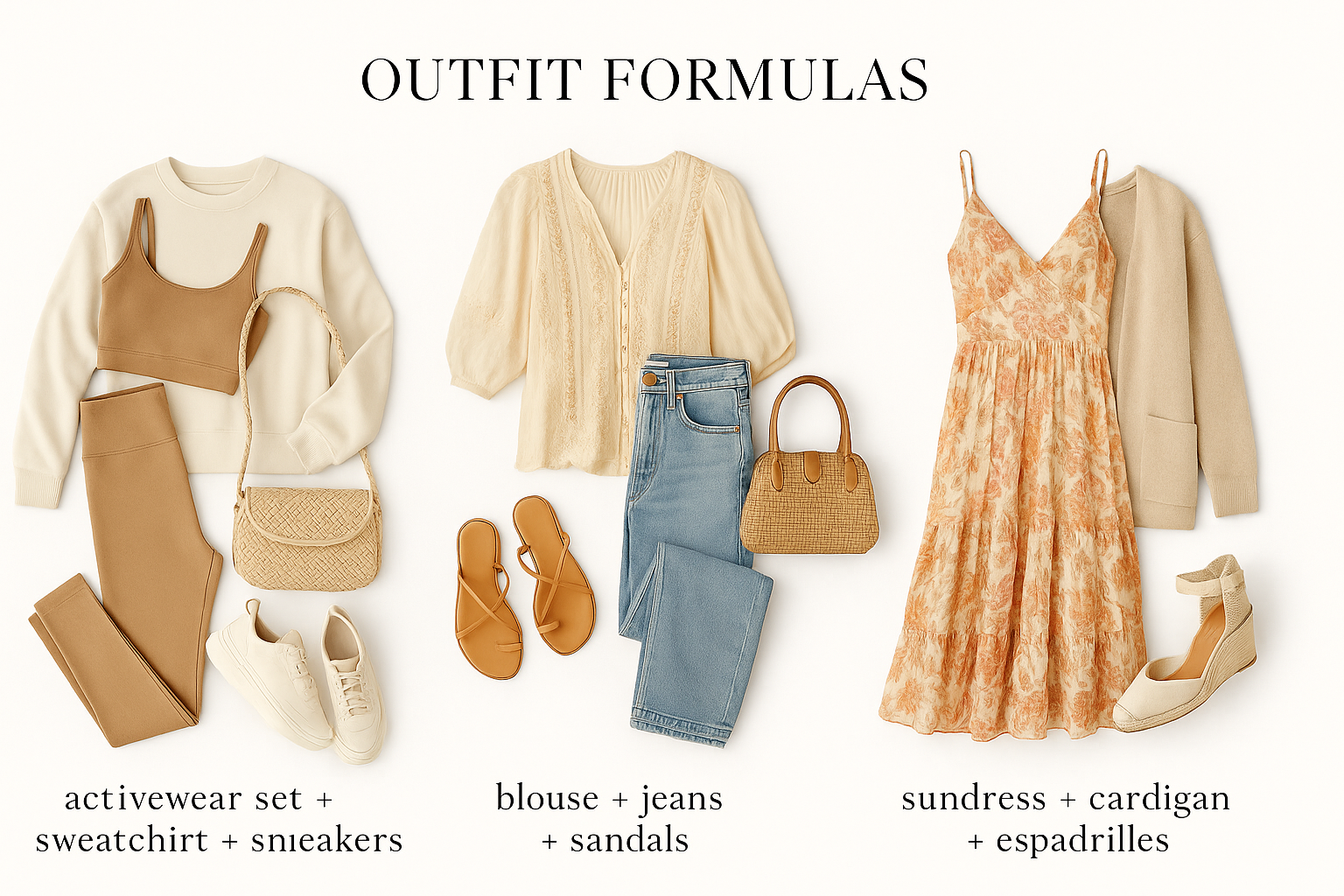
Once you understand your colors, silhouettes, and personal style words, it becomes much easier to build outfit formulas you can repeat throughout the year.
These should reflect your real week — not a hypothetical one.
Create outfit formulas that match how you actually live. My week includes active days, errands, and dressier moments; yours may follow a different flow.
Here are a few examples:
• dress + tall boots + a structured bag
• sweater + straight-leg denim + flats or boots
• knit dress + sneakers or sandals
• activewear set + cardigan + crossbody
• blouse + jeans + a polished layer
These formulas simplify getting dressed and help clarify what you already have versus what you truly need.
7. Edit What Doesn’t Fit Your Direction
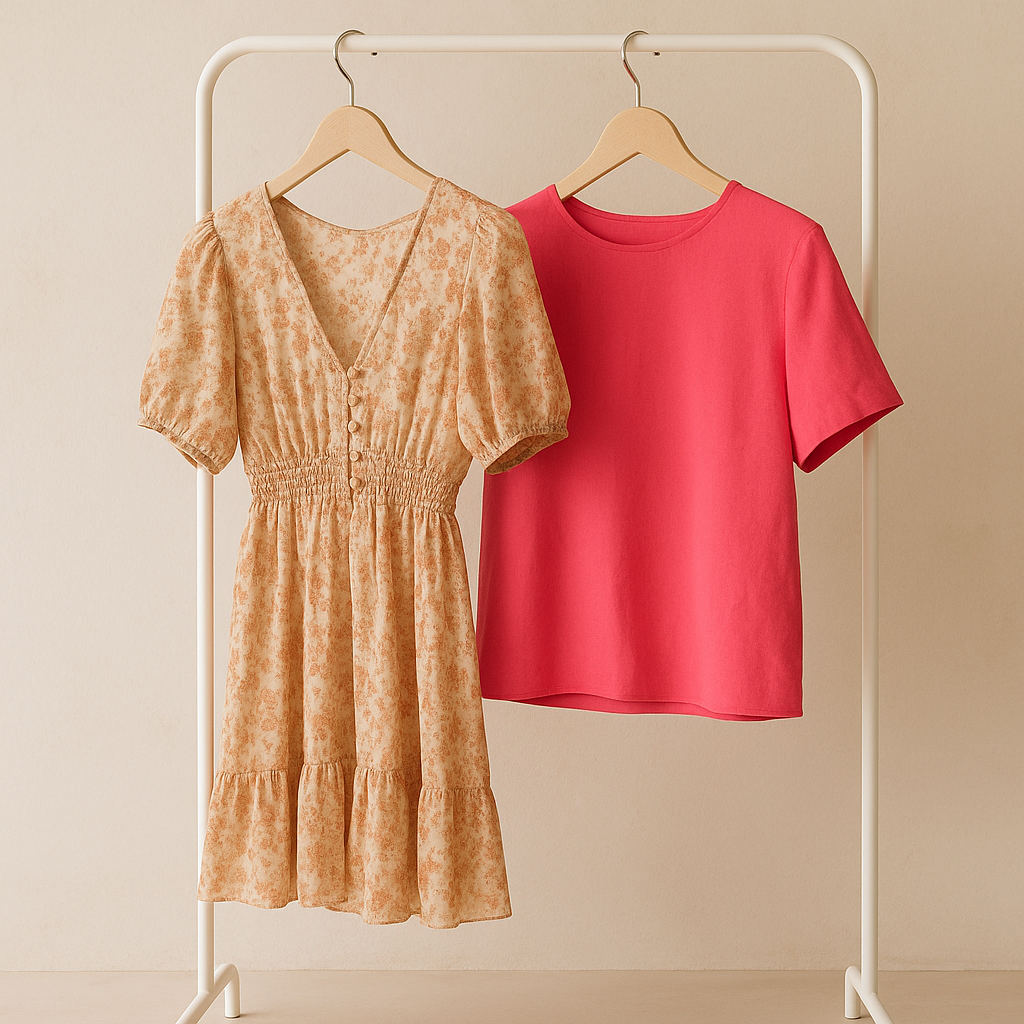
Edit out the pieces that no longer align with your style direction so your wardrobe reflects your true style.
You don’t need to start from scratch.
You just need to notice what isn’t working anymore.
If something doesn’t suit your palette, your lifestyle,
or how you want to feel when you get dressed,
it’s okay to set it aside — even if it’s “nice.”
This isn’t about rules.
It’s about making your closet feel easier to live with.
This kind of editing keeps your closet functional and helps you avoid repeating the same mistakes.
8. Make a Small, Intentional Shopping List — If Needed
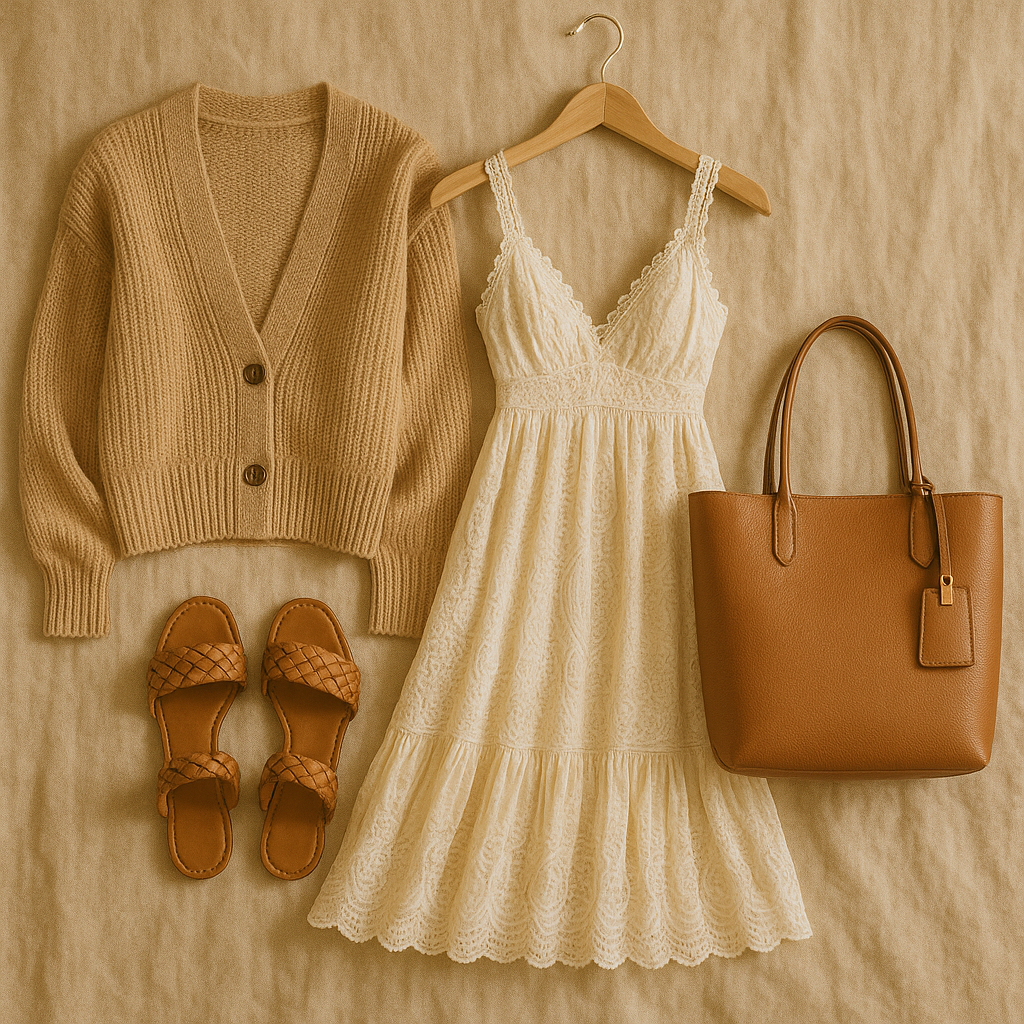
Add only what completes your wardrobe and complements your direction.
After editing, you may find there are a few additions that would better support your closet and help your outfits come together.
This will look different for everyone.
For some people, it’s realizing they don’t have a layer that works across outfits.
For others, it’s shoes — the kind you reach for day after day.
Sometimes it’s a dress that moves easily between seasons, or a bag for daily life and travel.
These additions are about supporting the pieces you already have and wear in your closet.
The list should stay small — just a few thoughtful additions that help everything else work better.
If you want guidance on choosing pieces that actually last, your Wardrobe Investments: How to Choose Pieces that Last post explains how to recognize quality in fabrics and construction so you can shop confidently and avoid replacements.

Let your style direction shape the pieces you choose next.
⭐ Flight 2 Fashion Takeaway
Personal style isn’t about buying more.
It’s about understanding what works for you.
When you know the colors you feel good in, the silhouettes you enjoy wearing, the pieces you reach for without thinking, and what your real lifestyle requires, you naturally buy less and wear more. Your wardrobe becomes cohesive, versatile, and aligned with your day-to-day life — not trends or impulse purchases.
A thoughtful closet comes from clearly defining what works for you and building around that — not constant shopping.
✨ Want a template to try this yourself? Download in the [Resources Library] to choose your core pieces and see how they set the tone for the rest of your outfits.
✨ Interested in reading more? Explore the [Inspiration Gallery] for seasonal color palettes, outfits, and mood boards to guide packing and for inspiration. You can also read the guide Holiday Style: How to Look Festive Without Buying a Whole New Wardrobe. and the guide about Wardrobe Investments: How to Choose Pieces that Last.
