

Flight 2 Fashion Guides

Welcome to Flight 2 Fashion Guides — a collection of in-depth articles on smart packing, sustainable style, and thoughtful trip planning.
Each guide combines a teacher’s clarity with fashion insight — helping you carry less, rewear more, and plan wardrobe and travel choices that reflect your own story.
New to Flight 2 Fashion?
Start with the Welcome Guide →
Explore by Topic
Find what inspires you most:
Travel Plan Your Way — destination planning and meaningful trip ideas
Style With Meaning — sustainable fashion and rewearable style
Smart Packing — packing lists, capsules, and outfit formulas
↓ You can also scroll down to explore the most recents post across all categories.
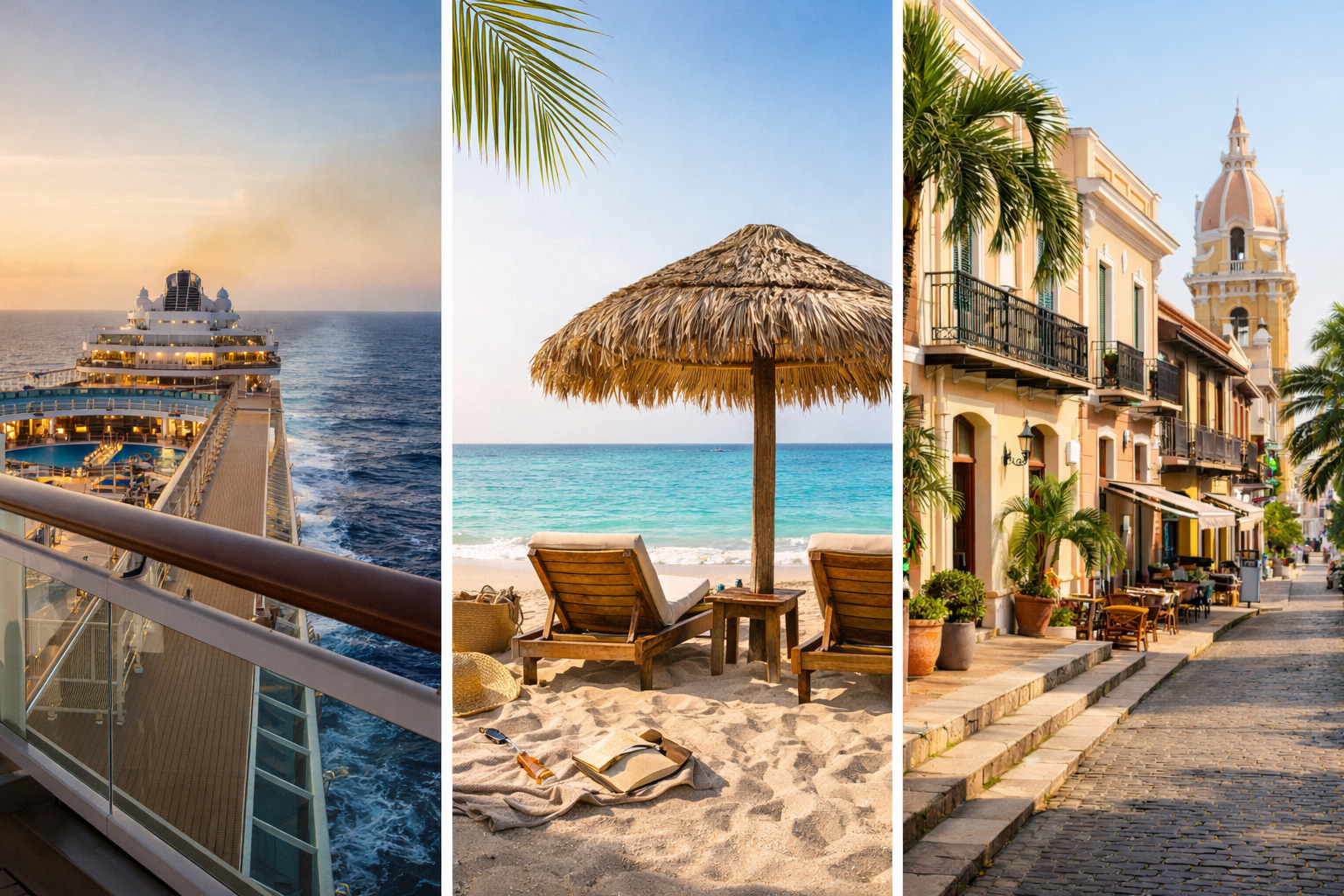
Which Tropical Trip Is Right for You? Cruise vs Beach vs City
Not all tropical trips feel the same. This guide breaks down cruises, beach stays, and tropical cities to help you choose the kind of trip that actually matches how you want to spend your days — before you book anything.
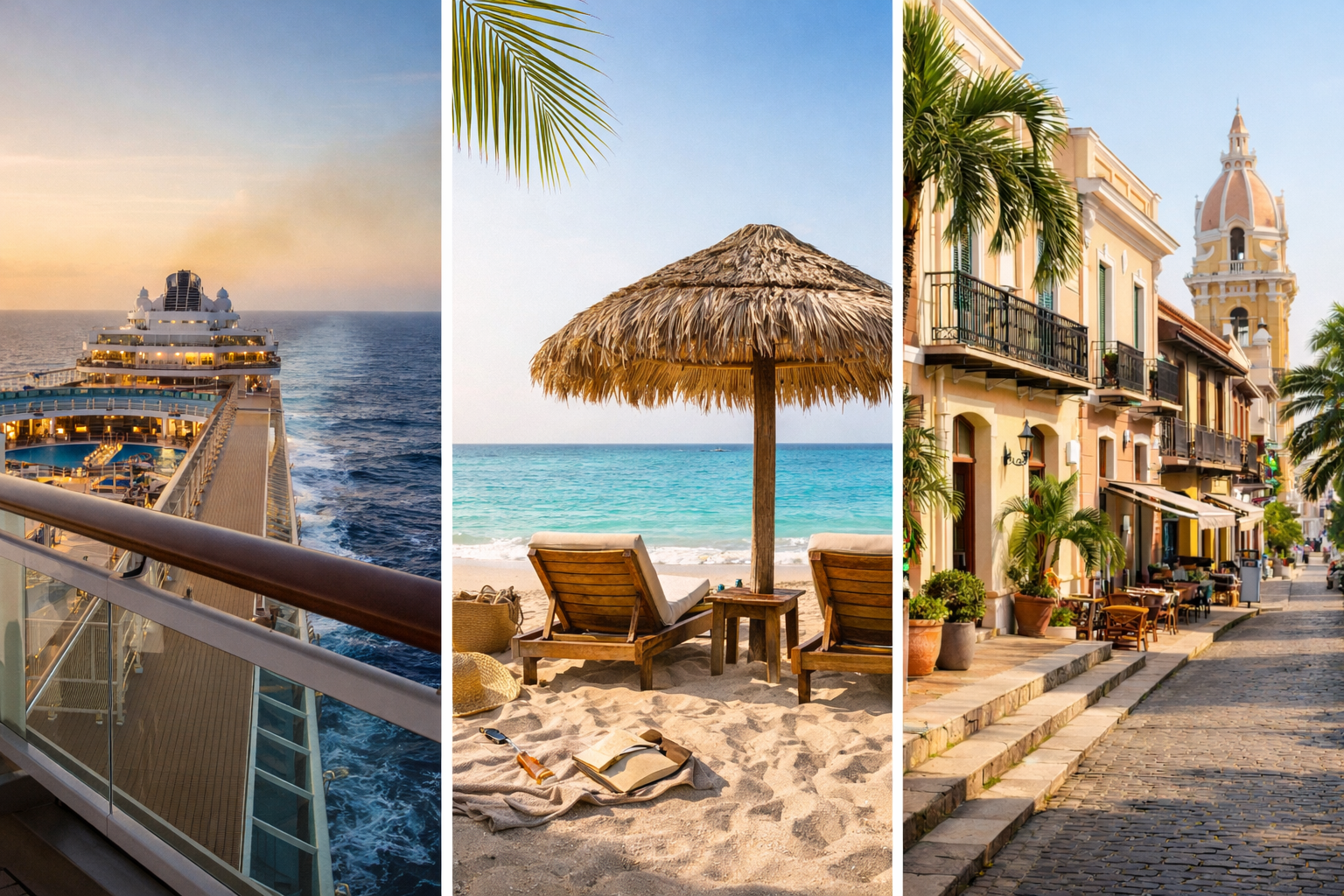
Three different ways to do a tropical trip — each with a very different rhythm.
Most people say they want a “tropical trip,” but they’re often imagining very different things.
Some want warmth and rest.
Some want warmth and movement.
Some want warmth without having to plan every detail.
If the trip doesn’t match how you want to spend your days, it can feel off — even if the destination is beautiful.
Instead of starting with where, start with how.
Below are three common tropical travel styles, and the questions that help clarify which one fits you best right now.
1. The Cruise
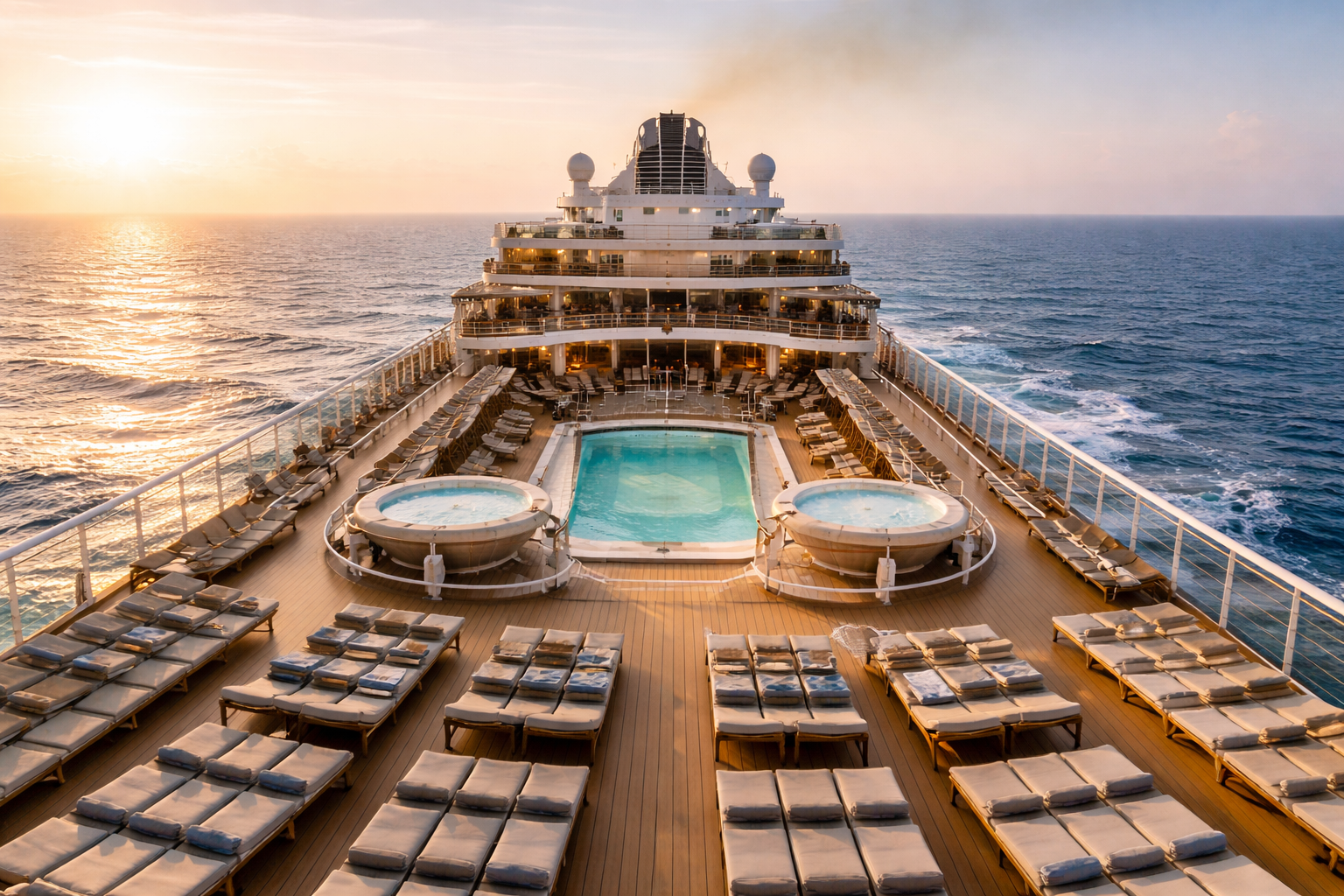
Cruise trips work best when you want warm weather without constant decision-making.
Meals, entertainment, and transportation are handled for you, with the option to explore ports if and when you want. It’s a good fit if you want variety without planning every detail — and the flexibility to do a lot or very little.
Best for: minimal planning, built-in structure, variety without logistics
A cruise works well if what you want most is to arrive, unpack once, and let the trip carry itself.
Meals are handled.
Entertainment is there when you want it.
Ports give you optional variety without requiring daily decisions.
You can be active or do almost nothing — and switch between the two without replanning your day.
Ask yourself:
Do I want to think as little as possible once I arrive?
Am I happier choosing from options than creating a plan from scratch?
Would I enjoy seeing multiple places briefly rather than staying rooted in one?
If planning feels like work right now, this is often the easiest way to still get warmth, water, and change of scenery.
2. The Beach Stay
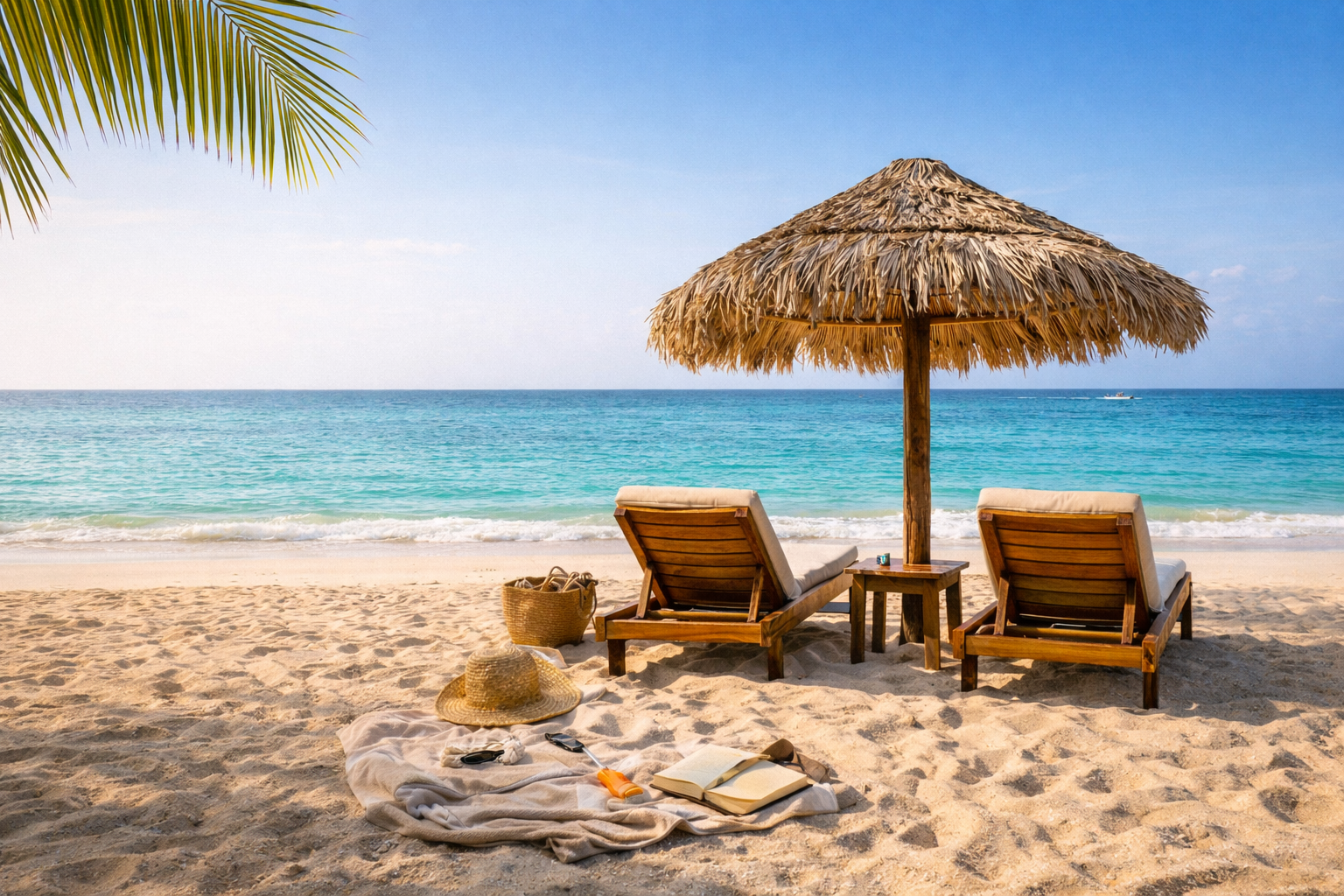
For travelers who want time to slow down.
A beach trip works best when the priority is rest, warm water, and days that don’t require decisions. If reading, swimming, walking the shoreline, and doing very little sounds like the point—not the problem—this is likely your trip.
Best for: rest, repetition, slower days, mental reset
A beach trip works best when your goal is less input, not more activity.
The days tend to repeat — and that’s the point.
Morning walks.
Time in the water.
Long lunches.
Early nights.
This kind of trip is about letting your nervous system settle, not filling time.
Ask yourself:
Do I want days that look similar to each other?
Will I be satisfied with one main environment?
Do I need rest more than novelty?
If you’ve been stretched thin, the simplicity of a single location can be what makes the trip work.
3. The Tropical City
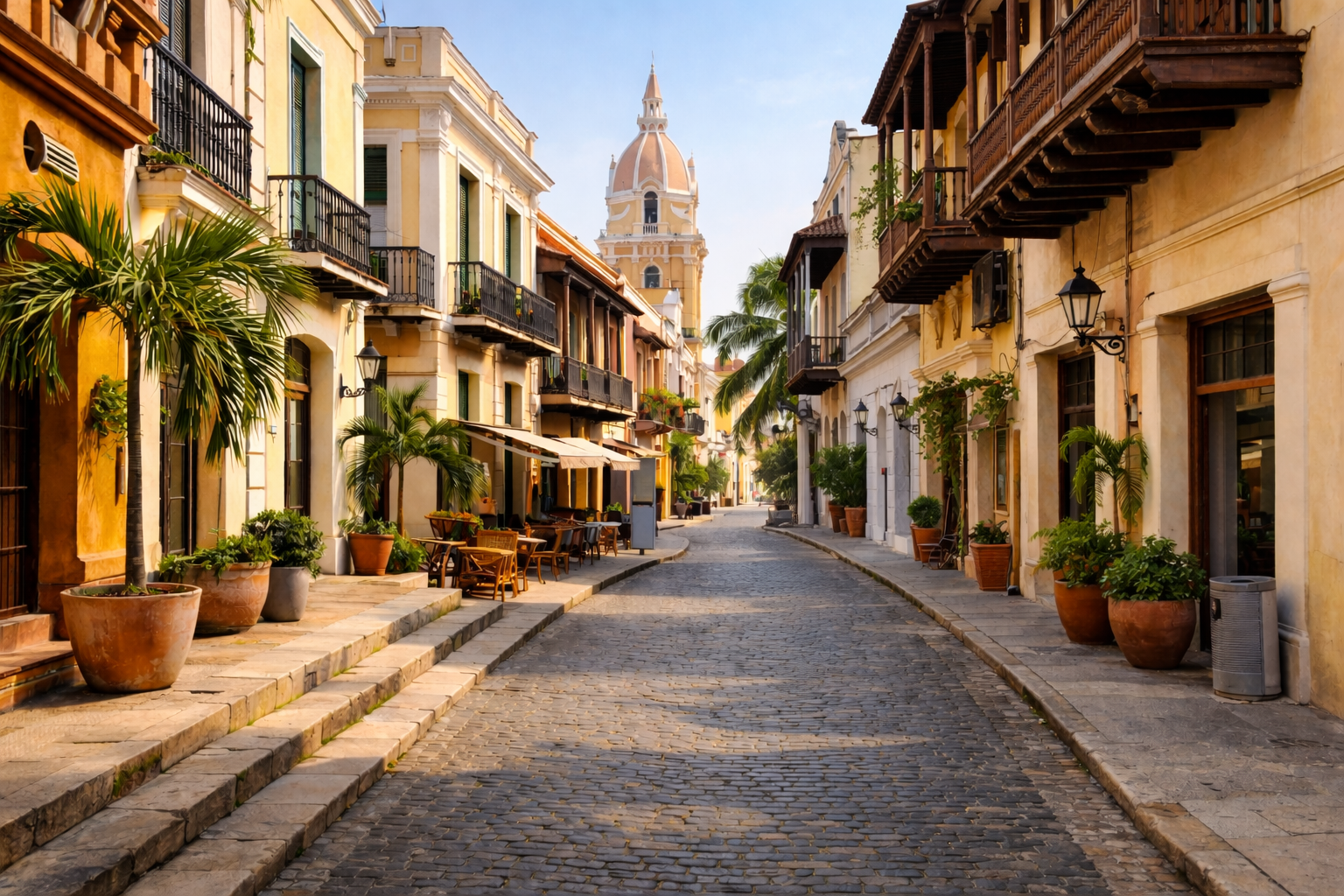
Not every tropical trip delivers the same experience. Cruise, beach, and city trips each solve a different travel problem.
Best for: movement, exploration, warm weather without slowing down
Some people want warmth but don’t want to stop moving.
Tropical cities offer outdoor cafés, walking neighborhoods, museums, markets, food scenes, biking paths, hiking nearby — all without cold weather dictating your day.
This is often the best choice if relaxation, for you, comes from doing.
Ask yourself:
Do I like structure to my days, even on vacation?
Would I get restless with too much downtime?
Do I want warmth and stimulation?
If sitting still isn’t restorative for you, a city gives energy without winter coats.
One Final Check (This Matters)
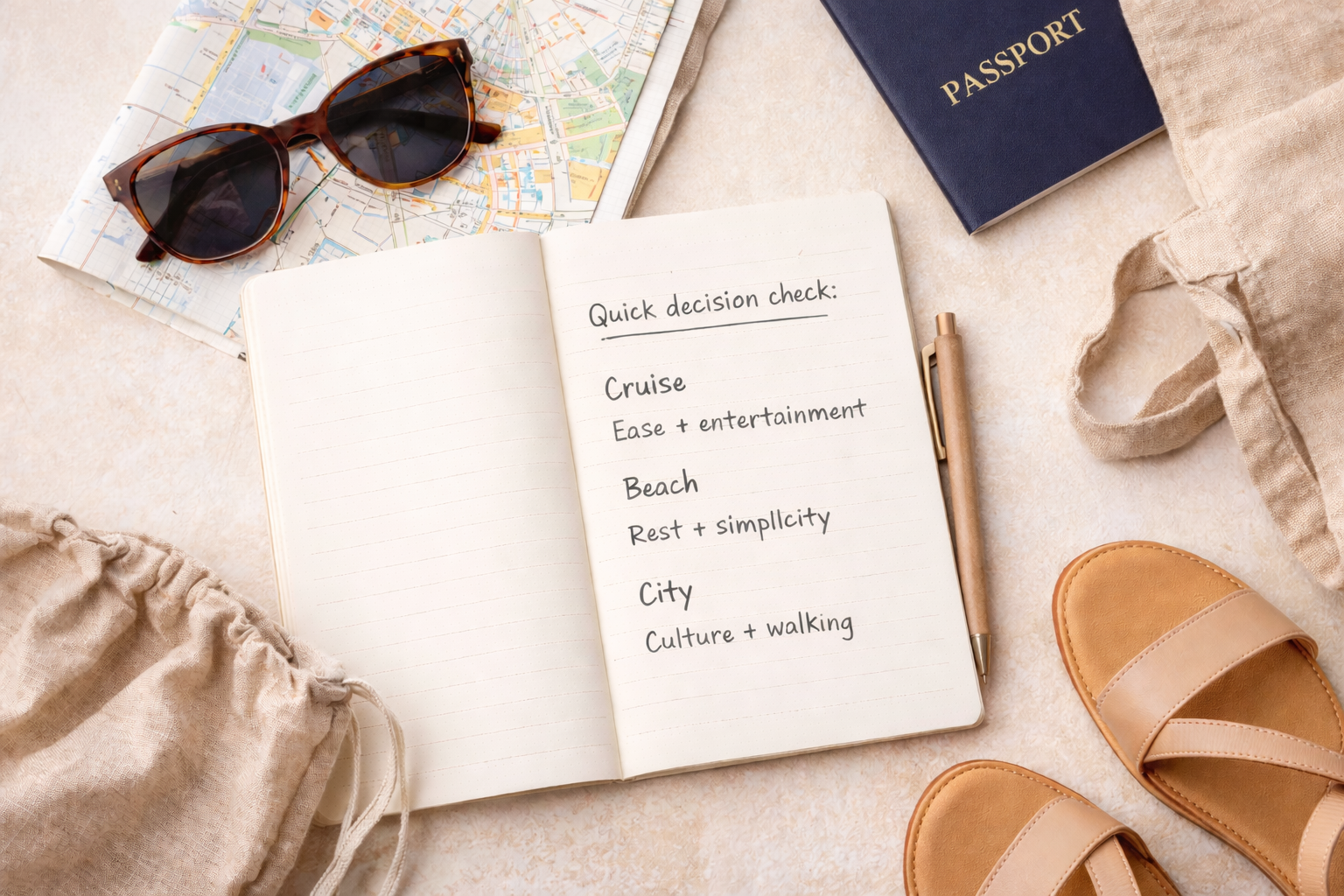
Not every tropical trip is the same — and choosing the wrong one is usually why people come home disappointed.
This quick check helps you decide what kind of trip fits how you want to spend your days, not just where it’s warm.
Cruise, beach, or city — the best choice is the one that matches your energy, planning tolerance, and how active you actually want to be.
Before you book, ask one last question:
At the end of the day, do I want to feel rested, entertained, or accomplished?
There’s no right answer — just different seasons of life.
The best tropical trip isn’t the one that looks best online.
It’s the one that matches how you want to spend your actual day.

Your Travel Year, Your Way: Reflect and Redesign the Way You Travel
Redesign the way you travel — with a clear plan, a curated suitcase, and your priorities in focus

Holiday nights, filled with your favorite travel memories.
Picture this: the holiday lights are still glowing overhead, the streets are quiet, and you have a moment just for yourself.
You stop and reflect — not just on the year, but on your favorite travel moments: the places you visited, the sights you explored, the new foods you tried, and the experiences that stayed with you.
The quiet days of late December are the perfect time to pause before the new year begins and reflect on your travels — what worked, what didn’t, and what you’d do differently next time.
When I was teaching, my best lessons came from this kind of reflection: looking back, identifying what worked, and using those insights to plan more effectively going forward. Travel benefits from the same approach. Asking the right questions helps you plan trips that run more smoothly, fit your needs, and leave you with more of the moments you actually want to remember.
This post walks you through five steps to reflect and redesign your travel — turning what you’ve learned into a guide for planning next year’s trips.
Looking back at the trips and travel moments from the year.
Step 1: Break Your Travel Into Four Parts
Look back at each trip this year by focusing on four areas. This helps you see what created your favorite moments and where small changes could make future trips better.
Experience — the key moments or days that stand out when you look back on the trip
Logistics — how you travelled from place to place, where you stayed, and the pace of each day
Personal State — how you felt, how prepared you were, and how confident you felt in what you packed
Budget — where money added value and where it didn’t
This step turns your travels into patterns and choices you can learn from — giving you a clearer picture of how you like to travel.
Step 2: Find the Highlights

Your favorite travel moments show you what to plan more of next year.
Experience: a sunset boat cruise ending with dinner on the beach; a day trip that balanced exploring a town with visiting historical sites; an evening spent at a local restaurant that turned into one of the best meals of the trip.
Logistics: choosing the train over flying for a smoother, more efficient journey; staying at a hotel within walking distance of everything you wanted to see; a day when transfers, reservations, and sightseeing all lined up.
Personal State: waking up rested because the day before wasn’t overscheduled; feeling like yourself in what you wore; having exactly the right layers for the weather.
Budget: a splurge meal that justified the cost; a boutique hotel that made mornings easier and put you in the right neighborhood; close-up seats at the Fulham vs. Arsenal match that became a highlight of the trip.
Then ask why each worked. Was it timing, pace, location, or preparation?
Step 3: Identify the Travel Challenges

Even messy travel days can teach you how to plan smarter next time.
Experience: a guided tour that dragged on and left you drained; a day packed with too many activities that turned into rushing from one stop to the next; a restaurant that looked great online but didn’t meet expectations.
Logistics: a transfer day with back-to-back trains and no buffer for delays; an early-morning flight after a late night out; a hotel located far from everything that turned every outing into a trek.
Personal State: feeling exhausted because there wasn’t enough downtime built in; a dinner where you didn’t feel comfortable in what you wore; a cold morning caused by not packing the right layers.
Budget: an expensive experience that felt generic; a tour that didn’t add value; extra transfers that wasted both time and money.
Treat these as information, not regrets. They’re insights that help you plan differently next time — with better pacing, smarter hotel locations, and a budget focused on what matters most to you
Step 4: Spot the Patterns in Your Travel Highlights and Challenges
Turning reflections into next year’s travel plans.
Step back and compare what worked and what didn’t. You’re looking for the patterns that run through your trips — the details that reveal how you actually like to travel.
Experience: Were your favorite days the slower ones — breakfast without rushing, one memorable activity instead of three — while the most stressful days were packed end to end?
Logistics: Do the hardest moments always seem to happen on transfer days — meaning fewer stops or better spacing might make next year’s trips feel easier?
Personal State: When did you feel most at ease — well-rested, dressed for the setting, prepared for the weather — and how can you set yourself up for more of those moments?
Budget: Which splurges became favorite memories, and which expenses just weren’t worth it?
Spotting these patterns helps you design trips around what you truly enjoy — so next year includes more of the moments you want to repeat and fewer of the ones you don’t.
Step 5: Redesign the Way You Travel
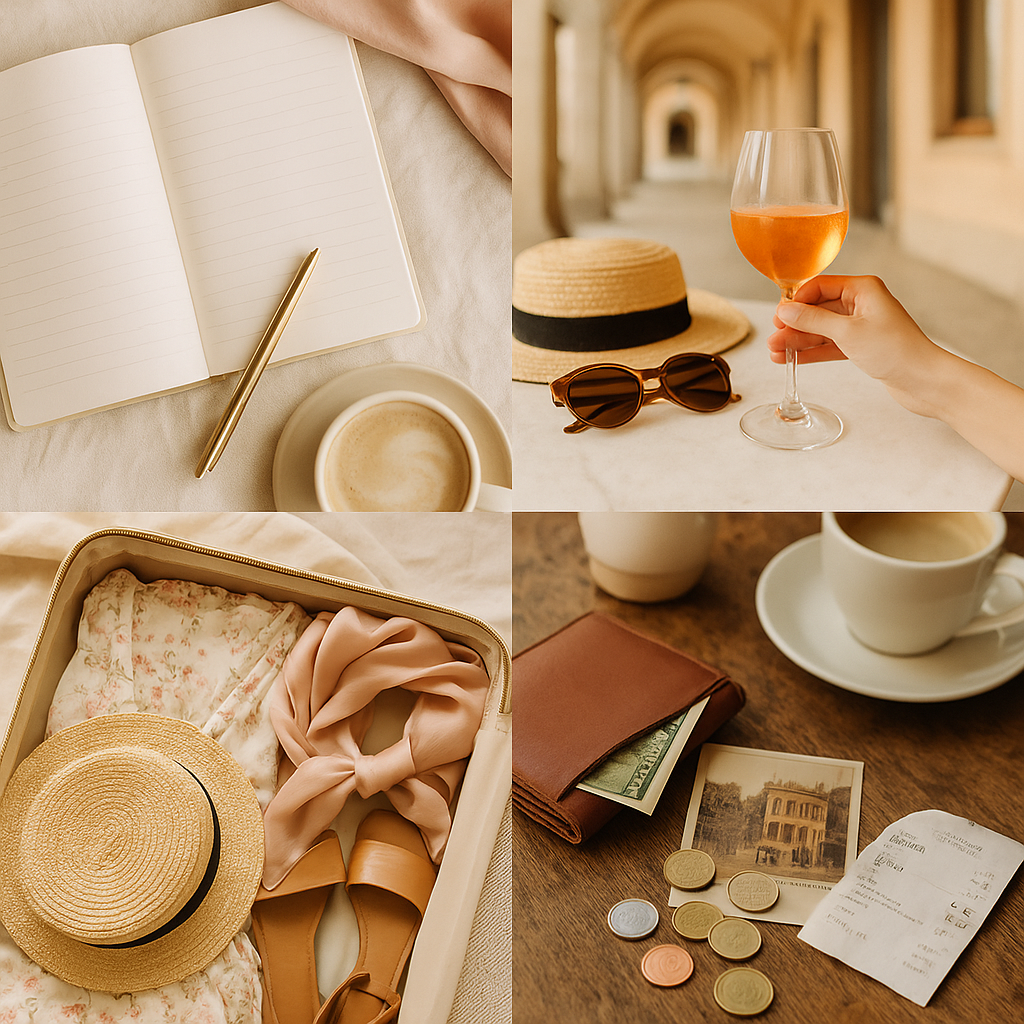
Redesign the way you travel — with a clear plan, a curated suitcase, and your priorities in focus
Once you’ve spotted the patterns, turn them into small but meaningful changes for next year. Choose one in each of these areas:
Trip Structure: will you plan fewer stops? Build in a recovery day after long travel? Choose one longer trip instead of several short ones?
Experiences: will you plan around one main highlight per trip — a special dinner, a favorite museum, a day at the beach — and leave more space for discovery instead of over-scheduling?
Packing & Preparation: will you build next year’s packing list around the pieces that made you feel most comfortable and prepared? Replace or skip the ones that didn’t work?
Budget: will you shift money toward the parts of your trips that created the best memories — and spend less on the ones you barely remember?
Write them down. These decisions become a simple guide you can return to as you plan — a way to make sure next year’s trips reflect what you value and give you more of the moments you want to remember.
Looking Ahead

Next year’s travel memory…
Picture yourself at the end of next year, looking back on trips that ran smoothly and reflected how you prefer to travel.
Taking a few minutes now to reflect clarifies what to repeat, what to adjust, and how to plan trips that fit you.
✨ Want a template to try this yourself? Download in the [Resources Library].
✨ Looking for travel or packing inspiration? Explore the [Inspiration Gallery] for seasonal color palettes, outfits, and travel mood boards to guide your packing.
✨Interested in reading more? Check out: How I Pack Layers for a 3 Day Weekend , ThreeThings I Pack for a Fall City Trip, and The ThreeThings I Pack for Thanksgiving.

How to Plan Your December for a Meaningful, Stress-Free Holiday Season
Plan December like a trip — with purpose, priority, and breathing room. This 5-step guide helps you decide how you want the month to feel, mark non-negotiables, pick meaningful activities, and protect time to rest so you can enjoy the season — not just survive it.

Plan December the way you’d plan a trip — with space for the things that make it meaningful
December can be busy and go by quickly. With school events, work deadlines, guests, and last-minute errands, your calendar is full before you know it. By the time January comes around, it can feel like you never had a break.
This post shows you how to stop reacting and start planning. Think of December like a trip — you have a set number of days, a few must-do stops, and a chance to make choices about how you spend the rest. When you plan it like you’d plan a trip, you can build a month that works for you.
Before you start, grab a piece of paper or open your calendar — the goal is to walk away with a plan you can use right away.
Step 1: Decide What You Want This Month to Feel Like
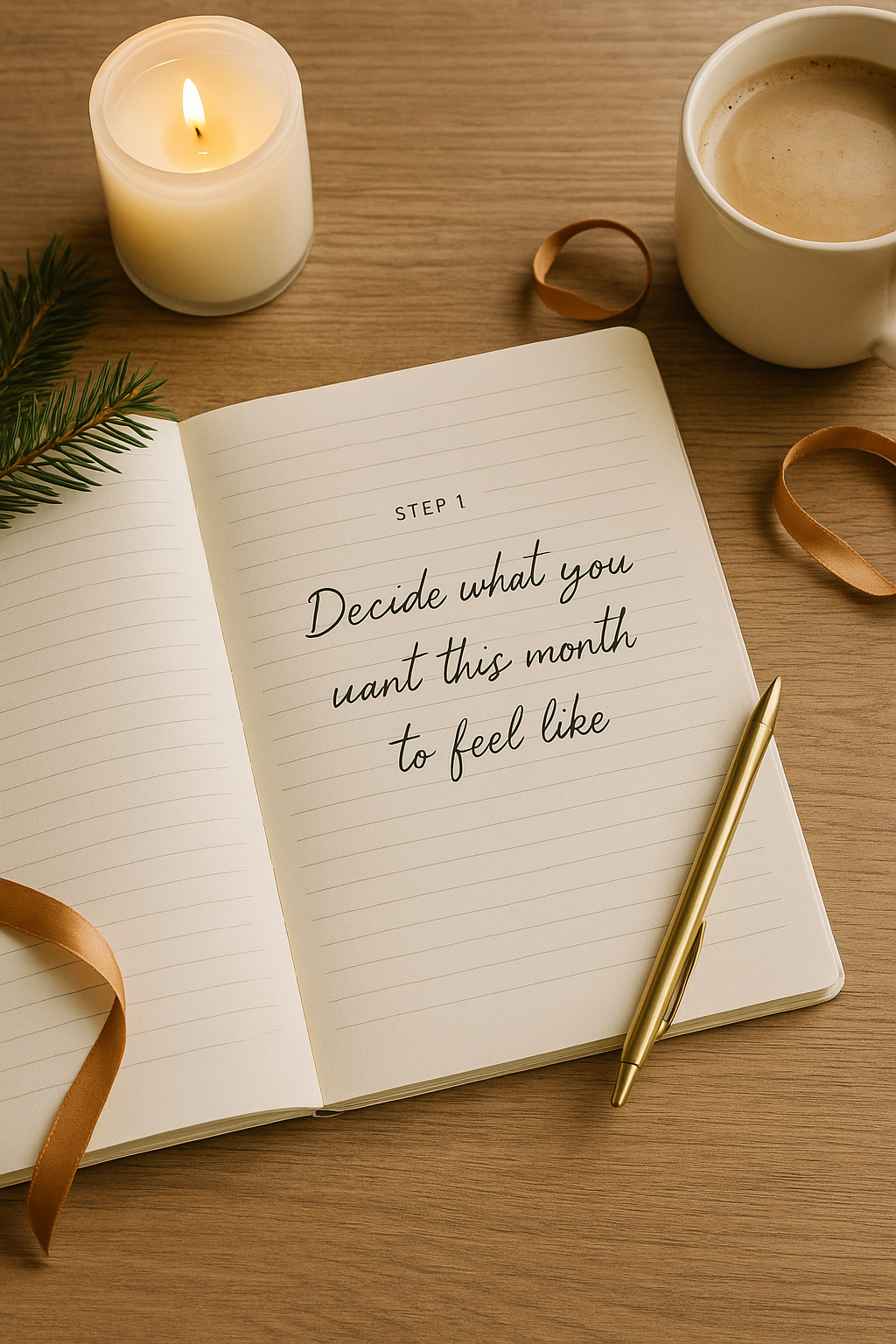
Pause before you fill the calendar and write down how you want this December to feel.
Before you open the calendar, pause and write down a few quick answers. This helps you figure out what you want out of December before you start filling every day.
Quick Check-In:
This December, I want my days to feel:
Calm and cozy
Packed with activities
Somewhere in the middle
Hosting or having guests makes me feel:
Excited to plan things for everyone
Like I need to keep it simple
Like I want space for myself
If everyone remembers one thing about this holiday, I want it to be:
Example: “I want December to be about connecting with my family — a few planned activities, time for rest, and space for unplanned fun.
This is like deciding the purpose of a trip — before you pick flights, you figure out if the goal is adventure or rest.
Step 2: Mark Your Non-Negotiables
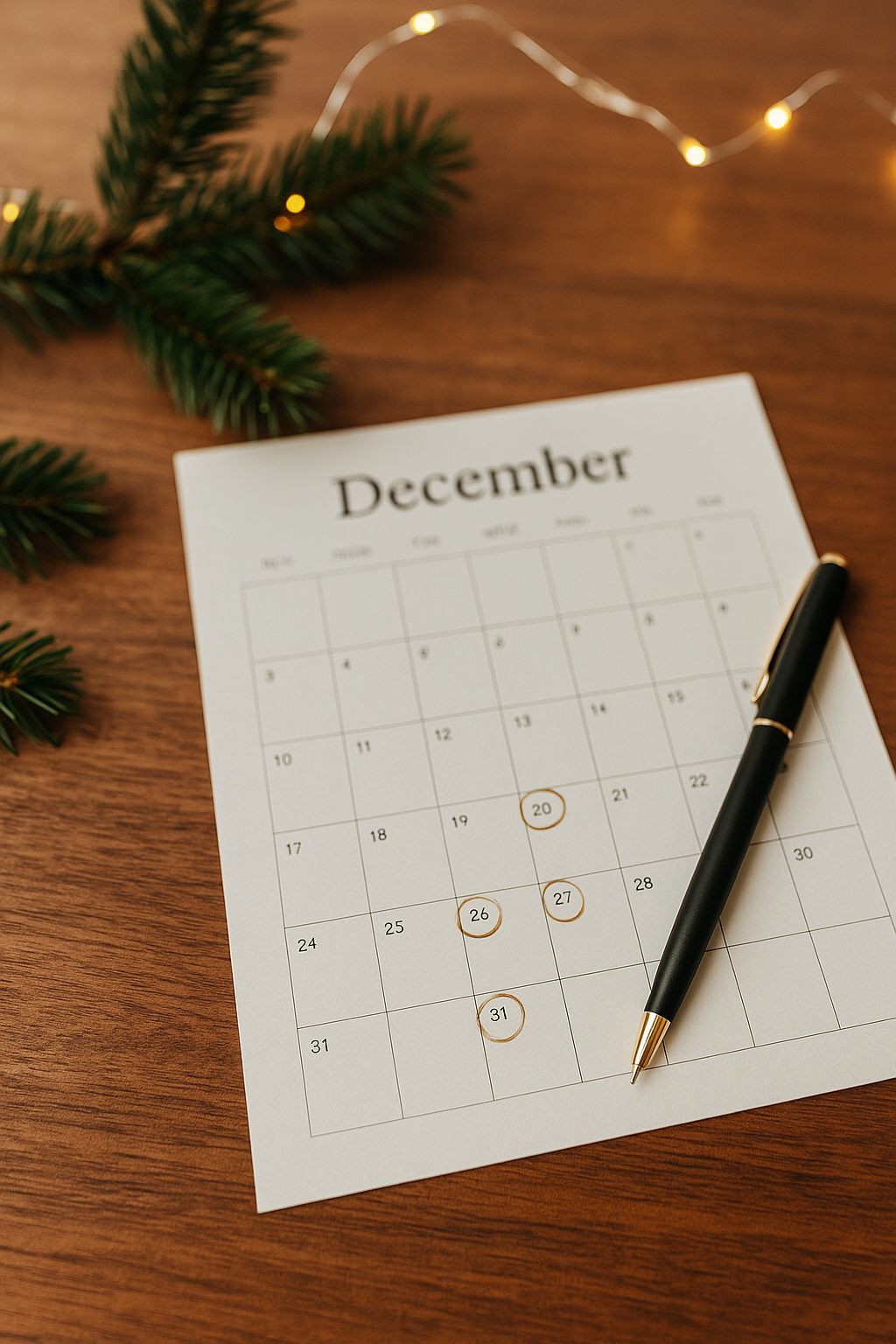
Step 2: Write down the dates you already know — guests, school events, and deadlines — so you can plan around them.
Look at your calendar and write down:
Guest arrival and departure dates
School concerts, recitals, or sports games
Work events or deadlines
These are the events you’ll plan around.
Example: Guests Dec 21–26, school concert Dec 18, office party Dec 10.
This is like putting flights and hotel bookings on your itinerary before you add anything else.
Step 3: Choose What You Actually Want to Do
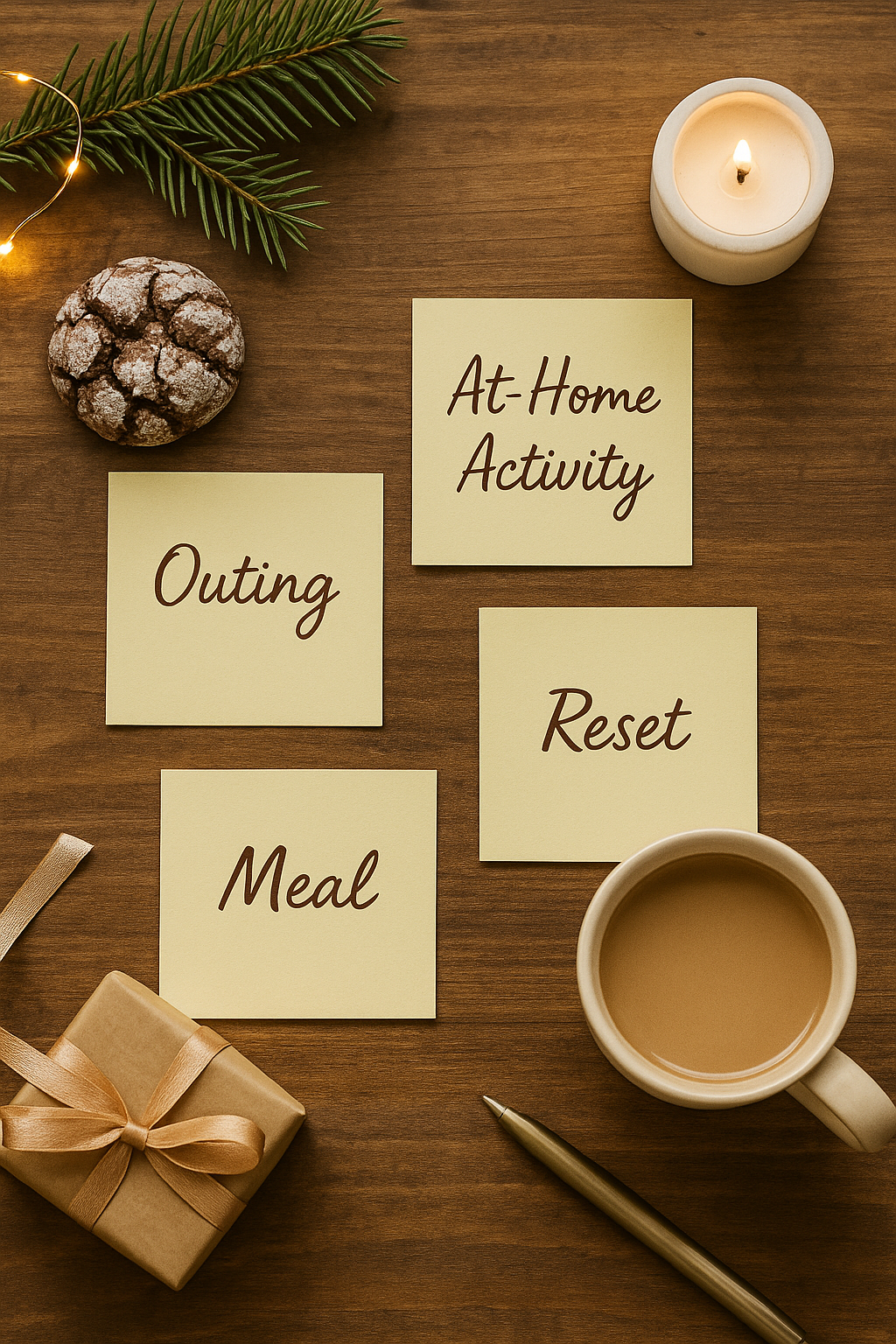
Step 3: Pick one or two things per category — outings, at-home activities, meals, and reset moments — to make your month feel special without overloading it.
Instead of trying to do everything, choose one or two things per category. The lists below are suggestions — feel free to add your own ideas that fit your family, guests, and schedule.
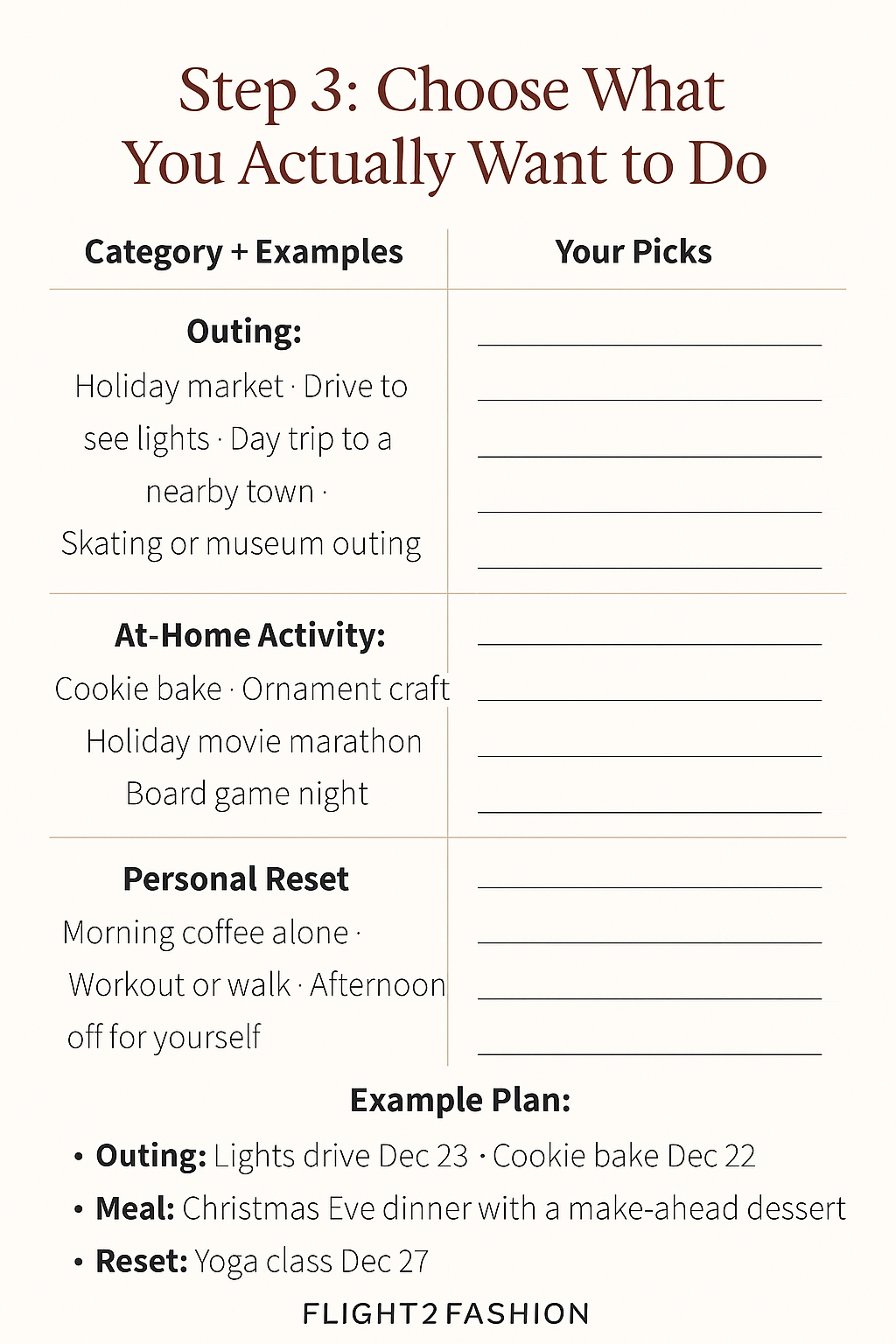
Step 3: Choose one or two things per category — outings, at-home activities, meals, and reset moments — and keep it simple so you can enjoy them.
Step 4: Put It on the Calendar
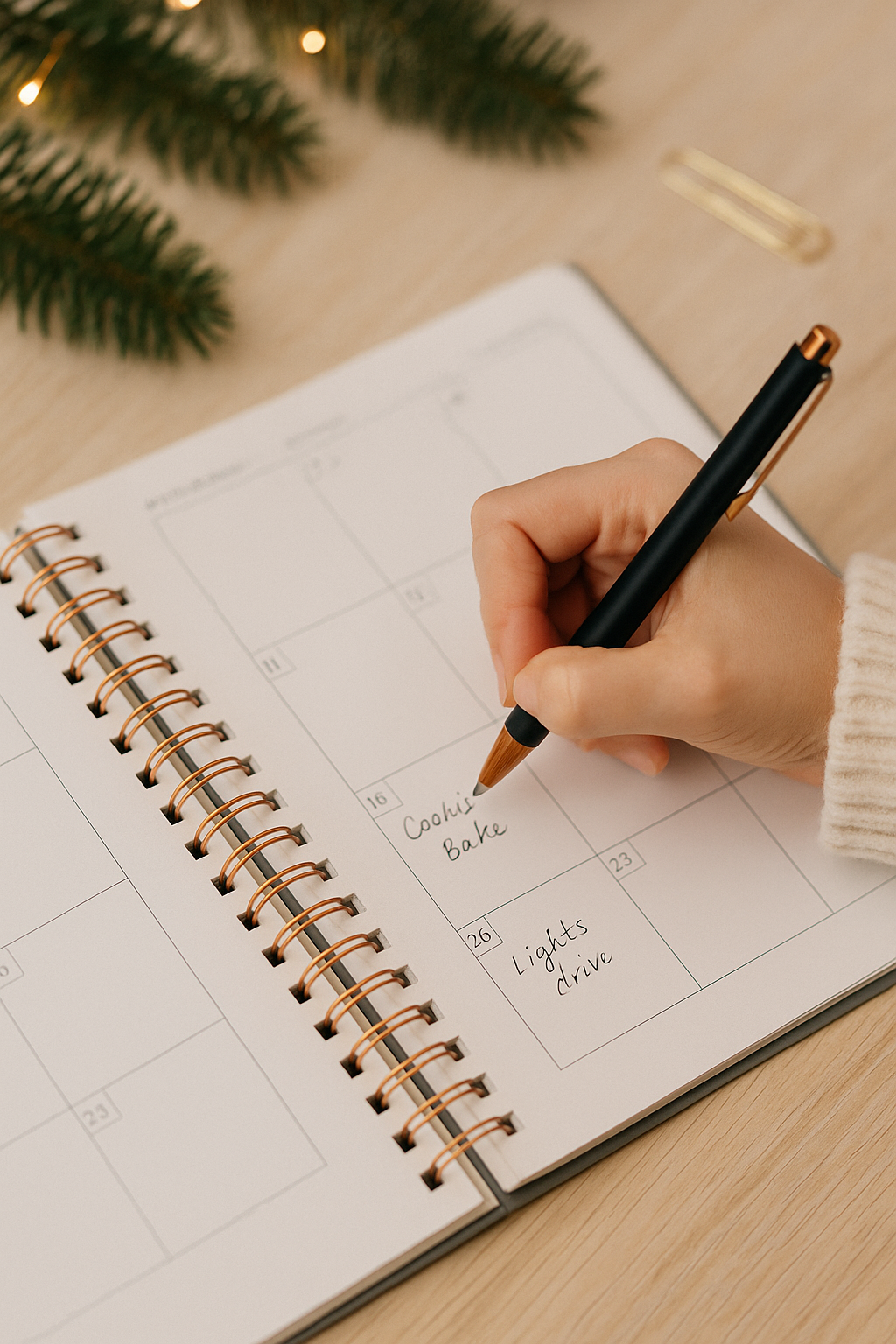
Step 4: Add your chosen activities to your calendar — and block time for prep — so they actually happen.
Take five minutes and add what you picked to your calendar. Block time for prep if you need it.
Example: Block Dec 22 from 3–5 PM for cookie bake. Block Dec 23 evening for lights drive.
This is like adding excursions to a travel itinerary — it locks them in and keeps other commitments from pushing them aside.
Step 5: Look Back Before the Month Ends
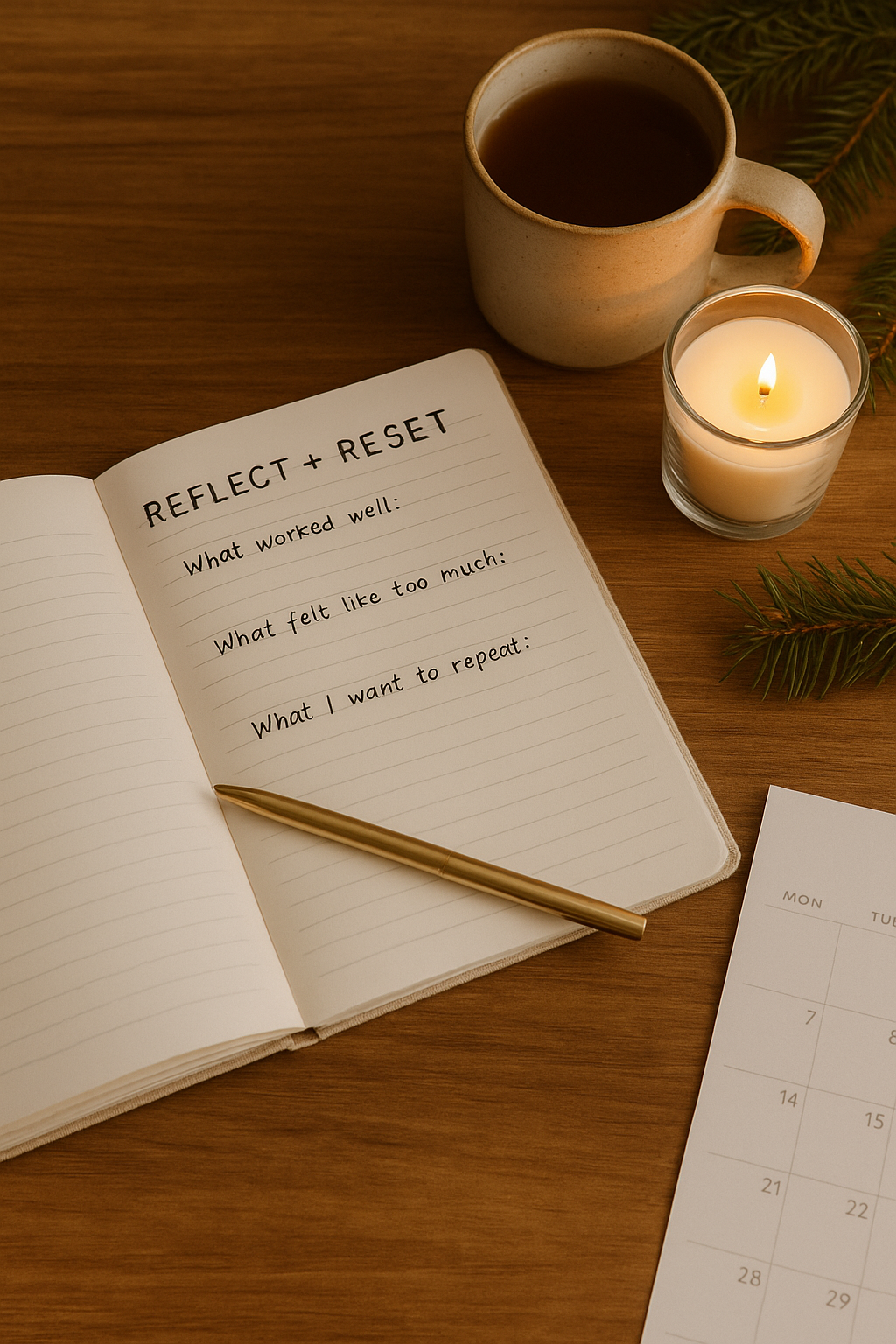
Take five minutes to look back on what worked and what didn’t this December — and plan next year’s holidays with less stress and more meaning.
When December is over, take a minute to jot down:
What worked this year?
What felt like too much?
What memory do I want to repeat next year?
This will make planning next December faster and easier.
Why This Matters

Pause and enjoy the small, meaningful moments this season — that’s what all the planning is for.
When you finish these steps, you have a plan that matches your priorities.. You’ve left space for what matters, protected time to relax, and added at least one thing just for you.
This is what Trip Planning Your Way looks like. You’ve treated December like a destination and made choices that fit how you want to experience it.
Download the Worksheet
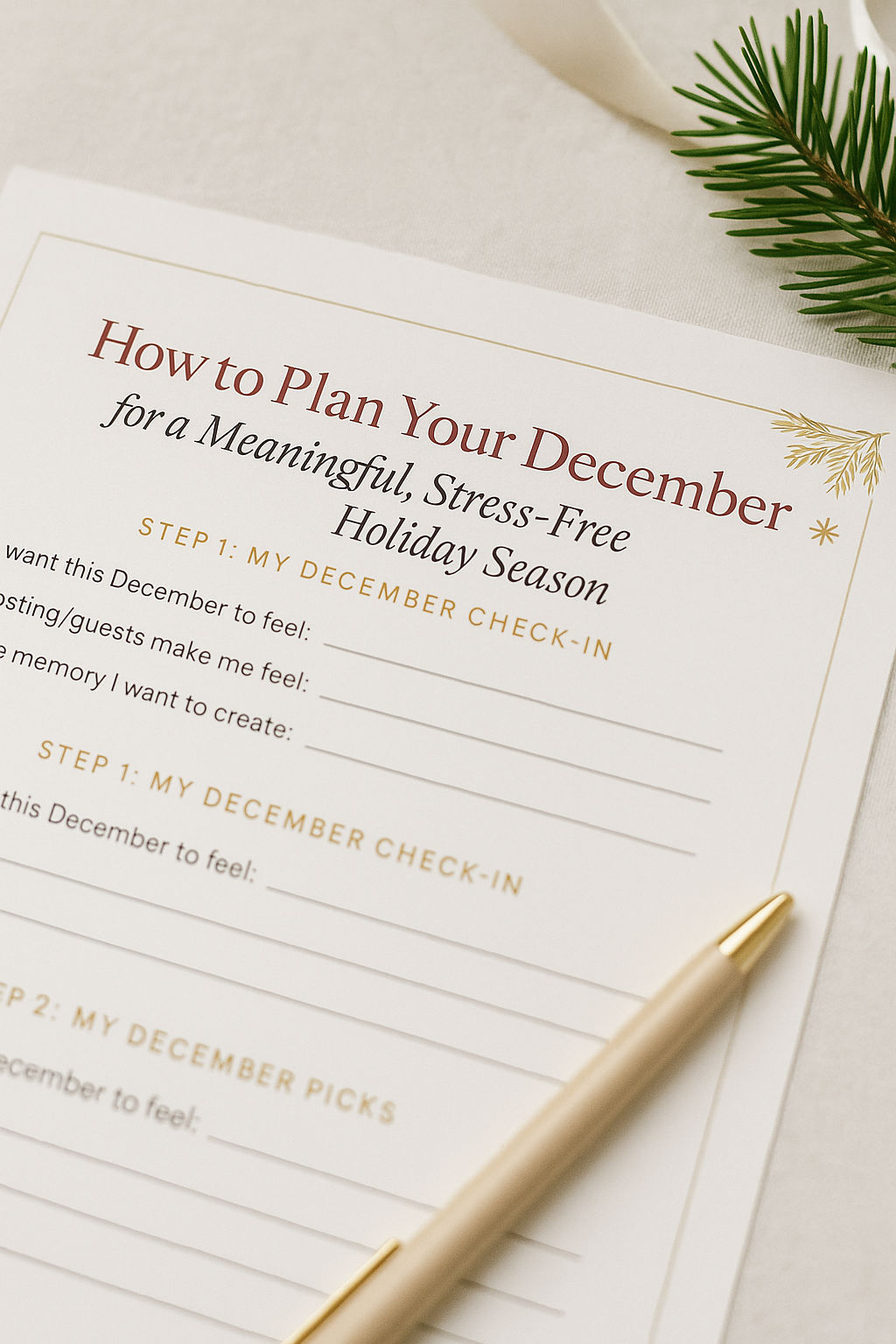
Download the free printable worksheet to walk through these steps and plan your December.
To make this even easier, I created a one-page worksheet you can print and fill out. It walks you through these five steps, with space to write your answers, pick your activities, and add them to your calendar.
[Download Your December Planning Worksheet]
Pin it, save it, or print it — and use it again next year.
Want more info about travel planning your way? Check out How to Plan a Trip that Matches Your Travel Style. Interesting in smart packing or styling tips click here for packing and here for style.

How to Plan a Trip That Matches Your Travel Style
Learn how to plan a trip with ease using a simple system that blends must-sees with downtime, so your travel feels intentional and enjoyable.

Good planning starts here — with the people, the priorities, and the purpose of the trip.
Many trip-planning guides start with destinations and checklists; however, I’ve learned — through both my years of teaching and my travels — that the best plans start with people. Just as a great lesson begins by considering the needs and learning styles of students, a meaningful trip begins with understanding who’s traveling, the experiences that matter most, and the outcome you want from the journey.
Thoughtful planning doesn’t mean scheduling every hour; it means balancing must-sees with downtime, aligning experiences to personalities, and leaving room for spontaneity. Done well, it creates a trip that feels personal, memorable, and authentic — one that reflects your style of travel.
1. Begin With the Outcome in Mind
In teaching, I ask: What do I want students to take away from this lesson? In travel, I ask: What do I want to take away from this trip?
Do I want to come home feeling rested and recharged?
Do I want to experience another culture through its history, food, and way of life?
Is this trip about spending time together and creating memories that last?
Being clear about your goals helps filter destinations and activities. A tropical island, a European city, or a weekend getaway may all be appealing — but the best fit depends on the outcome you’re seeking.

Start with the goal: Do you want to relax, explore, or connect — or a mix of all three?
2. Balance Needs and Styles
Every group is different. Some travelers like full days of activities, while others want downtime built in. For example, one person might be excited about museums while another wants a day at the beach.
The key is to plan with personalities in mind. That might mean alternating between high-energy and slower-paced days, or making sure everyone has at least one activity that feels “for them.” Just like in the classroom, thoughtful planning respects individual needs while creating a shared experience.

3. Identify Must-Sees vs. Optional Activities
I always create a short list of must -sees — the experiences I’d be disappointed to miss. That might be a Broadway show, a castle tour, or a special dinner reservation.
Everything else? Optional. The best memories are often the unplanned ones— a small market, a quiet street, or a corner of the city you never expected to find.

A short “must-see” list keeps your trip focused while leaving space for what you discover along the way.
4. Think Through the Logistics
Seamless transitions make both lessons and trips run better. Consider:
Mapping activities so you’re not backtracking across a city.
Choosing accommodations that support your pace (walkable if you love exploring, resort-style if you want rest).
Scheduling downtime so the trip feels relaxing, not rushed.
The one part you can’t control? Air travel. Delays happen. But you can prepare:
Track checked luggage with AirTags.
Pack a change of clothes and essentials in your carry-on.
Keep chargers and snacks handy.
Preparation reduces stress when the unexpected happens.

Plan just enough to guide you, not so much that you lose the fun of exploring.
5. Leave Room for Rest and Discovery
Just as students need processing time to absorb new learning, travelers need downtime to absorb new places. A memorable trip isn’t about how much you do, but about the depth of the experiences. Often, one or two meaningful experiences in a day can be the most rewarding.
By leaving 30% of your schedule unplanned, you give yourself space to discover — and to breathe.

Some of the best memories aren’t on the itinerary.
Make Your Trip Your Own
The most memorable journeys aren’t copied from someone else’s itinerary. They’re built thoughtfully, with the travelers in mind, shaped by outcomes, anchored in must-sees, balanced with flexibility, and enriched with downtime.
When you plan a trip that matches your travel style, you don’t just come home with photos — you come home with stories, memories, and pieces of a place that stay with you.
That’s what makes travel meaningful. And that’s why thoughtful planning matters.
✨ Flight 2 Fashion takeaway: The best trips are designed with the travelers in mind — balancing purpose, priorities, and pace to create memories that last.
✨ Want to plan your next trip with ease? Download the Trip Planning Step-by-Step Template in the Trip Planning section of the [Resources Library] to map your goals, must-sees, and downtime before you go. For more trip planning posts, click here.
✨ Looking for ideas to spark your planning? Visit the [Fall 2025 Inspiration Gallery] for seasonal destinations, mood boards, and style direction to pair with your trip.
Planning and packing are closely connected.
These Smart Packing guides show how to turn a clear travel plan into a lighter, more intentional suitcase.