

Flight 2 Fashion Guides

Welcome to Flight 2 Fashion Guides — a collection of in-depth articles on smart packing, sustainable style, and thoughtful trip planning.
Each guide combines a teacher’s clarity with fashion insight — helping you carry less, rewear more, and plan wardrobe and travel choices that reflect your own story.
New to Flight 2 Fashion?
Start with the Welcome Guide →
Explore by Topic
Find what inspires you most:
Travel Plan Your Way — destination planning and meaningful trip ideas
Style With Meaning — sustainable fashion and rewearable style
Smart Packing — packing lists, capsules, and outfit formulas
↓ You can also scroll down to explore the most recents post across all categories.
How to Shop Secondhand Online: What to Look For, What to Skip, and How to Make Each Platform Work for You
A practical guide to secondhand shopping: how to find well-made pieces, what to avoid, and how to use platforms like Poshmark and The RealReal with confidence.
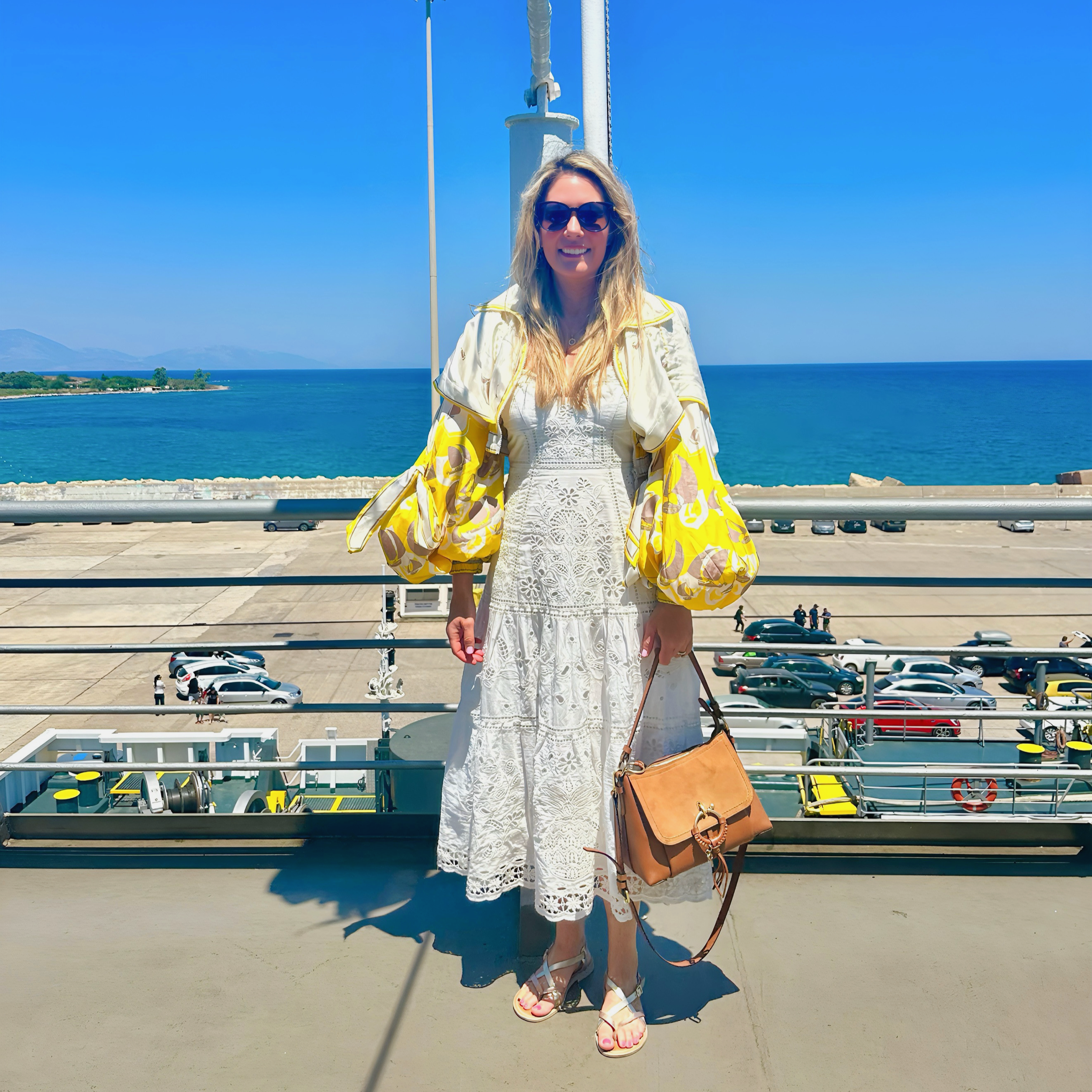
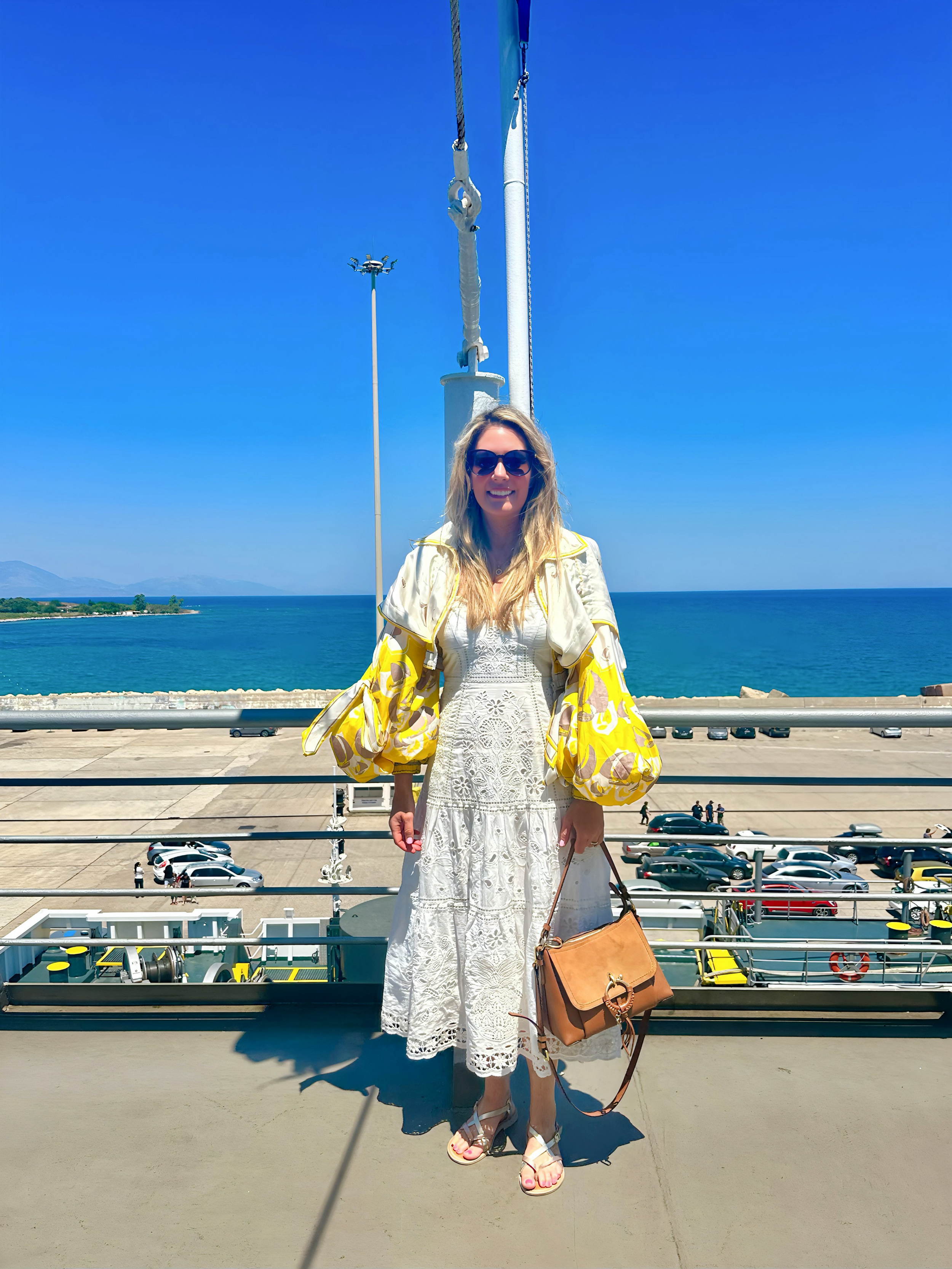
One of my favorite secondhand finds—a Zimmermann jacket that has become a staple in my travel wardrobe.
For years, I’ve found some of my best, most-worn pieces through secondhand shopping. In the mid-to-late 2000s, eBay was my go-to place for the brands I loved—Rebecca Taylor, Nanette Lepore, and Marc by Marc Jacobs. These labels were known for their beautiful fabrics, thoughtful design, and silhouettes that held up year after year. At the time, they were pieces I admired but couldn’t always buy at full price, and shopping secondhand made it possible for me to bring them into my wardrobe. Those early finds showed me that well-made clothing truly holds up, and that understanding still shapes how I shop today.
Over time, Poshmark became the platform I use most often, and it has brought some of my best finds. I’ve found new-with-tags items, replaced favorite pieces I had worn out, and sold the ones that no longer worked. A few of my favorite wardrobe additions came from Poshmark, including a vintage Saks Fifth Avenue wool cape I wore to a winter formal and a Zimmermann jacket—new with tags—from someone’s personal closet that remains one of my favorite pieces.
More recently, I’ve turned to The RealReal for higher-end pieces where authenticity matters. Two of my favorite Zimmermann finds arrived new with tags, and I added a Burberry scarf in excellent condition. Additionally, I browse local consignment stores for accessories and wardrobe staples, and I’ve used ThredUp—their clean-out bag process makes it easy to send in items you no longer want.

A reminder that the pieces you love most are often the ones that work in real life.
The resale world has changed a lot since my early eBay days, but one thing has remained the same: secondhand shopping works best when you know what you’re looking for. That clarity makes the process easier and helps you bring in pieces you’ll actually wear. Over the years, a few habits have helped me navigate the platforms confidently, and they continue to guide the way I shop today.
Start With a Short List
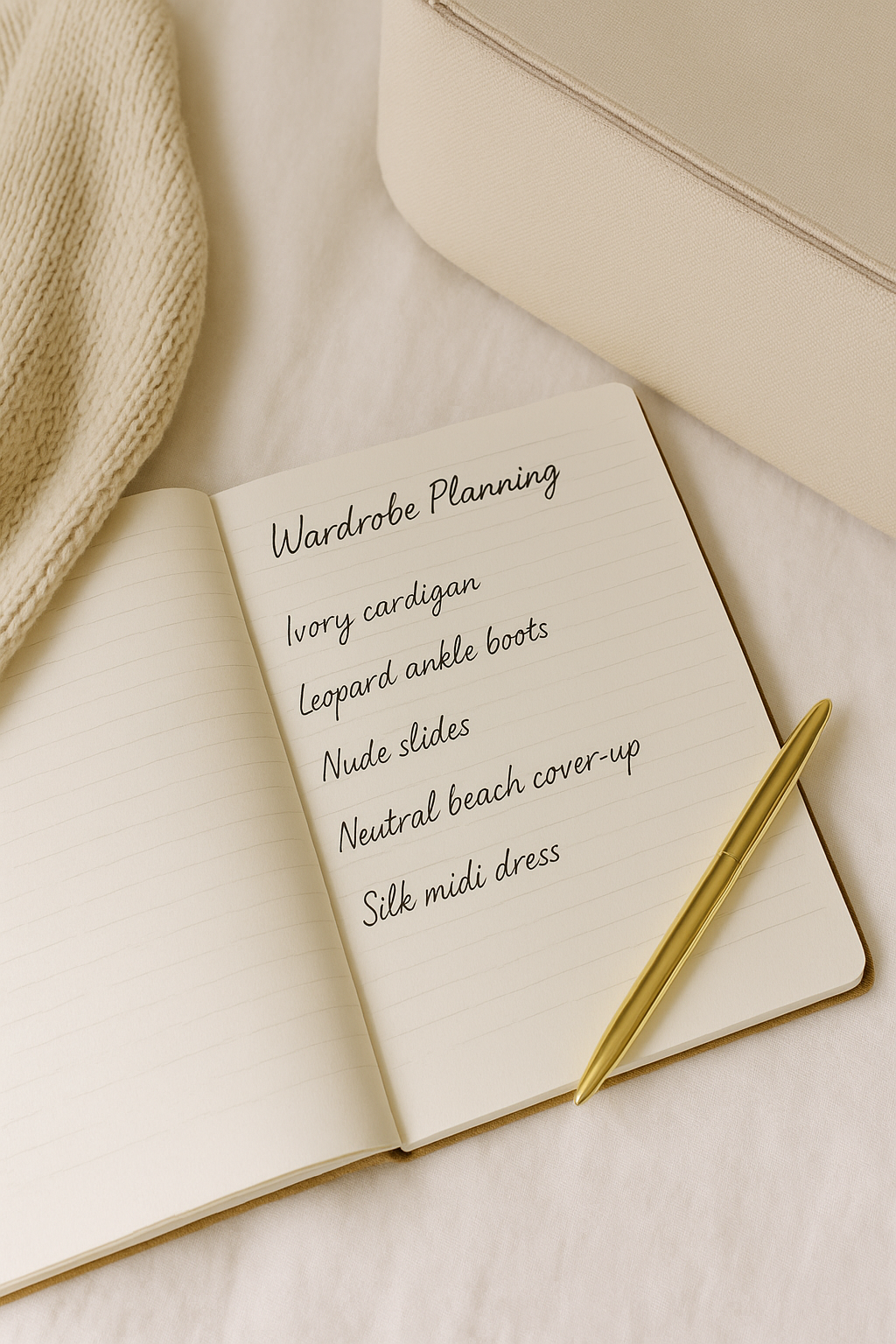
Thoughtful planning always comes before the search.
Before I open any platform, I jot down five to seven items I would genuinely wear. This might be a linen day dress, a cotton knit layer, sandals in a tone I already know works, or a replacement for something I reach for constantly.
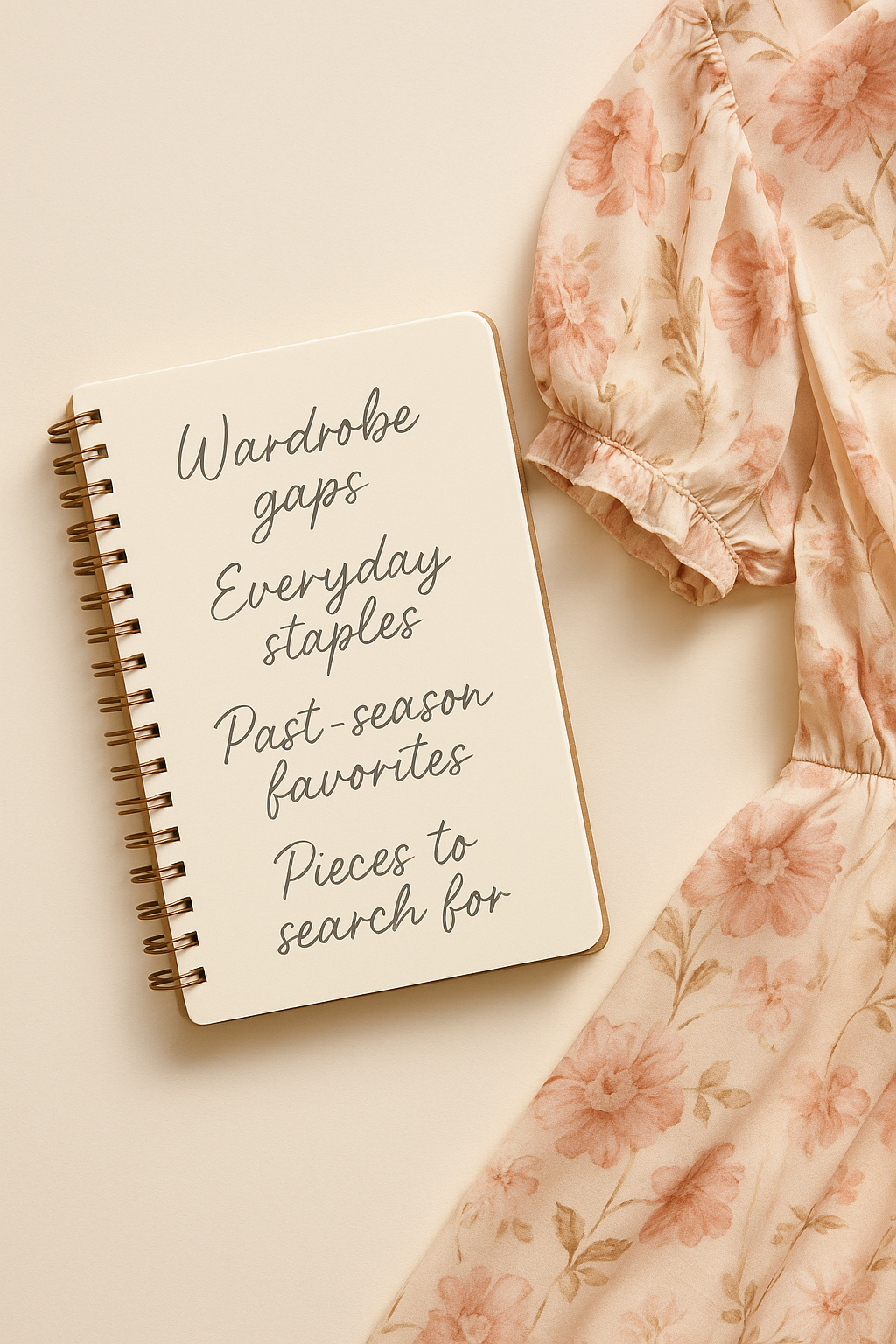
I always begin by looking in my closet first. Understanding what I already own makes it easier to see the gaps—pieces that would support my lifestyle, items I know I would reach for often, or something I admired a season or two ago but didn’t purchase at full price. Many of those pieces eventually appear on Poshmark or The RealReal at a better price, and having them on my list keeps the search focused.
A short list helps guide the process and prevents the kind of browsing that leads to impulse purchases.
What I Look For When Shopping Secondhand
Accurate Measurements
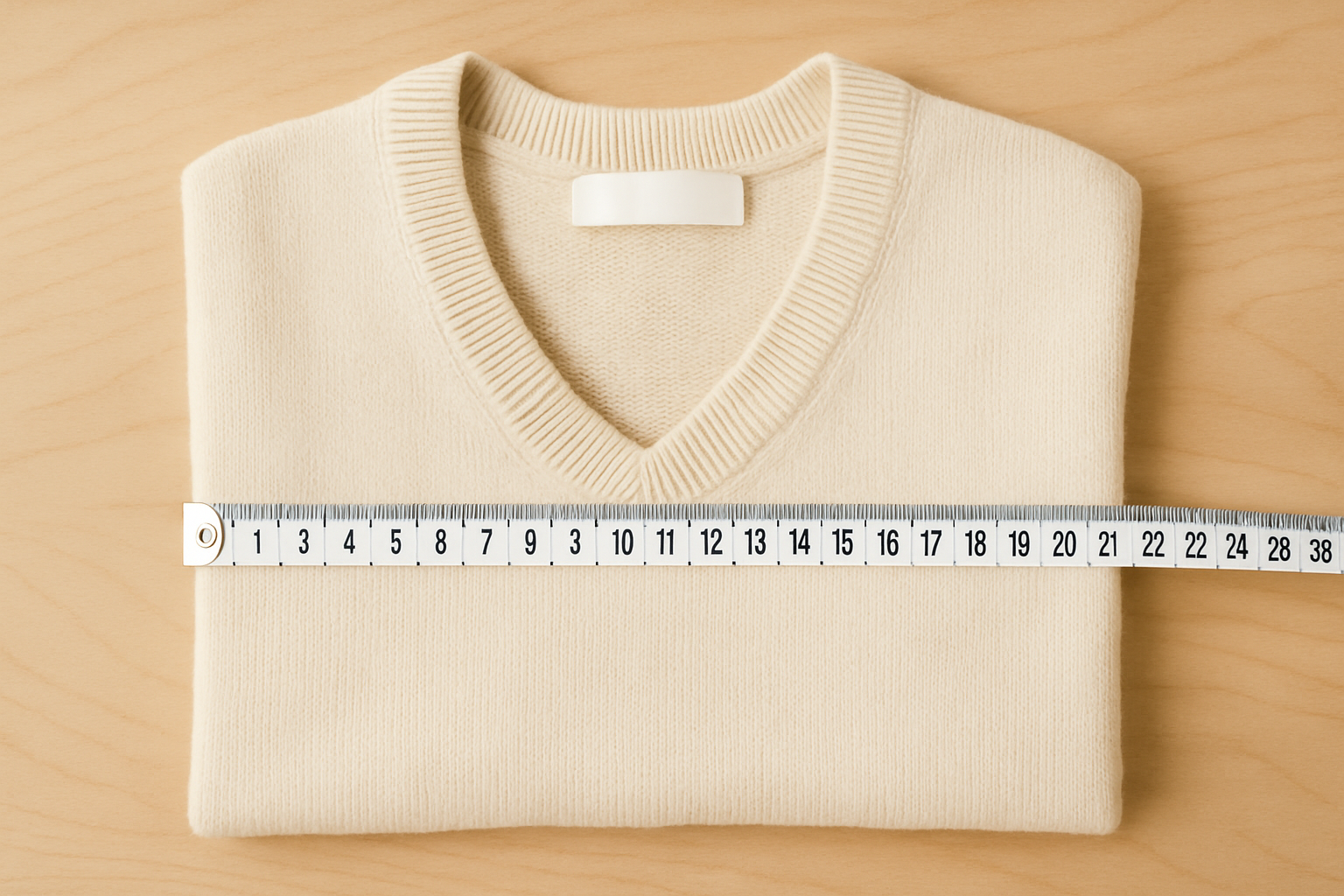
Checking actual measurements—like width and length—helps ensure a perfect fit when buying secondhand.
Sizing varies widely across brands, so measurements—bust, waist, hip, length, inseam, rise—tell you far more than the number on a tag. I compare them to a similar piece I already own, and I often ask sellers specific fit questions, such as whether the item runs true to size. It’s especially helpful when the piece is from a brand I’ve worn before or something I tried on in store previously.
Fabric Content
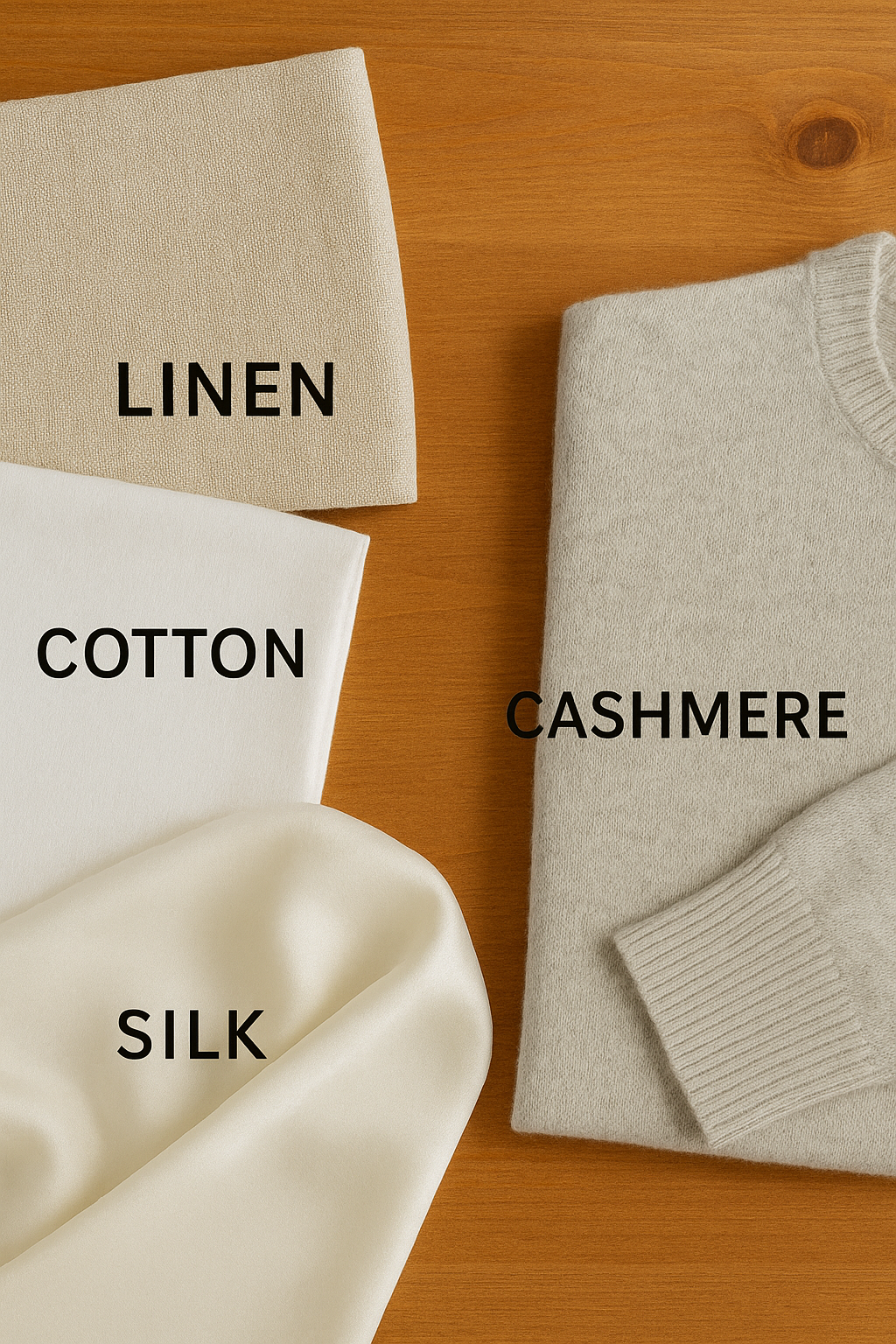
I look for natural fibers first—they breathe better, feel better, and hold up over time.
Fabric tells you a lot about how well a piece will wear over time. I prefer natural fibers like linen, cotton, silk, wool, and cashmere. They tend to hold up better and are much more breathable.
Condition Rating
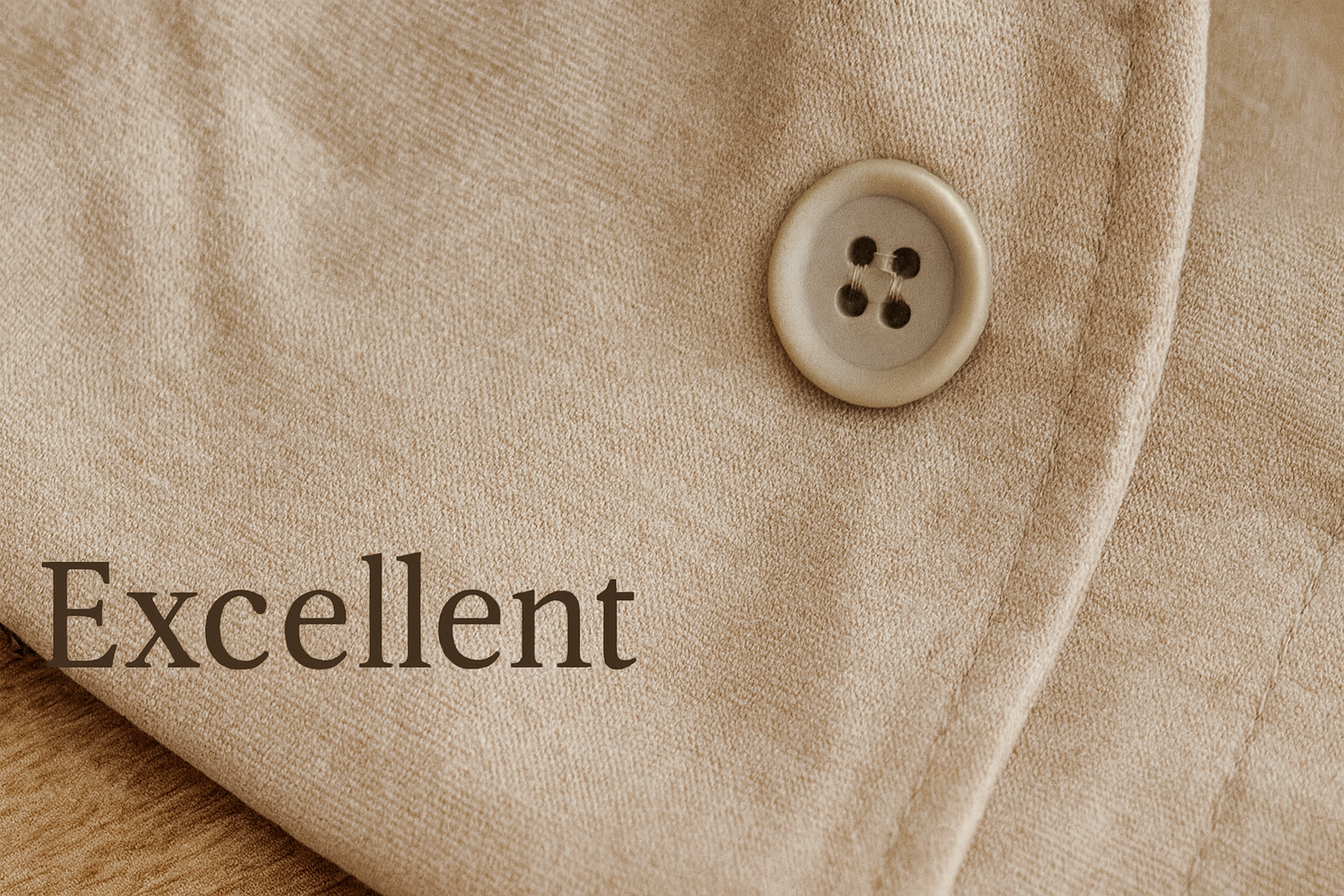
Small details tell the full story of condition.
My go-to categories are:
New With Tags
New Without Tags
Excellent
Very Good
“Good” often means visible wear, and the pricing rarely makes sense unless the piece is inexpensive and made from a durable material. When a listing includes a flaw, I look closely at how noticeable it is and whether it’s something I could fix myself or ask a tailor to repair easily. Small issues—like a loose button, a minor seam repair, or a faint mark—can bring the price down significantly, and if they’re easy to address or unlikely to show, the piece may still be worth considering.
Clear Photos
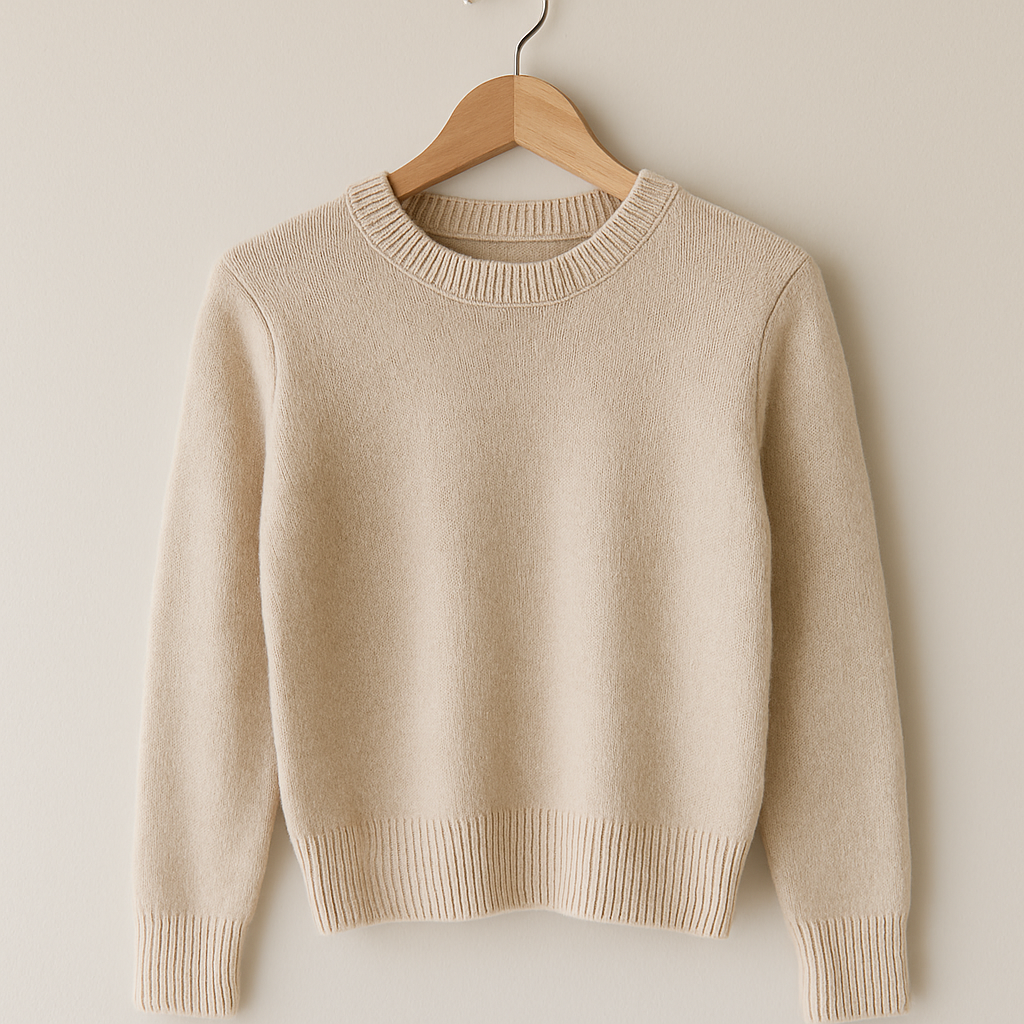
Listings with clear front and back views—and close-ups in good light—are always the most reliable.
I look for clear, well-lit photos that make it easy to see the item’s condition and authenticity. Good listings usually include:
Overall front and back views
Close-ups of fabric texture
Care tags and fabric content
Brand labels for authenticity
Buttons, zippers, and hardware
Any areas that might show wear
I avoid listings with blurry images or lighting that makes it hard to tell what you’re buying. Sellers should show (and clearly describe) any flaws such as pilling, small stains, loose threads, or snags. If anything is unclear, I always ask questions or request additional photos before purchasing.
The Criteria I Rely On
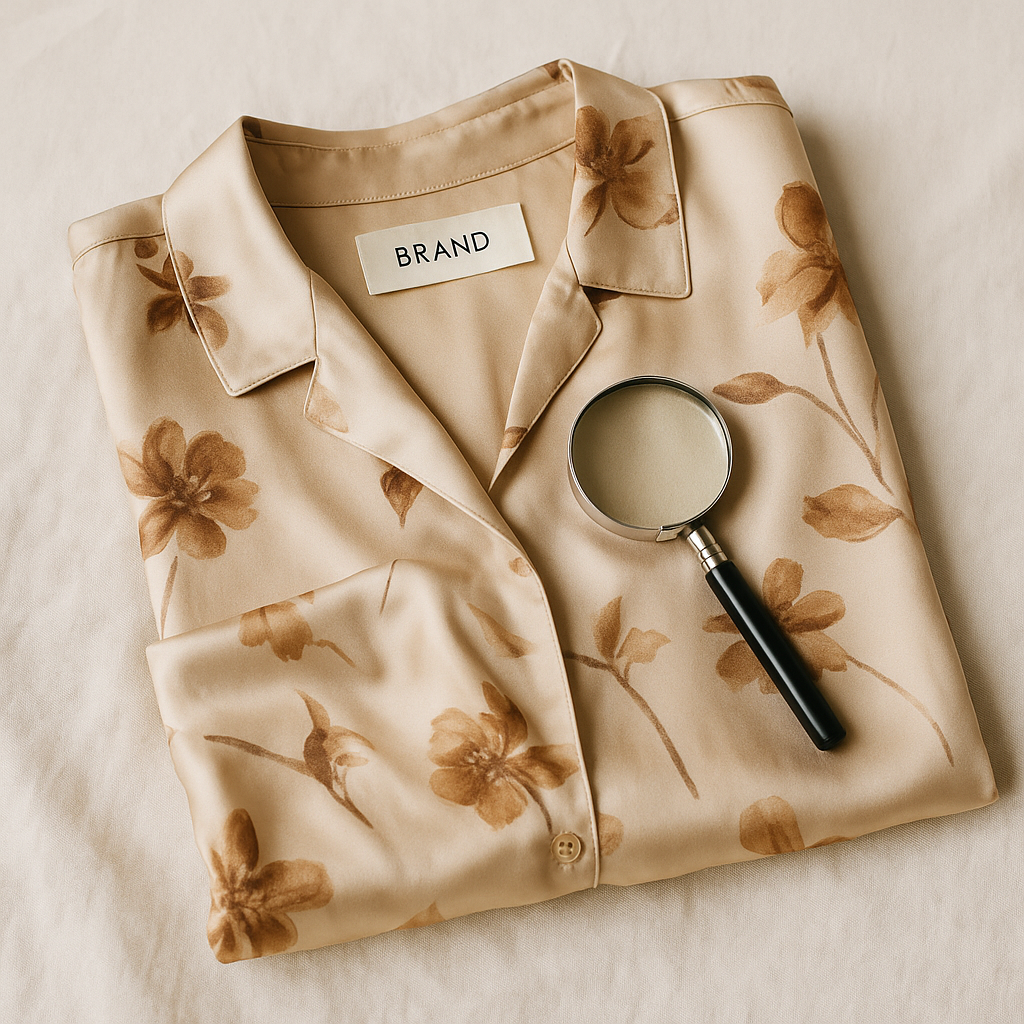
A closer look at the details helps me decide whether a piece truly meets my criteria.
These habits have helped me avoid most disappointing purchases:
I look for brands and silhouettes that already fit me well (and pieces I’ve tried on before are even better).
I ask the seller where designer items were originally purchased.
I check stitching, lining, tags, and fabric texture.
I prefer natural fibers whenever possible.
I compare details to the brand’s website when authenticity matters—and if anything seems questionable, I pass.
I skip listings when communication is slow or vague.
How I Use Each Platform
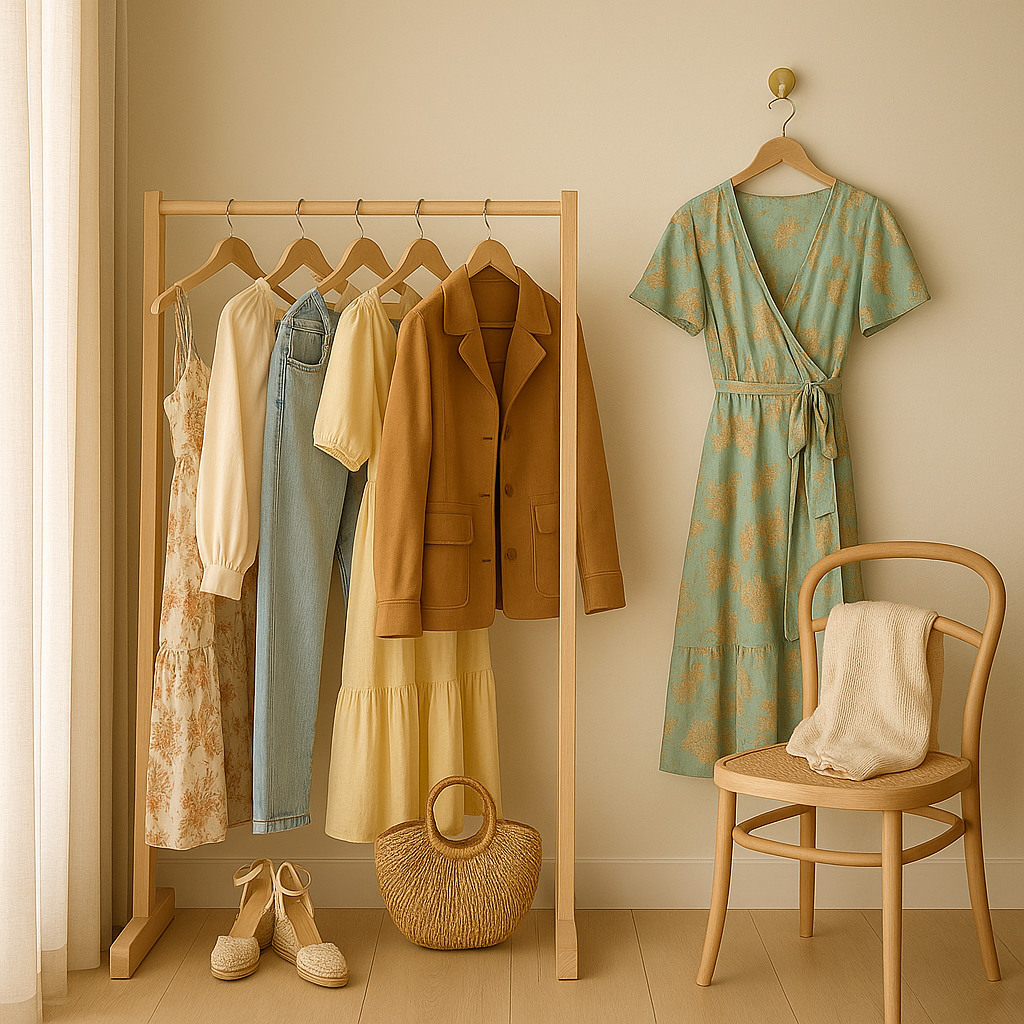
A glimpse at the kinds of pieces I often source secondhand, depending on which platform works best for the search.
The RealReal
What I search for: investment pieces and anything where authenticity matters
Strengths: consistent condition grading, clear fabric details, and helpful photos
Note: many items are final sale unless you pay a significant return fee, so knowing your size in each brand is important.
Poshmark
What I search for: mid-range brands, sandals, sundresses, coverups, lightweight knits, and pieces still in current collections
Strengths: large selection, many new-with-tags items, and easy communication with sellers
Note: fakes do exist—actual photos of the item (not just stock images) are important, and in my experience, personal closets tend to be more reliable than mass sellers.
eBay
What I search for: older seasons, rare pieces, discontinued styles, and occasionally non-clothing items
Strengths: a huge range of inventory across many categories
Note: quality varies widely, so clear photos and accurate measurements matter. As with any resale site, be mindful of fakes—always look for actual photos of the item, photos of the tags, and ask questions if anything is unclear. When in doubt, trust your instincts and move on.
Vestiaire Collective
I follow listings on this platform and see strong options for handbags, rare pieces, and anything where authentication is essential. I haven’t purchased yet, but I continue exploring and learning more about how the platform works.
ThredUp
A good source for basics and approachable price points. Their clean-out bag process is one of the easiest: they send you a large bag, you fill it with items you’d like them to sell (or that you’re comfortable having donated), and then return it using the prepaid label. ThredUp will list what they can sell and donate anything they can’t, which makes it a convenient way to pass along pieces you no longer need.
What I Avoid
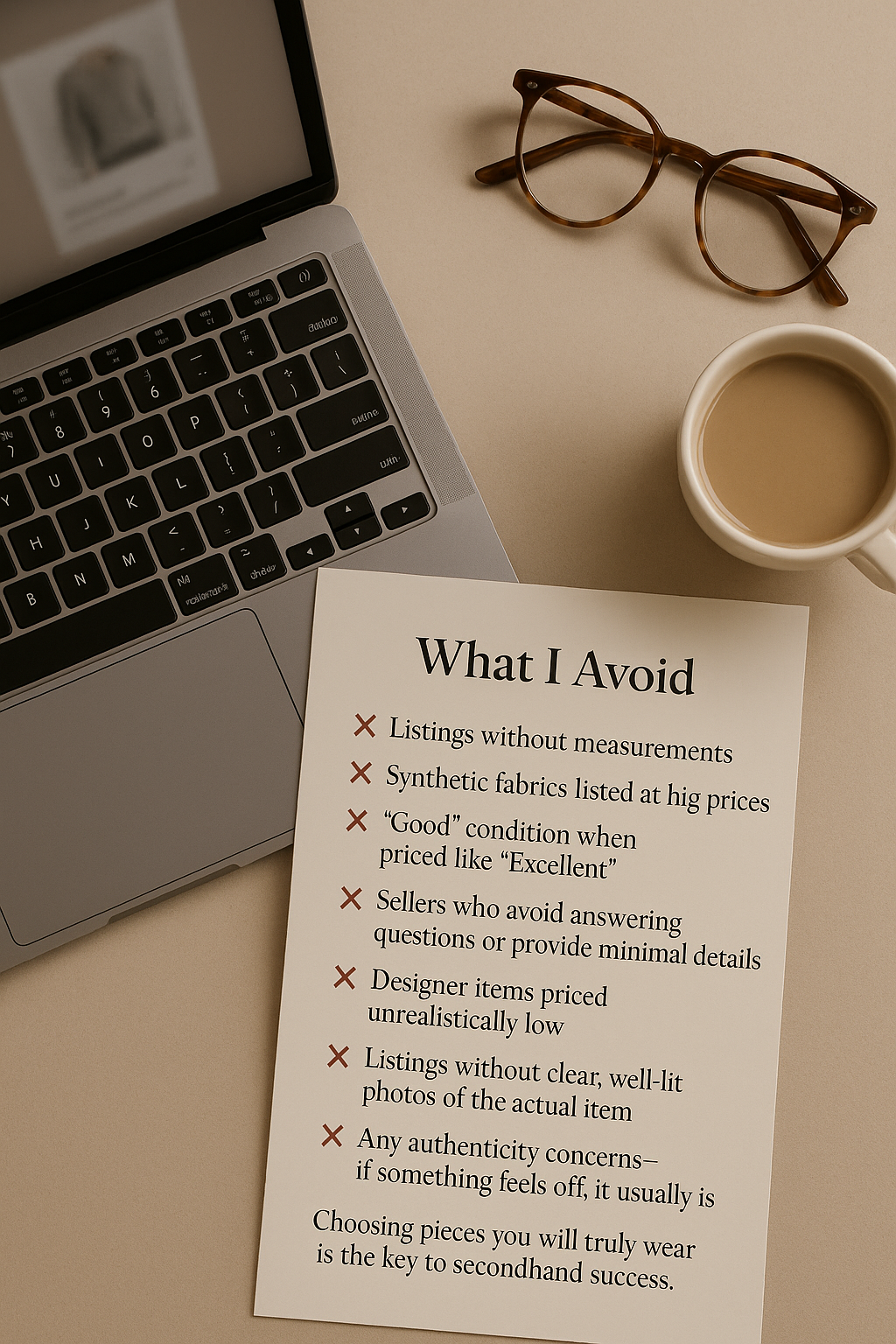
A quick guide to what I always avoid when shopping secondhand — from unclear photos and missing measurements to unrealistic pricing and authenticity red flags. Smart filters lead to better finds and a wardrobe you truly love.
Listings without measurements
Synthetic fabrics listed at high prices
“Good” condition when priced like “Excellent”
Sellers who avoid answering questions or provide minimal details
Designer items priced unrealistically low
Listings without clear, well-lit photos of the actual item
Any authenticity concerns—if something feels off, it usually is
Silhouettes I already know don’t work for me
Pieces that sound appealing but don’t fit my actual lifestyle
Choosing pieces you will truly wear is the key to secondhand success.
Use Saved Searches and Alerts
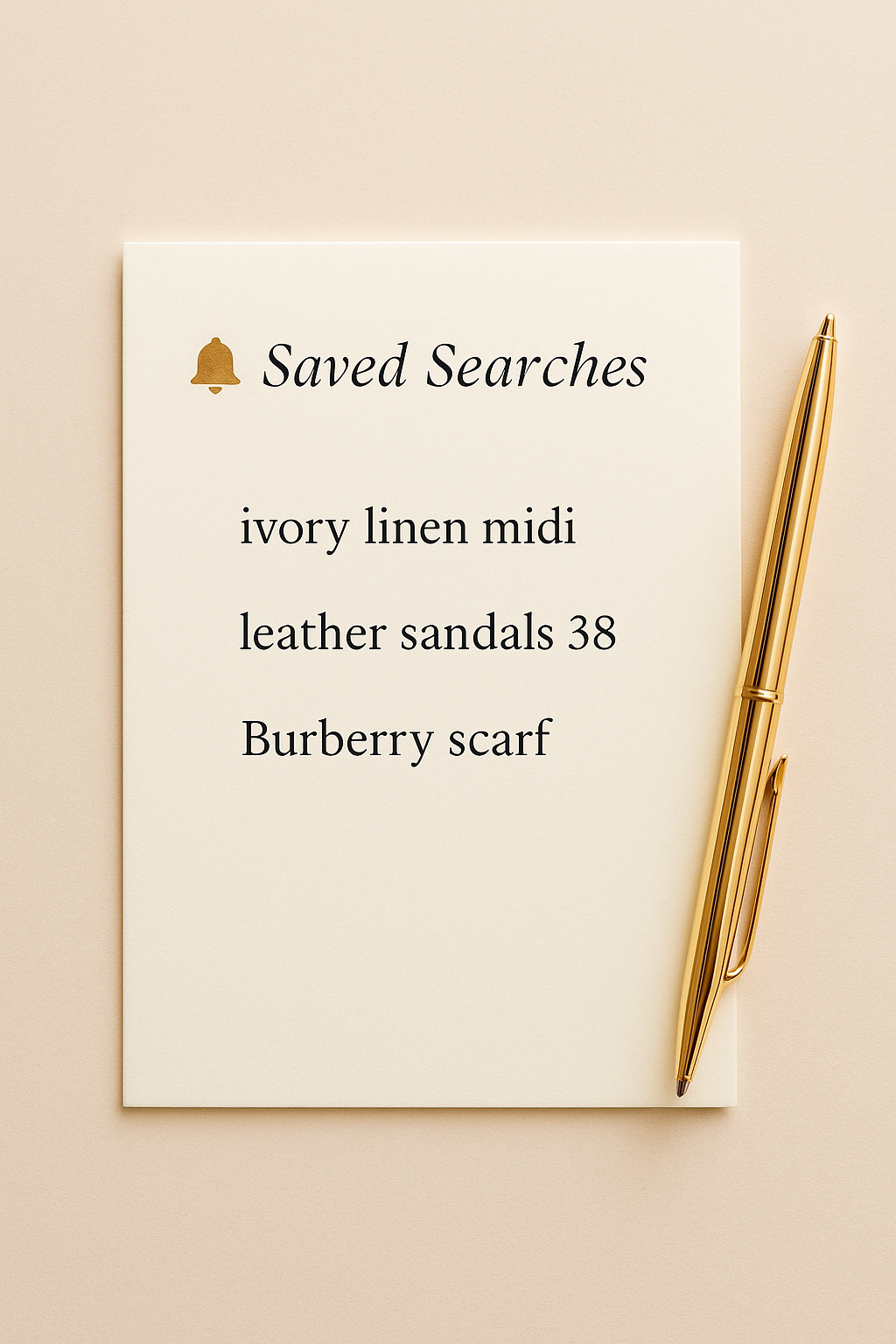
Saved searches help me track the pieces I truly want—so new listings appear the moment they’re available.
Saved searches simplify the process and help you find the pieces you’re actually looking for. I set alerts for items on my list after taking inventory of my closet—pieces that would fill a gap, work for my lifestyle, or are things I admired in past seasons. For example:
“ivory linen midi”
“leather sandals 38”
“Burberry scarf”
When new listings appear, they show up automatically, which keeps the search manageable and aligned with what I want to add to my wardrobe.
Flight 2 Fashion Takeaway

A snapshot from one of my favorite travel days—proof that pieces you truly love will go everywhere with you.
Secondhand shopping isn’t about adding more; it’s about finding well-made pieces that fit your style, your climate, and your daily life—at a fair price. It’s also a more sustainable way to shop, allowing you to bring thoughtful pieces into your wardrobe without contributing to mass consumption. Some of my most-worn items came from secondhand platforms, and they’ve lasted because they were well-made to begin with.
A simple approach and a few dependable habits make secondhand shopping both practical and enjoyable.
What pieces would you love to find secondhand this year?
✨ Interested in reading more? Explore the [Inspiration Gallery] for seasonal color palettes, outfits, and mood boards to guide packing and for inspiration. You can also read the guide Holiday Style: How to Look Festive Without Buying a Whole New Wardrobe. and the guide about Wardrobe Investments: How to Choose Pieces that Last.
How to Create Your Personal Style Direction for the Year Ahead
How to create your personal style direction using your best colors, silhouettes, lifestyle needs, and wardrobe patterns to build a cohesive closet.
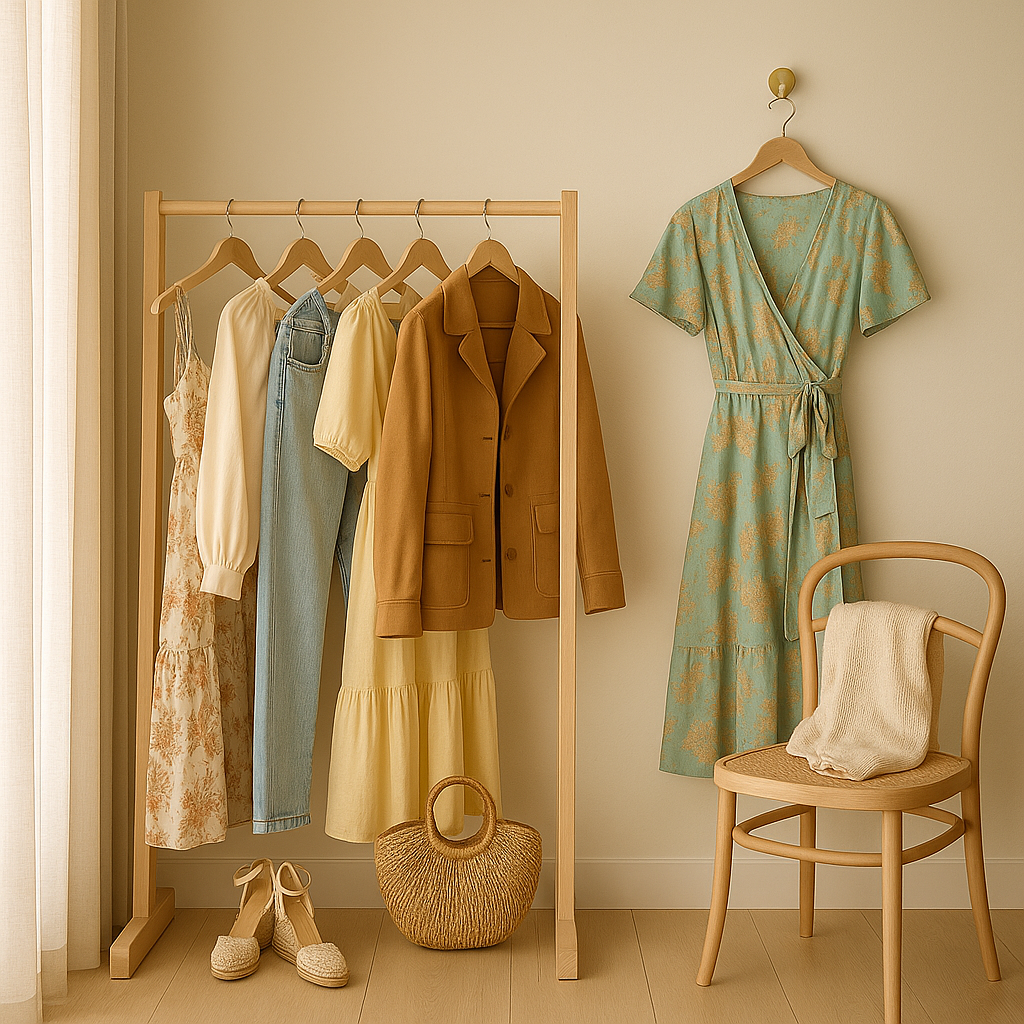
Your style direction starts with the pieces you already love — the ones you reach for without thinking.
A guide to dressing with clarity, buying less, and building a wardrobe that supports your life.
Most style frustration doesn’t come from owning the “wrong” pieces — it comes from not knowing what truly works for your life. Your routine, your coloring, your proportions, and your comfort level all shape the pieces you naturally reach for without even thinking. When you start to recognize those patterns, everything shifts. You wear more of what you already own, make more strategic purchases, and your closet begins to support you because it reflects what you need. Your wardrobe becomes consistent, useful, and effortless to work with.
This idea ties naturally into How to Look Fabulous for a Good Price, where I talked about curating quality staples on a budget. This guide goes a bit deeper and helps you clarify your personal style so you can recognize what belongs in your wardrobe and wear more of what you already own.
1. Start With the Life You Actually Live
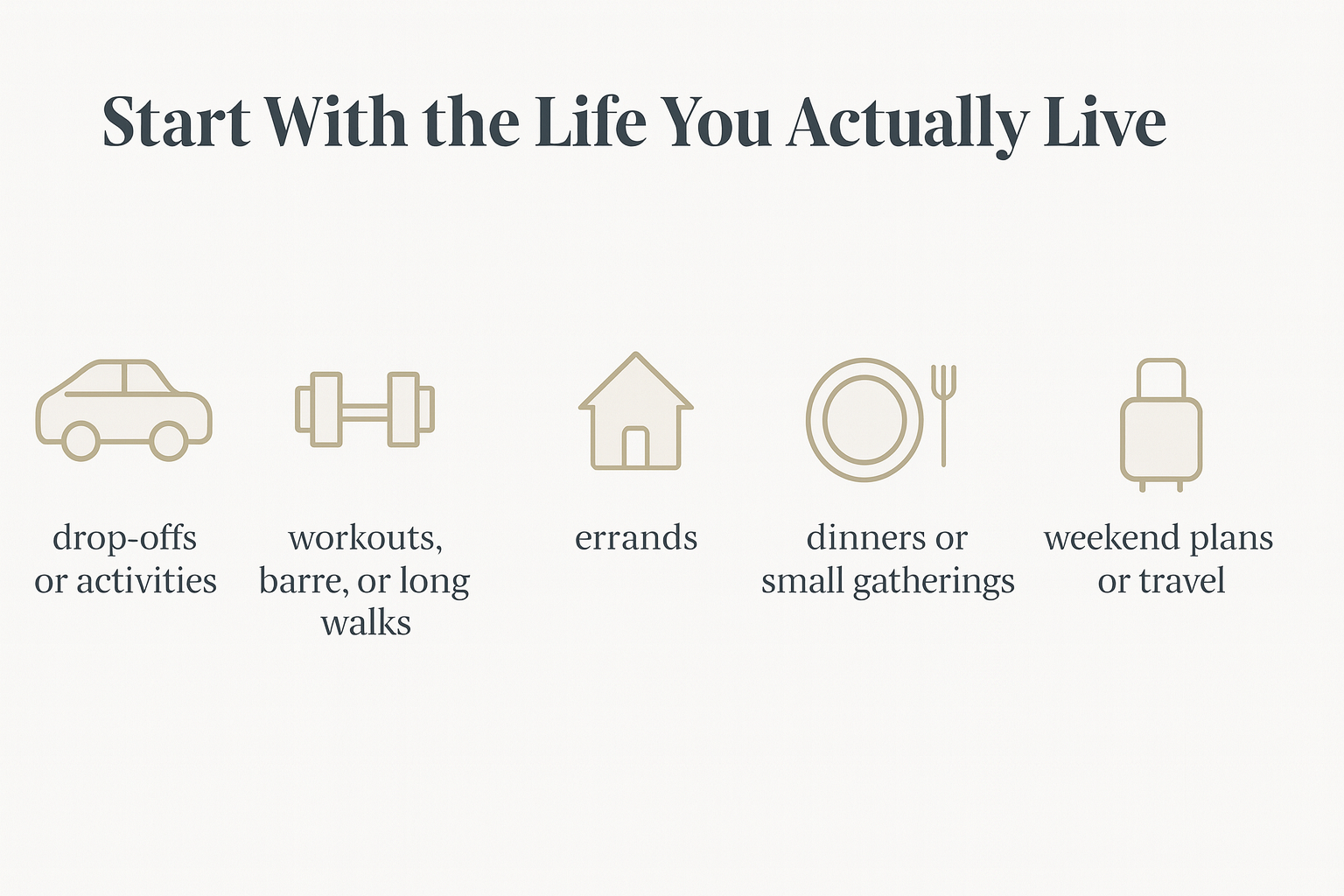
Before adding anything new to your closet, take a clear look at what your days require — rather than planning your wardrobe around rare occasions or once-a-year events.
Consider your weekly routine:
work or professional commitments
drop-offs or activities
workouts or long walks
errands
time at home
dinners or small gatherings
weekend plans or travel
These are the moments your clothes need to support.
Then notice what you naturally reach for — the pieces you wear most often, the ones always in the wash, or the items you throw on without thinking because they work. Whether that’s dresses, knits, denim, or activewear that fits your schedule, these patterns show you what you really wear in daily life.
Your real lifestyle is the foundation of your personal style direction. It reveals what belongs in your wardrobe and helps you make choices that support the way you live.
2. Choose a Few Words That Give Your Style Some Direction
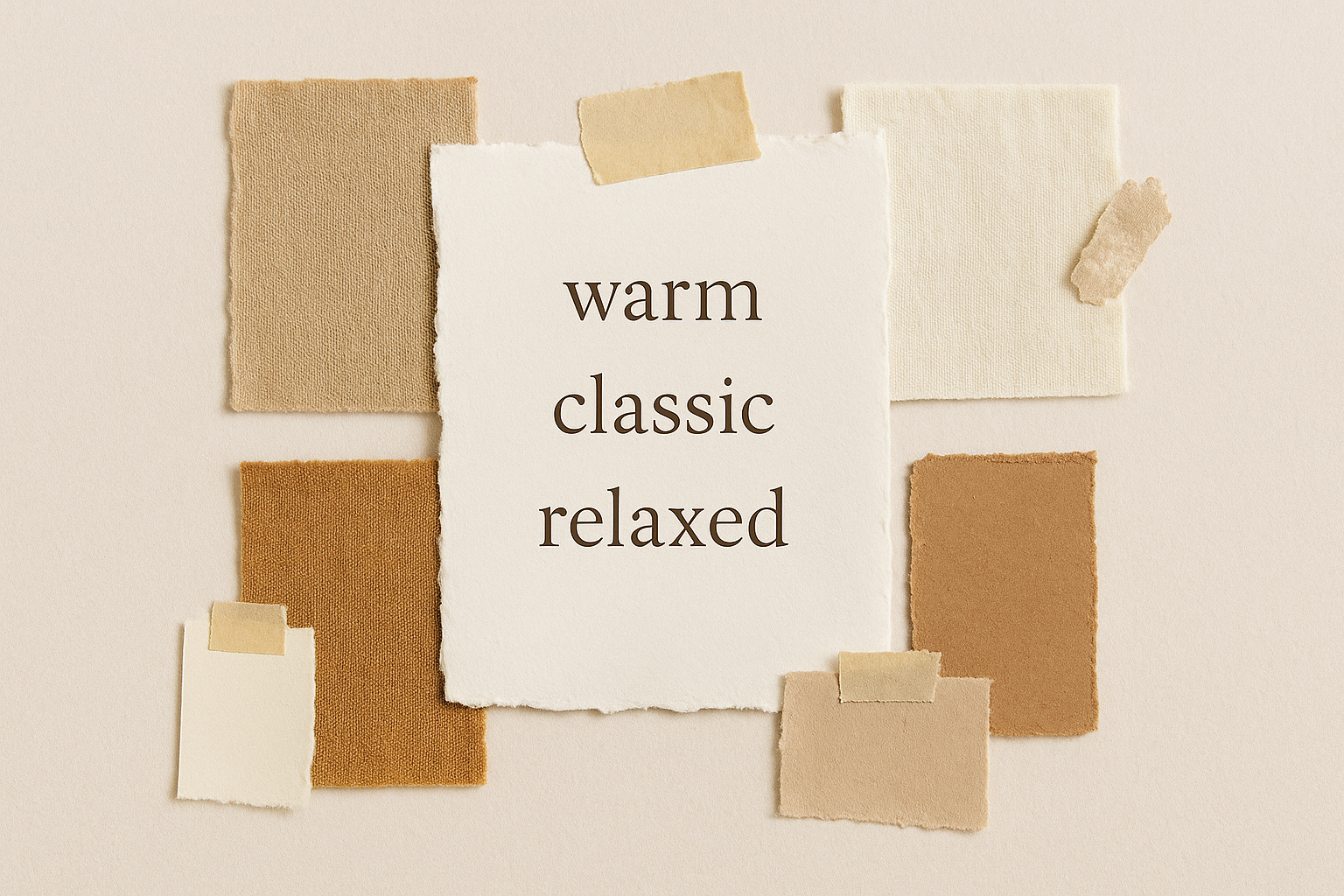
A simple reminder that a few thoughtfully chosen words can guide your entire wardrobe.
Once you understand your routine, it helps to choose a few straightforward words that describe the overall direction of your style. These are clear descriptors that keep your wardrobe focused.
A few examples: warm, feminine, relaxed, classic, clean, structured, simple, tailored.
Choose the two or three that genuinely reflect how you dress most days. These words can help you stay consistent when you’re editing your closet or deciding whether a new piece makes sense for your wardrobe. If something doesn’t line up with the direction you’ve chosen, it usually won’t become something you wear often.
This quick exercise can give you more clarity about what belongs in your wardrobe.
3. Know the Silhouettes That Work For You
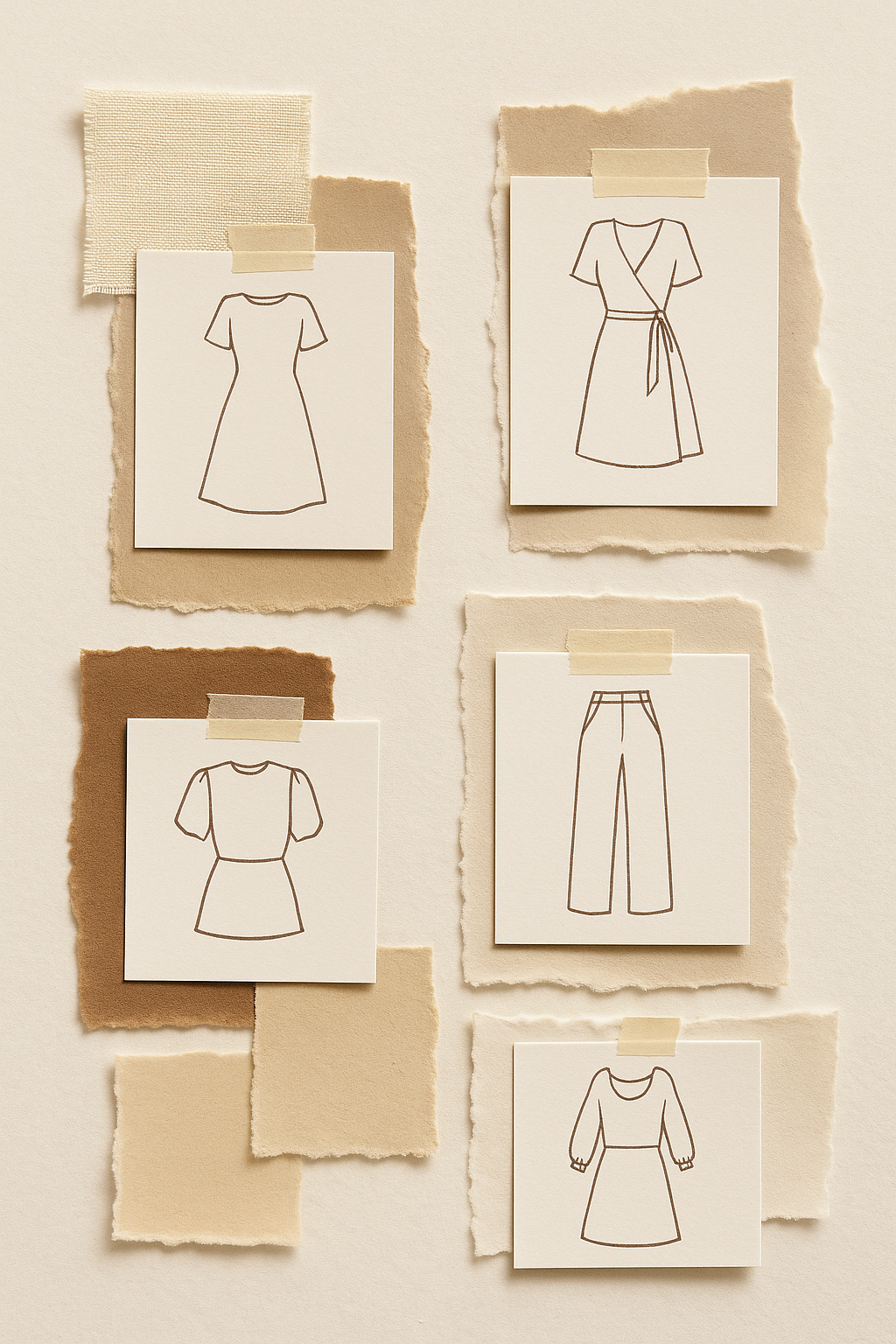
Your most-worn pieces usually share certain silhouettes — noticing that pattern helps guide your style.
One of the easiest ways to avoid unnecessary purchases is to understand which silhouettes genuinely work for you.
Think about:
the dress shapes you feel best in
sleeve styles that you prefer
the pant styles you consistently return to
the cuts you tend to skip without hesitation
Noticing these patterns helps you avoid buying pieces that seem appealing in the moment, but never end up being worn. When you understand the silhouettes that work for you, you’ll find it much easier to build a wardrobe you love wearing and avoid buying pieces you won’t use.
4. Use Color Intentionally
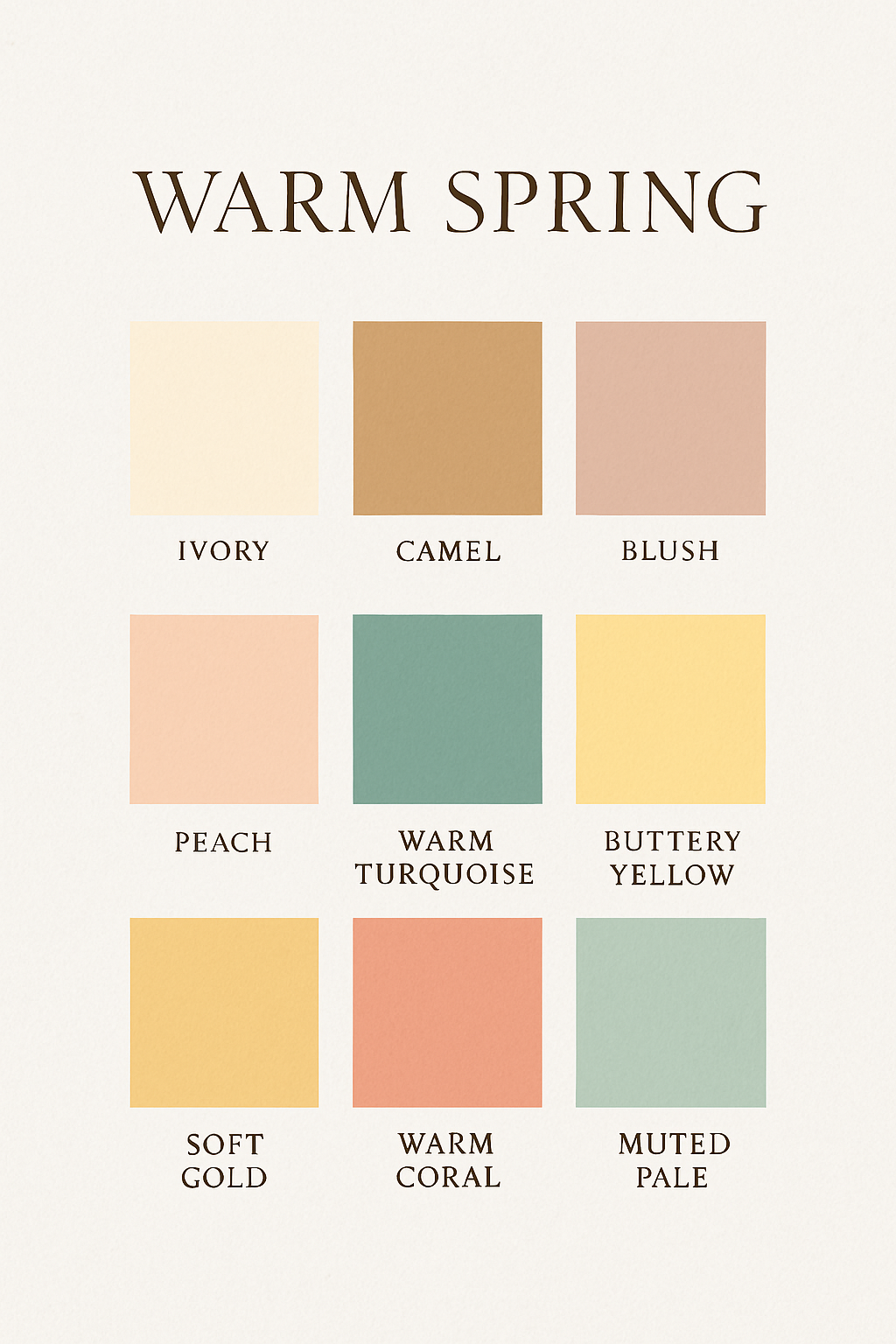
These are the shades that tend to brighten Warm Spring complexions—ivory, camel, blush, peach, warm turquoise, buttery yellow, soft gold, warm coral, and muted pale. Seeing your colors in a simple grid makes it easier to spot what already works in your closet and keep future choices consistent.
Color plays a quiet but important role in building a cohesive wardrobe. When you know which tones brighten your complexion, you feel more confident in what you’re wearing — and getting dressed, mixing pieces, and choosing what to add becomes clearer.
Look at the colors you naturally gravitate toward. If warm tones like ivory, camel, blush, peach, warm turquoise, buttery yellows, or soft golds flatter you, that becomes a natural palette to build around.
A consistent palette helps you:
put outfits together quickly
mix pieces easily
avoid buying items that end up sitting in your closet
choose pieces you enjoy wearing
repeat what works
The colors you select in your wardrobe are up to what you feel best in and should reflect what you enjoy wearing.
5. Build a Mood Board That Reflects You
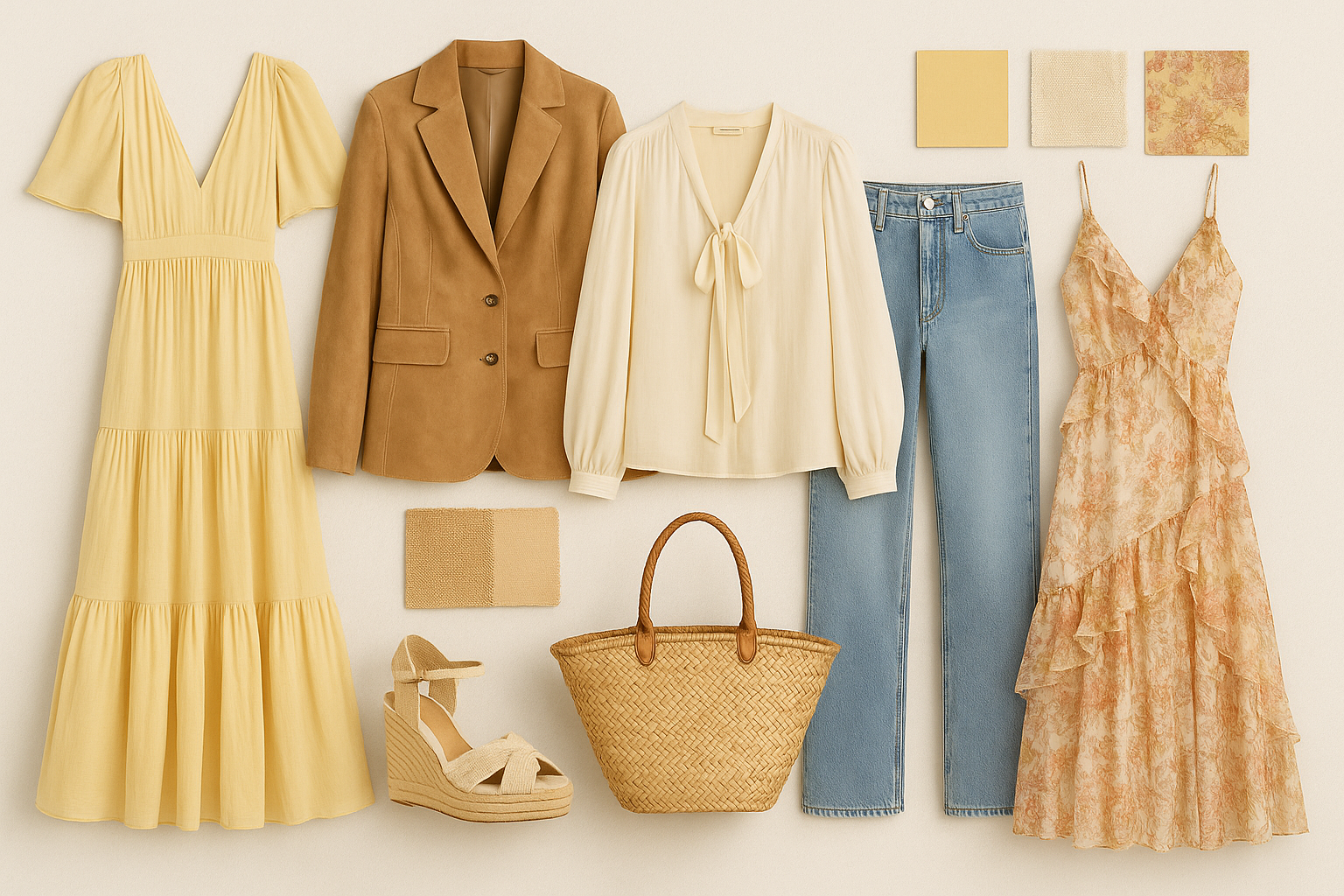
Your mood board should reflect the real you — the colors you reach for, the textures and silhouettes you love, and the pieces you’re excited to wear.
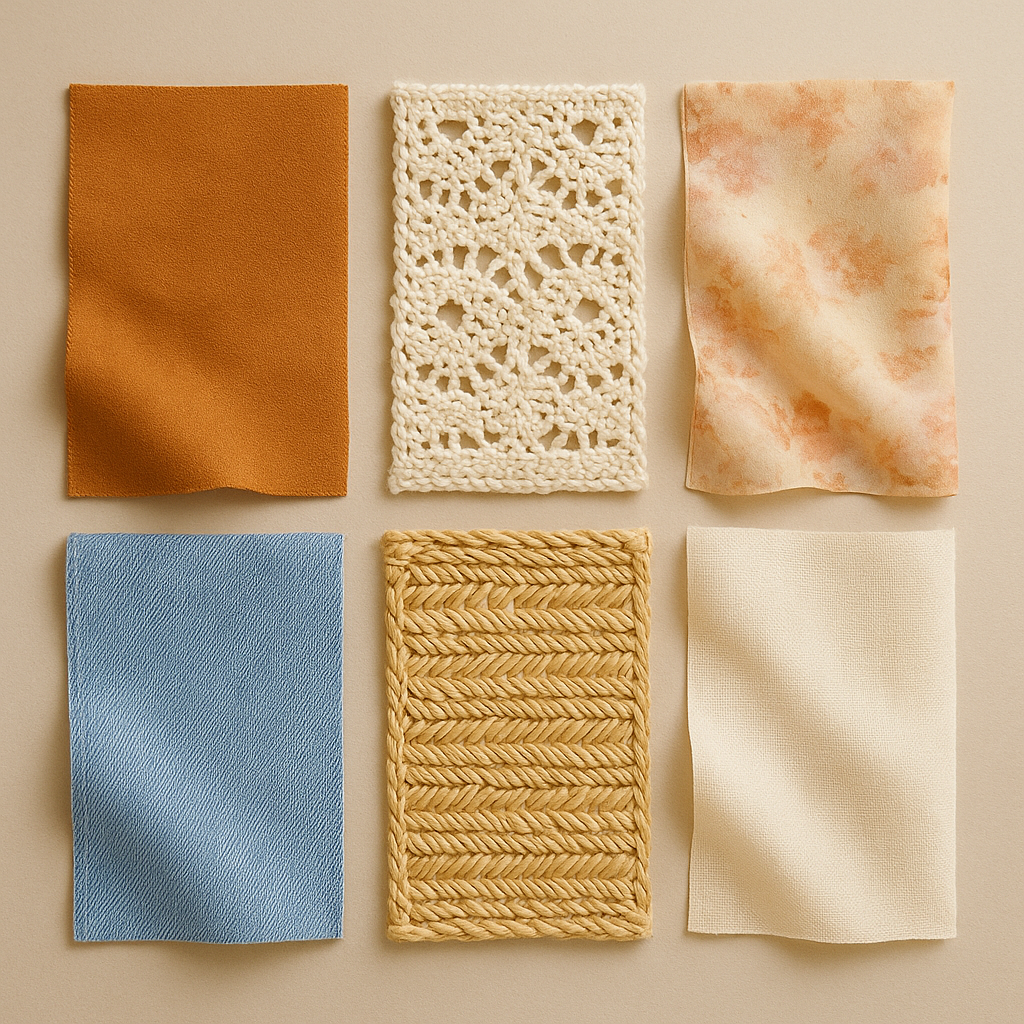
A focused blend of textures and hues that capture the essence of your style direction.
A mood board becomes useful when it reflects your real life and consists of silhouettes, colors and textures you love.
Keep it simple:
choose 10–12 images
focus on outfits you would realistically wear
stick to silhouettes that work for you
stay within your color palette
pay attention to textures and pieces you reach for often
Then look for the patterns:
Do your best silhouettes show up repeatedly?
Are the colors consistent?
Do you gravitate toward dresses, denim, or knits?
Does the tone match the style direction you chose?
If you want a seasonal example, my Holiday Mood Board post: Holiday Style-How to Look Festive Without Buying a Whole New Wardrobe shows how a mood can guide outfits for a specific time of year. This guide builds on that idea for long-term clarity.
6. Create a Few Outfit Formulas You Can Rely On
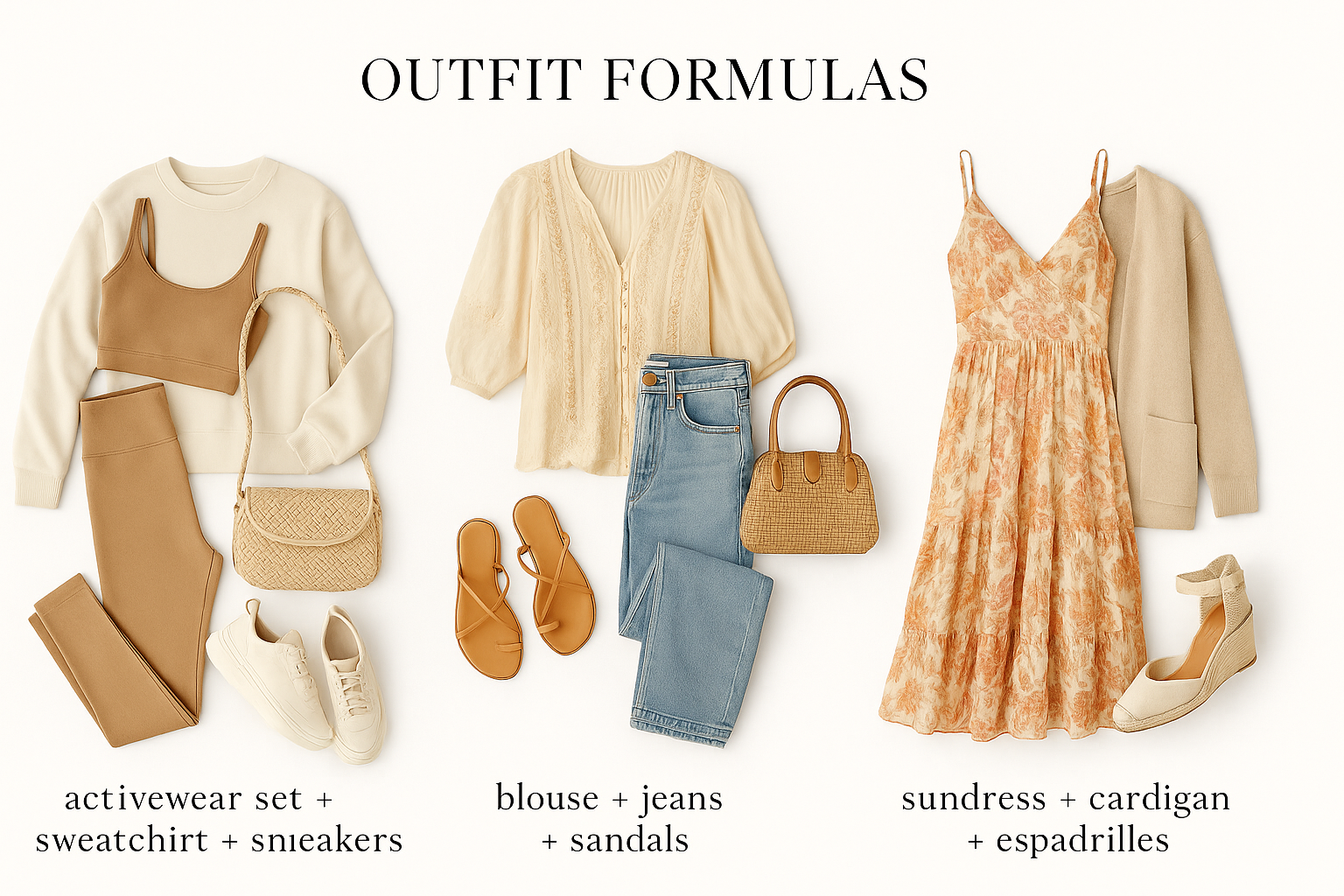
Once you understand your colors, silhouettes, and personal style words, it becomes much easier to build outfit formulas you can repeat throughout the year.
These should reflect your real week — not a hypothetical one.
Create outfit formulas that match how you actually live. My week includes active days, errands, and dressier moments; yours may follow a different flow.
Here are a few examples:
• dress + tall boots + a structured bag
• sweater + straight-leg denim + flats or boots
• knit dress + sneakers or sandals
• activewear set + cardigan + crossbody
• blouse + jeans + a polished layer
These formulas simplify getting dressed and help clarify what you already have versus what you truly need.
7. Edit What Doesn’t Fit Your Direction
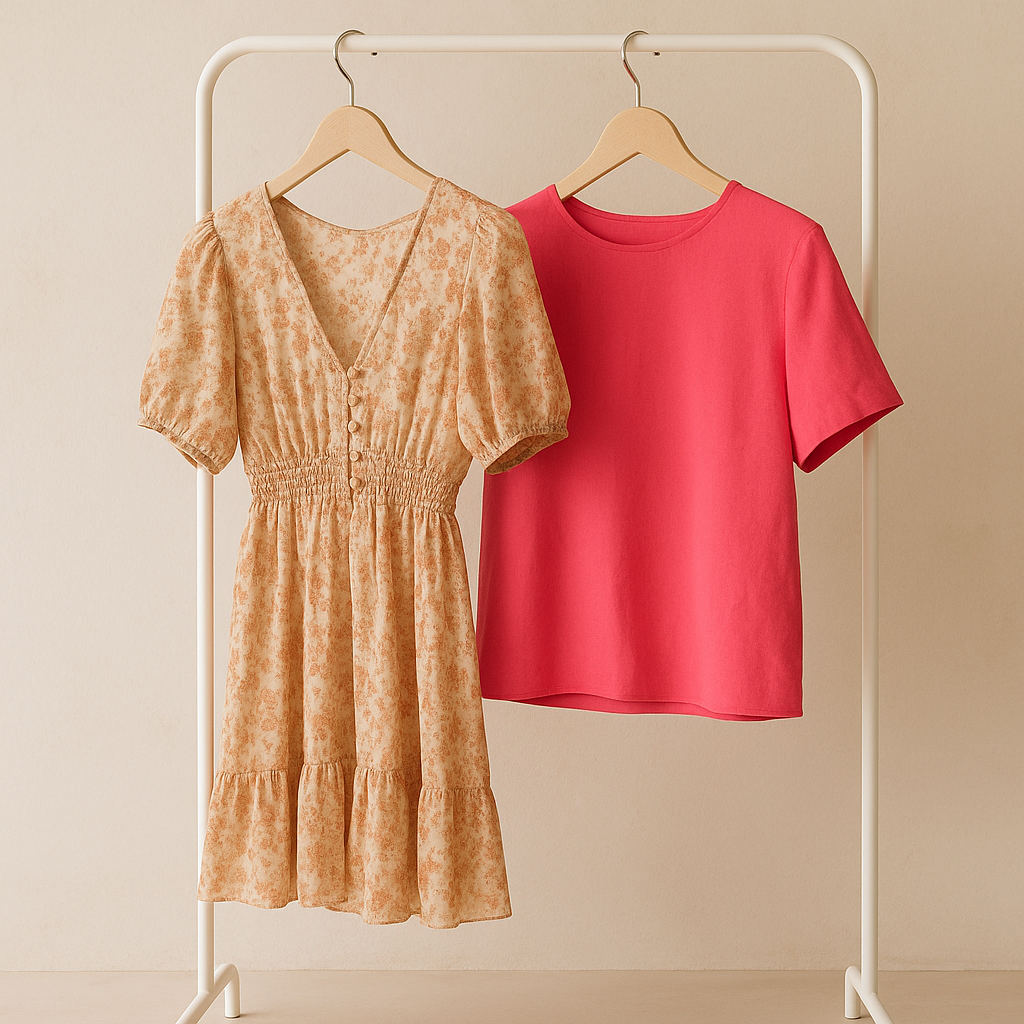
Edit out the pieces that no longer align with your style direction so your wardrobe reflects your true style.
You don’t need to start from scratch.
You just need to notice what isn’t working anymore.
If something doesn’t suit your palette, your lifestyle,
or how you want to feel when you get dressed,
it’s okay to set it aside — even if it’s “nice.”
This isn’t about rules.
It’s about making your closet feel easier to live with.
This kind of editing keeps your closet functional and helps you avoid repeating the same mistakes.
8. Make a Small, Intentional Shopping List — If Needed
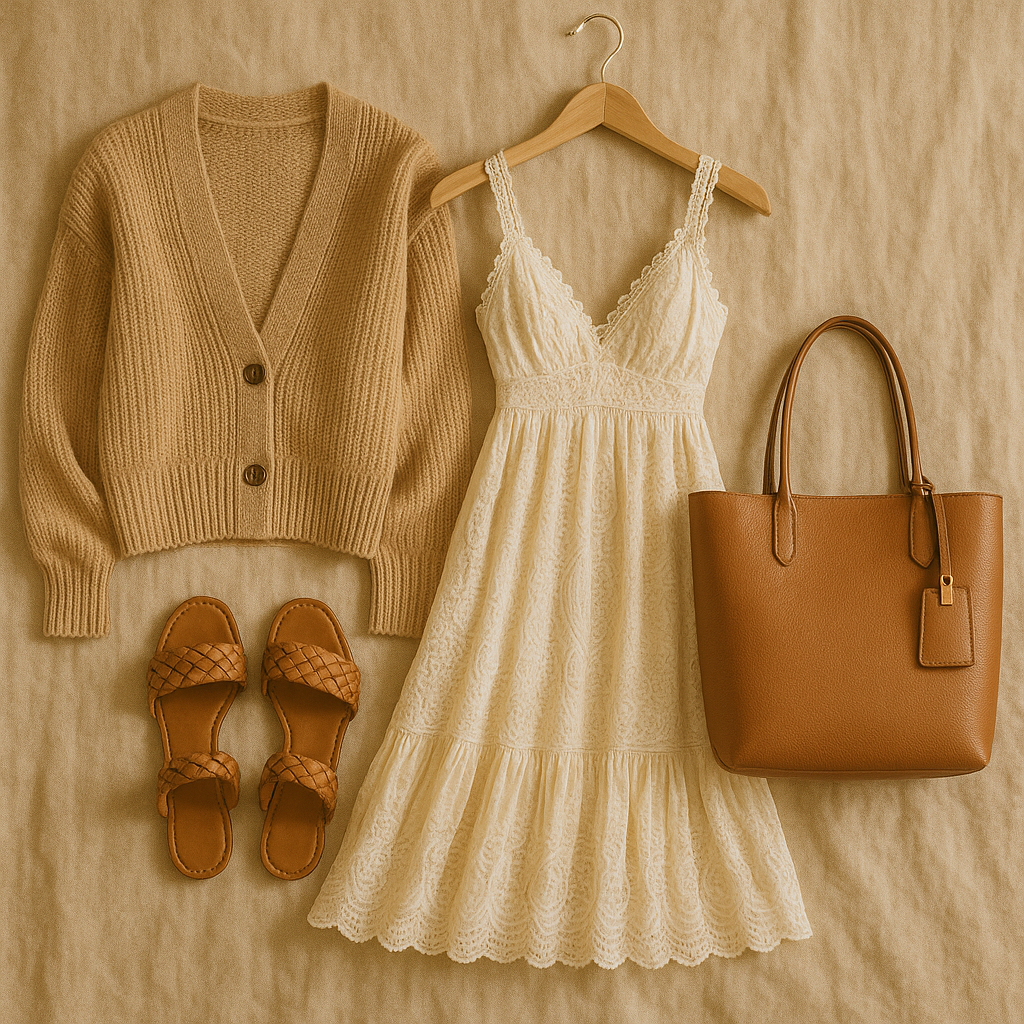
Add only what completes your wardrobe and complements your direction.
After editing, you may find there are a few additions that would better support your closet and help your outfits come together.
This will look different for everyone.
For some people, it’s realizing they don’t have a layer that works across outfits.
For others, it’s shoes — the kind you reach for day after day.
Sometimes it’s a dress that moves easily between seasons, or a bag for daily life and travel.
These additions are about supporting the pieces you already have and wear in your closet.
The list should stay small — just a few thoughtful additions that help everything else work better.
If you want guidance on choosing pieces that actually last, your Wardrobe Investments: How to Choose Pieces that Last post explains how to recognize quality in fabrics and construction so you can shop confidently and avoid replacements.

Let your style direction shape the pieces you choose next.
⭐ Flight 2 Fashion Takeaway
Personal style isn’t about buying more.
It’s about understanding what works for you.
When you know the colors you feel good in, the silhouettes you enjoy wearing, the pieces you reach for without thinking, and what your real lifestyle requires, you naturally buy less and wear more. Your wardrobe becomes cohesive, versatile, and aligned with your day-to-day life — not trends or impulse purchases.
A thoughtful closet comes from clearly defining what works for you and building around that — not constant shopping.
✨ Want a template to try this yourself? Download in the [Resources Library] to choose your core pieces and see how they set the tone for the rest of your outfits.
✨ Interested in reading more? Explore the [Inspiration Gallery] for seasonal color palettes, outfits, and mood boards to guide packing and for inspiration. You can also read the guide Holiday Style: How to Look Festive Without Buying a Whole New Wardrobe. and the guide about Wardrobe Investments: How to Choose Pieces that Last.
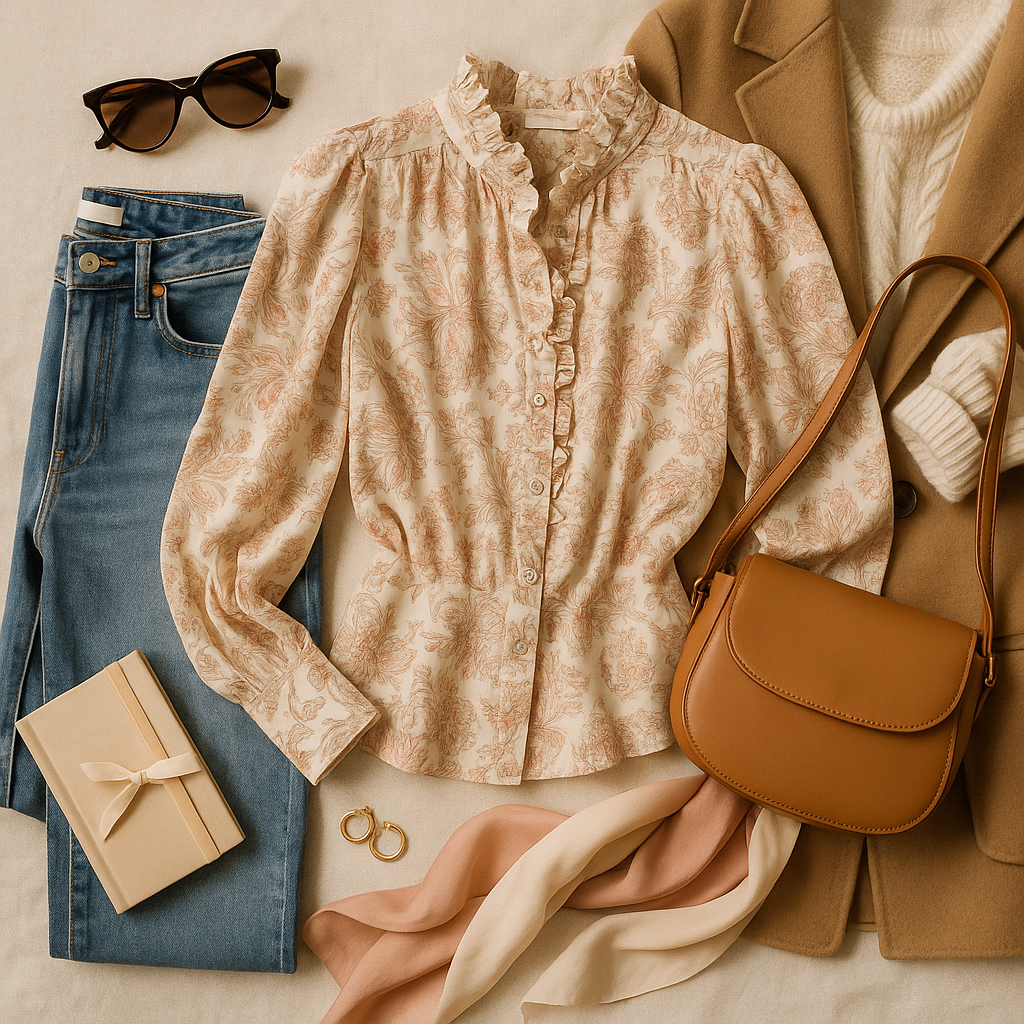
How to Look Fabulous for a Good Price — By Editing Your Closet and Shopping Smarter
After a season of celebration and spending, January invites a reset — in life and in style. This Flight 2 Fashion guide shows how to look fabulous for a good price without fast fashion or excess. Learn to reassess your closet, refine what you own, and build a sustainable wardrobe that reflects your real life.
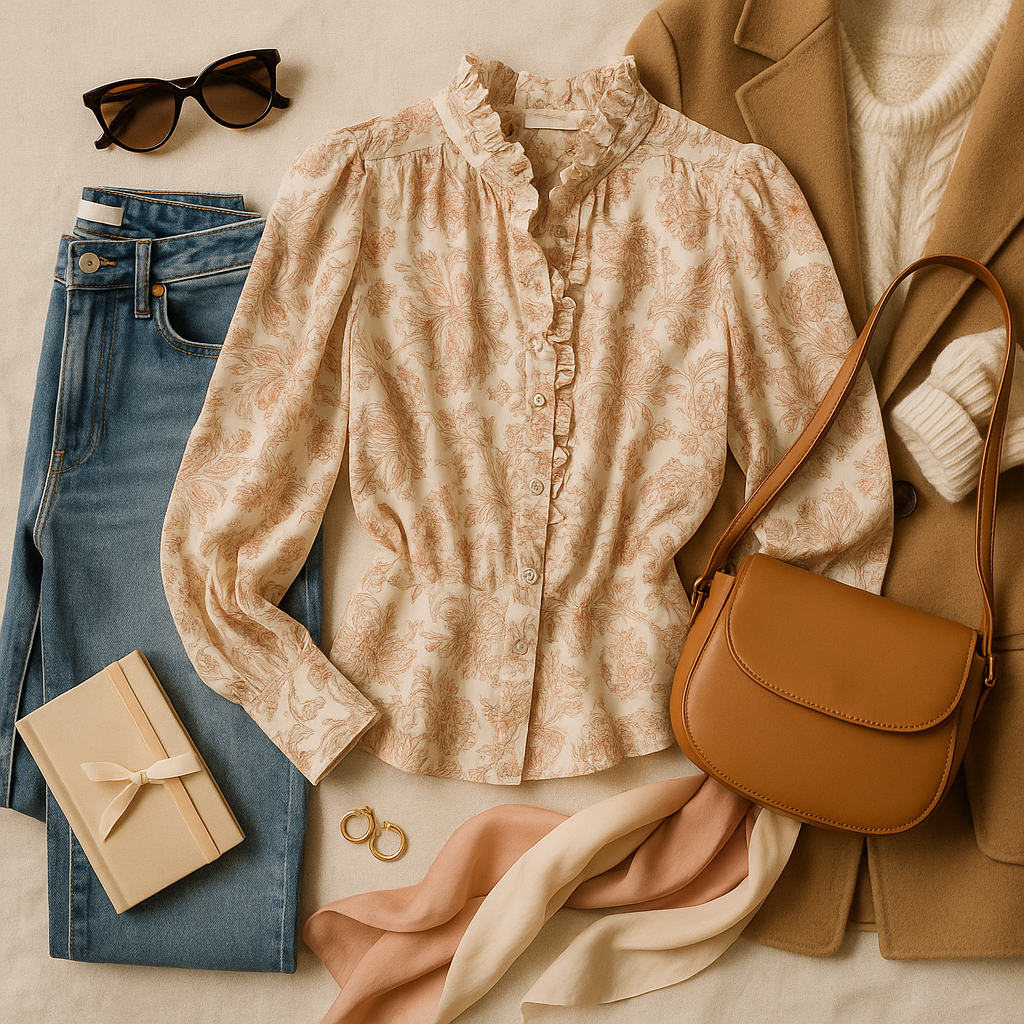
The year’s first refresh — classic pieces with personality, curated for how you actually live.
My friend recently asked how to look fabulous for a good price — not through fast fashion or endless sales, but in a way that is elevated and true to her style.
It’s a fitting question for the start of a new year. January always brings a sense of reset — a time for new goals, fresh perspective, and the urge to simplify and organize. After weeks of travel and celebration, many of us crave that same clarity in our wardrobes: fewer pieces, better choices, and a closet that reflects how we live now.
That’s where the process begins — not with what’s missing, but with what’s already there.
1. Evaluate Your Current Wardrobe
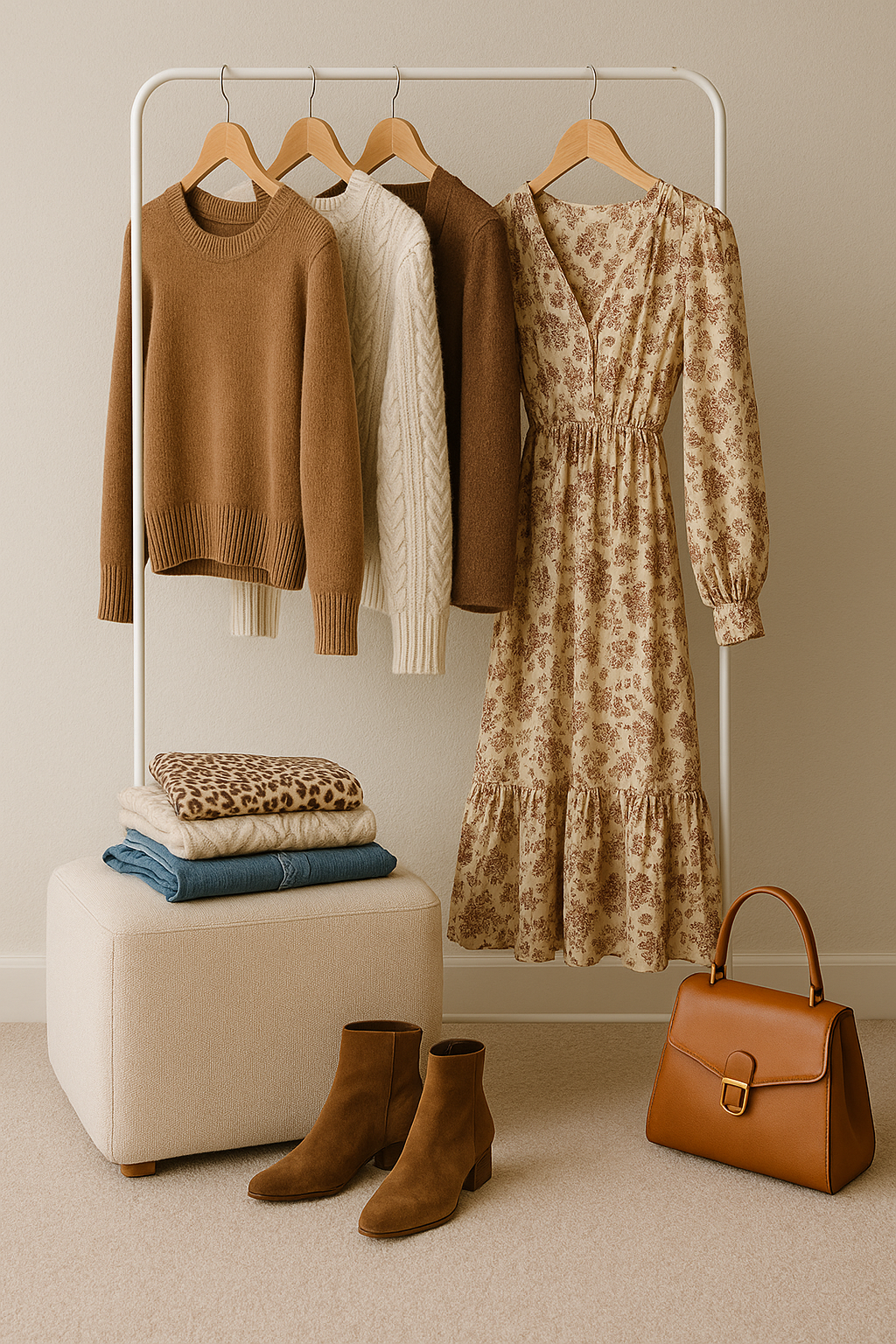
Start where you are — see what you already own and rediscover the pieces that define your style.
Start in your closet. Before buying anything new, take a moment to look at what you already own. This step is about understanding your wardrobe — what you wear most, what rarely leaves the hanger, and what supports your day-to-day style.
Pull everything out and lay your clothes where you can see them. Seeing the full picture at once makes it easier to understand what’s working and what isn’t.
Notice what you reach for first: the cotton dress that’s an easy throw-on, the cashmere sweater that’s held up for years, the jeans that fit perfectly. Those are your foundations.
Then look at what you tend to skip — the jacket that never fits quite right, the color that doesn’t flatter you, the heels that never make it out the door. These pieces are just as informative as your favorites.
Ask yourself:
Which colors are most flattering?
Which fabrics have kept their shape?
Which silhouettes consistently work for me?
Viewed as a whole, your wardrobe tells a clear story — the materials, palettes, and cuts that represent your style.
If you haven’t done a full closet review before, begin with Wardrobe Investments: How to Choose Pieces That Last; it outlines how to evaluate what to keep, repair, or release.
With your wardrobe in view, the picture sharpens — what stays, what goes, and what needs rethinking. The next step is defining what “fabulous” means for you — based on how you live day to day.
2. Define “Fabulous” for Your Life
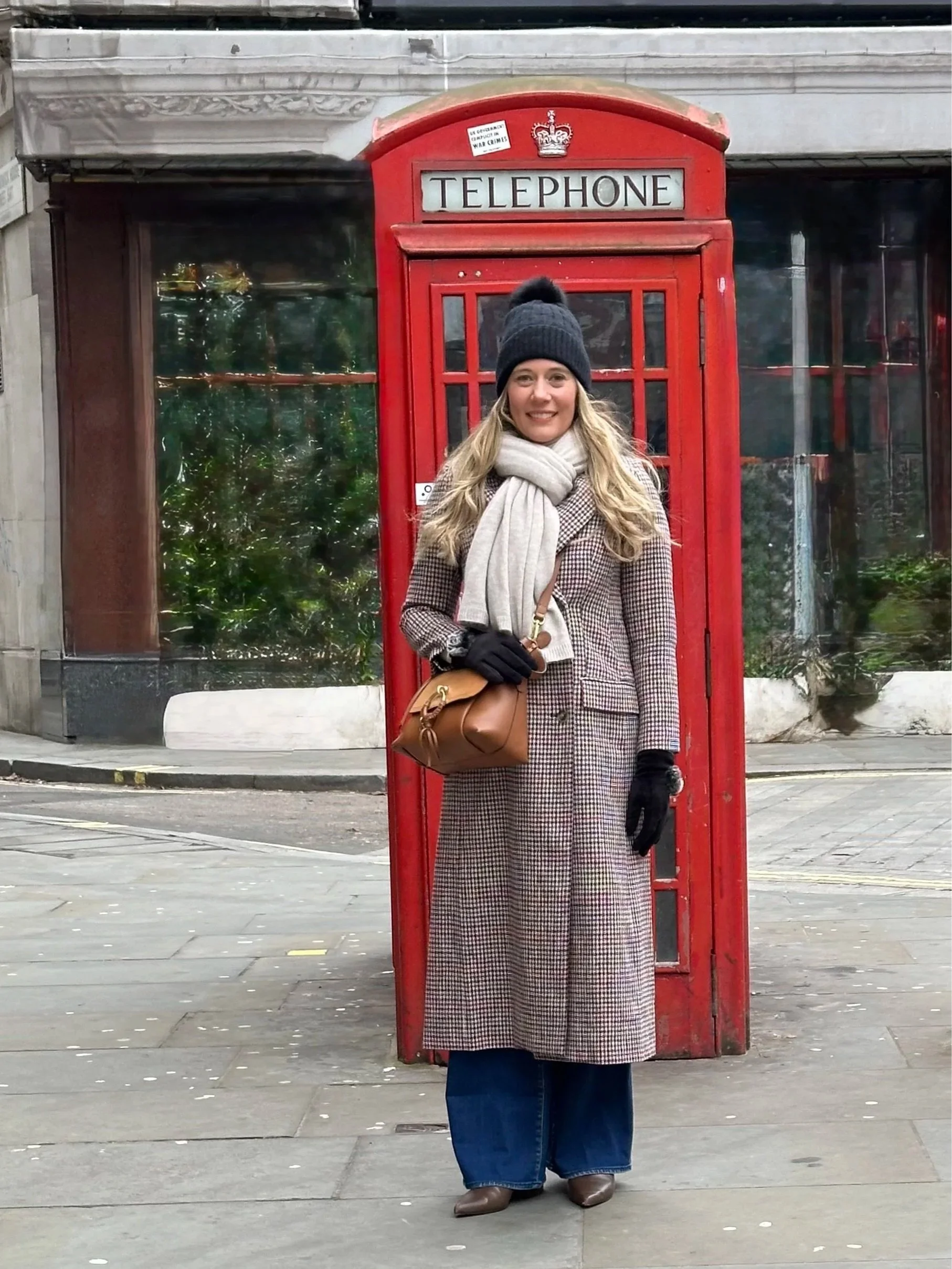
Fabulous doesn’t mean expensive; it means choosing pieces that support your routine, your climate, and your travels — and rewearing them well.
Style only matters when it supports the life you lead. Clothing that doesn’t serve your everyday routine, no matter how beautiful, simply takes up space.
To define fabulous, start with your routine. Think about your day-to-day environments, your climate, your upcoming events or travel, and the kind of clothing that functions well across them.
If your winter days mean walking outdoors, a tailored coat with real warmth will prove more useful than something delicate that rarely gets worn.
If your schedule includes travel or varied climates, look for layers that adapt — a lighter coat you can dress up or down, or a knit dress that works with both boots and sandals.
Defining fabulous isn’t about aiming for an ideal — it’s about refinement. Clothes that support your life have more longevity than those bought for a passing trend.
Think of fabulous as proportion, balance, and purpose rather than excess. A thoughtful wardrobe endures through seasons and change.
When your clothes align with how you live, getting dressed is straightforward because the pieces support your routine.
3. Identify What’s Missing
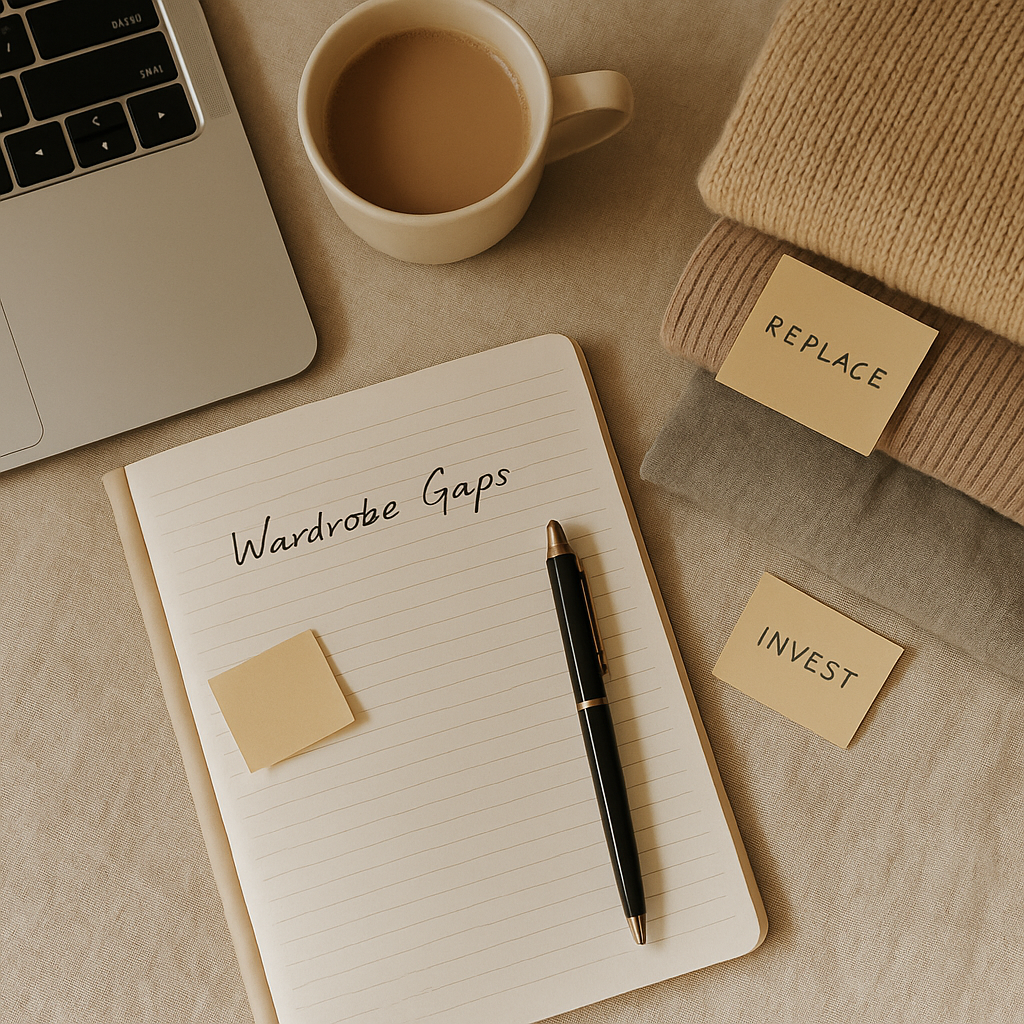
Identify what’s missing — focus on what would make your wardrobe work better, not bigger.
Once you’ve reviewed your wardrobe and defined what fabulous means for your life, the next step is identifying what’s missing.
Reflect on what you needed this season, but couldn’t find in your own closet. Maybe you own several coats, but none suited for rain. Perhaps you’re missing boots that work for both errands and evenings out, or a dress that transitions across climates and occasions.
Write these gaps down — just two or three items that would genuinely expand your options. This list matters. It shifts shopping from browsing to problem-solving.
This is where “a good price” comes into focus. Dressing well for less isn’t about buying the cheapest option; it’s about buying fewer pieces, choosing better quality, and purchasing them thoughtfully. A well-made coat bought on sale and worn for years often costs less over time than multiple fast-fashion alternatives that lose their shape, fall apart, or never quite work.
January makes this approach easier. End-of-season sales allow you to invest in quality pieces at reduced prices — pieces you already know you’ll wear because you’ve identified the need.
Retailers like The Outnet often carry last-season collections from brands such as Zimmermann, Chloé, or Aje — designs that hold their relevance well beyond a single season. For resale, platforms like The RealReal, Vestiaire Collective, or Poshmark offer access to pre-owned investment pieces at a fraction of their original price. For knitwear, January promotions from brands like Naadam or White + Warren are well suited for replacing staples you reach for every winter.
Selling pieces that no longer serve you can offset new purchases and create space for what you really need.
The goal isn’t replacement, but refinement — adding only what supports the way you live and complements what you already own. Over time, this approach leads to fewer purchases, lower cost per wear, and a wardrobe that works with. your life without constant shopping.
4. Buy Quality Once, Care for It Well
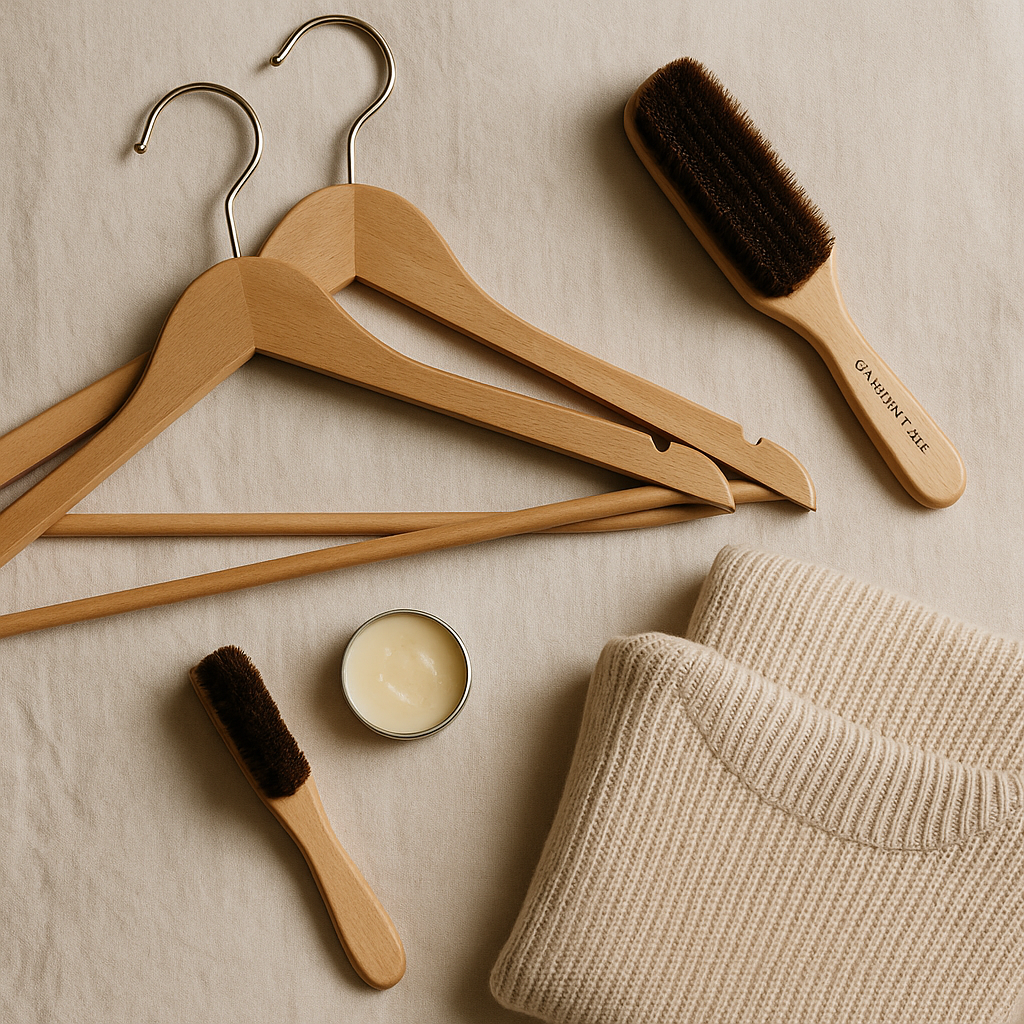
Sustainability begins not with what we purchase, but with what we preserve.
When you do buy, focus on construction. Quality determines how a piece wears, how it ages, and how long it stays in rotation.
Outerwear: Choose fabrics with structure and substance. A puffer with high-fill down or recycled insulation, a waxed-cotton raincoat, or a densely woven wool coat will retain warmth and shape for years. Check seams, linings, and closures — details that reveal real craftsmanship.
Shoes: Select real or high-grade vegan leather with stitched soles. Materials that can be conditioned, polished, or re-soled will last far longer and improve with wear.
Denim: Choose 100 percent cotton in a sturdy weight. Well-made denim softens over time, developing character rather than losing form. Avoid lightweight weaves or synthetic stretch that break down quickly.
Knitwear: Prioritize natural fibers — cashmere, merino, alpaca, or organic cotton — over synthetics that pill and lose structure.
Once you own quality pieces, maintenance matters as much as material:
Re-sole boots before the leather thins.
Fold knitwear; never hang it.
Clean coats before storing and hang them on wide wooden hangers with space to breathe.
Condition leather bags once or twice a year to prevent cracking.
The goal isn’t perfection — it’s longevity. Well-made pieces, cared for properly, serve across seasons and years, reducing the need to buy again and again.
Sustainability begins not with what we purchase, but with what we preserve.
5. Restyle and Reinvest
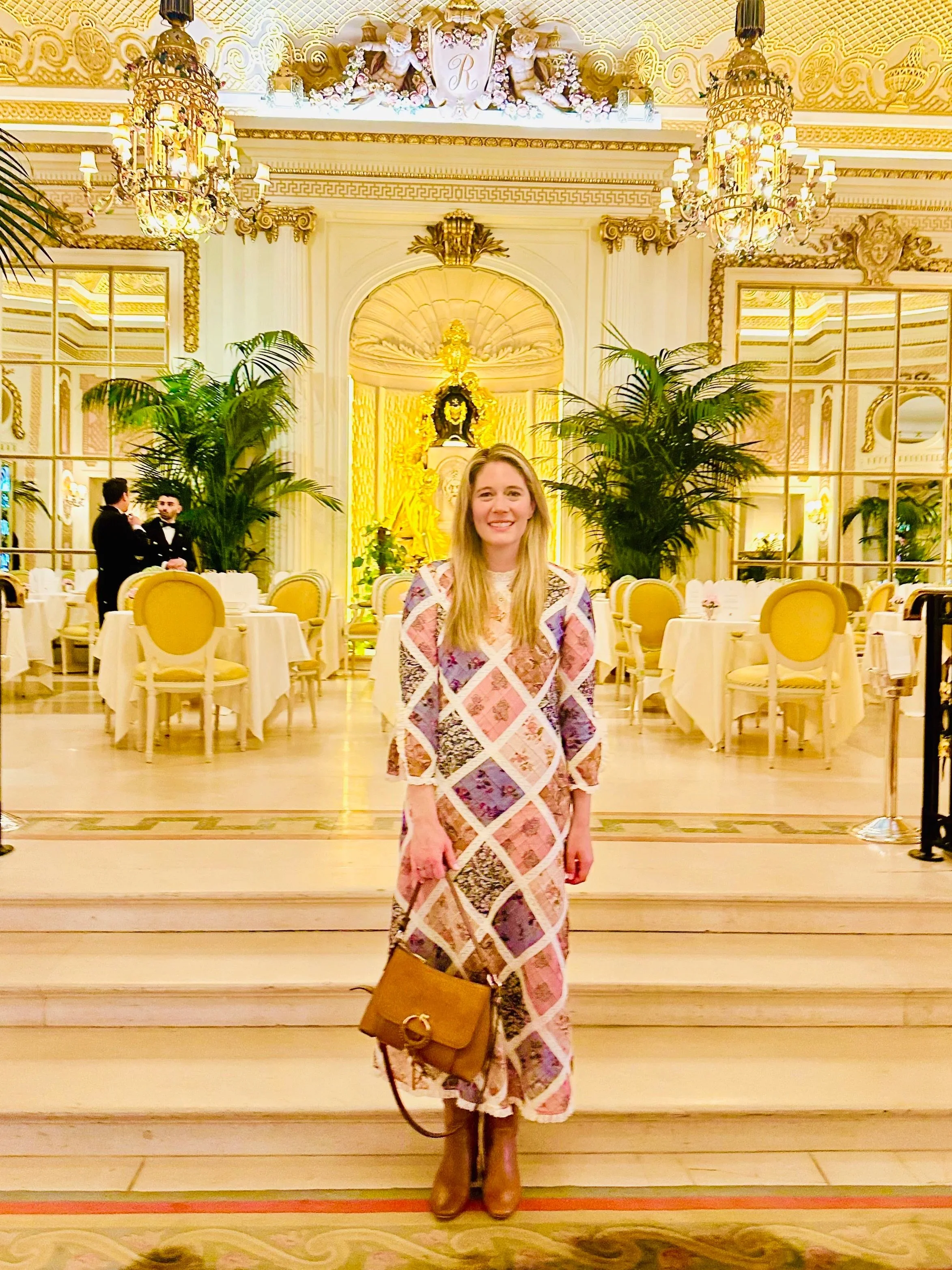
This linen patchwork dress is one of my warm-weather staples, but with opaque tights, tall boots, and a wool coat, it becomes a winter-ready look — proof that reimagining what you already own is often the most stylish option.
Before buying something new, look at what can be reimagined. Often, the most versatile pieces are already in your closet — they just need to be styled differently.
A lightweight summer dress layered with a leather belt, tall boots, and a quilted coat becomes winter-ready.
A silk skirt paired with a fine-gauge turtleneck and flats works for lunches or travel days.
A cotton blouse under a sleeveless dress adds structure and warmth for cooler weather.
Small styling shifts extend a piece’s life across seasons and settings. For more inspiration, see [How to Restyle a Summer Dress for Fall and Winter], which walks through layering techniques that give warm-weather pieces year-round relevance.
If your edit left you with items that no longer serve you, resell them. Everyday pieces do well on Poshmark or Depop; higher-end items fit The RealReal or Vestiaire Collective. Even a few thoughtful sales can fund one lasting addition.
Setting aside a small monthly amount — even fifty dollars — as a dedicated Style Fund helps you invest when the right piece appears. It’s a slow, steady approach that builds both discipline and freedom: the ability to buy well, without impulse.
This approach relies on using what you already own and being selective about what you add.
6. The Flight 2 Fashion Philosophy
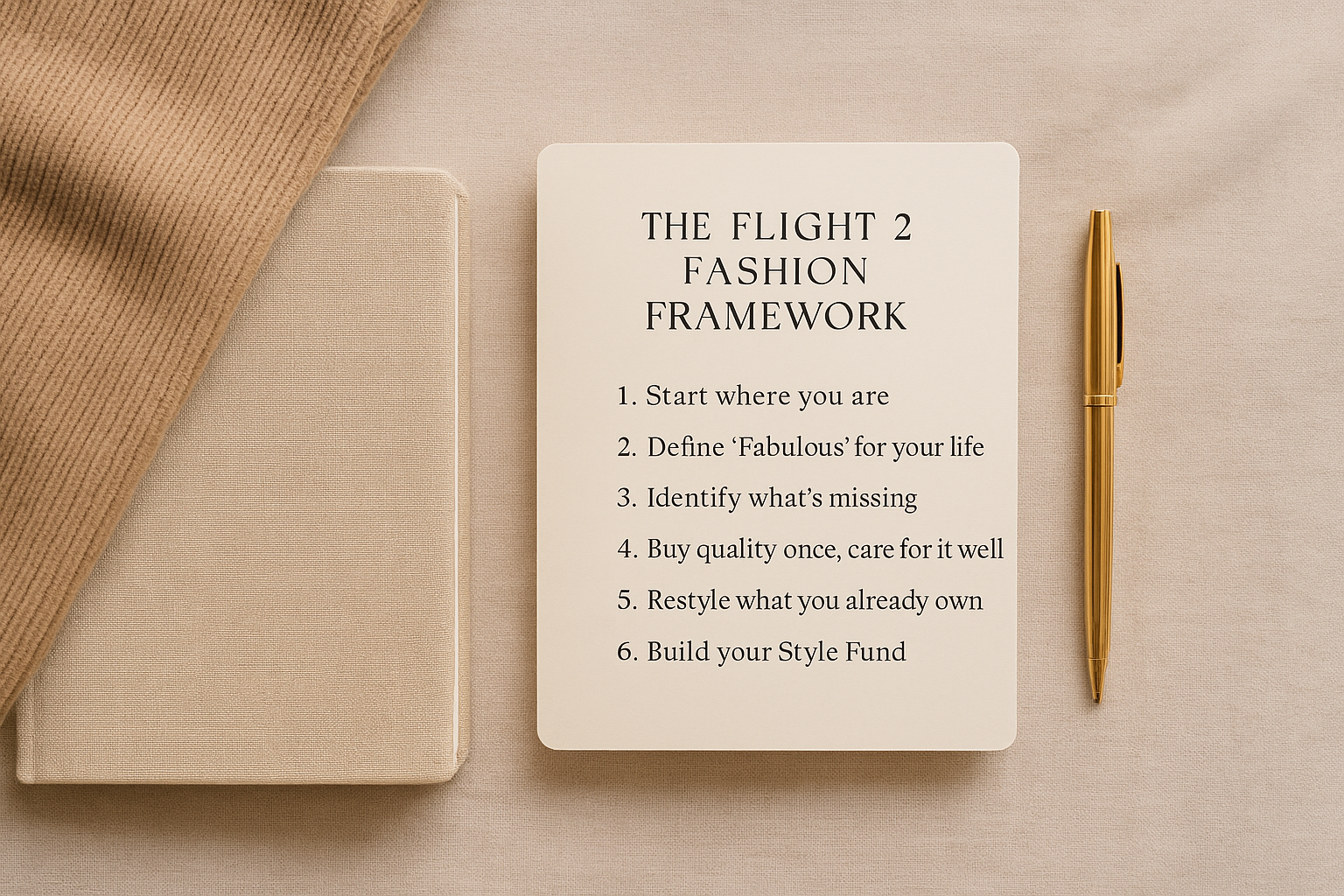
The Flight 2 Fashion Framework — six steps to refine your wardrobe, redefine your style, and shop with purpose.
Looking fabulous for a good price isn’t about chasing discounts or trends — it’s about building a wardrobe that reflects your life, your values, and your sense of style.
When you begin with what you own, define what works for you, and choose quality over quantity, everything else follows. You spend less, wear more, and avoid pieces that sit unworn.
You’ll find that for most occasions — a trip, a dinner, a new season — what you need is already there. When you do add something new, it serves a purpose and lasts beyond the moment.
✨ Flight 2 Fashion Takeaway:
Fabulous style isn’t found in constant buying. It’s built through clarity — knowing yourself, valuing quality, and creating a wardrobe that is personal, versatile, and lasting.
✨ Want a template to try this yourself? Download in the [Resources Library] to choose your core pieces and see how they set the tone for the rest of your outfits.
✨ Interested in reading more? Explore the [Inspiration Gallery] for seasonal color palettes, festive outfits, and mood boards to guide your December packing and read the guide Holiday Style: How to Look Festive Without Buying a Whole New Wardrobe. and the guide about Wardrobe Investments: How to Choose Pieces that Last.
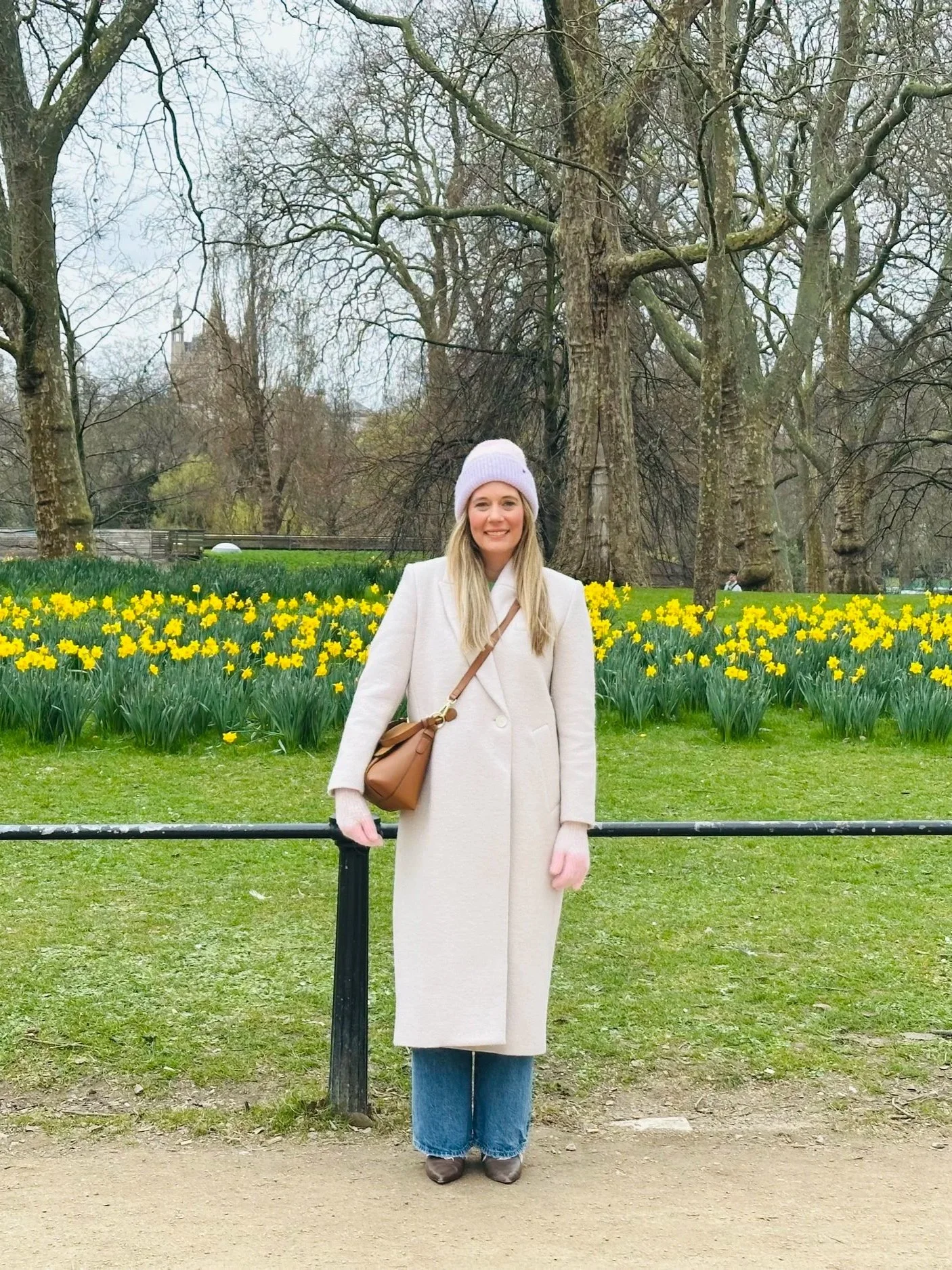
The same boots and bag worn on repeat, and the coat I styled different ways throughout my trip.
Holiday Style: Rewearing and Restyling the Pieces That Tell a Story
This December, I’m sharing how I restyle the pieces in my closet that hold memories — vintage dresses, heirloom bags, and jewelry — to create outfits that feel festive and personal. Think cozy layers, nostalgic textures, and accessories that carry stories into the season.
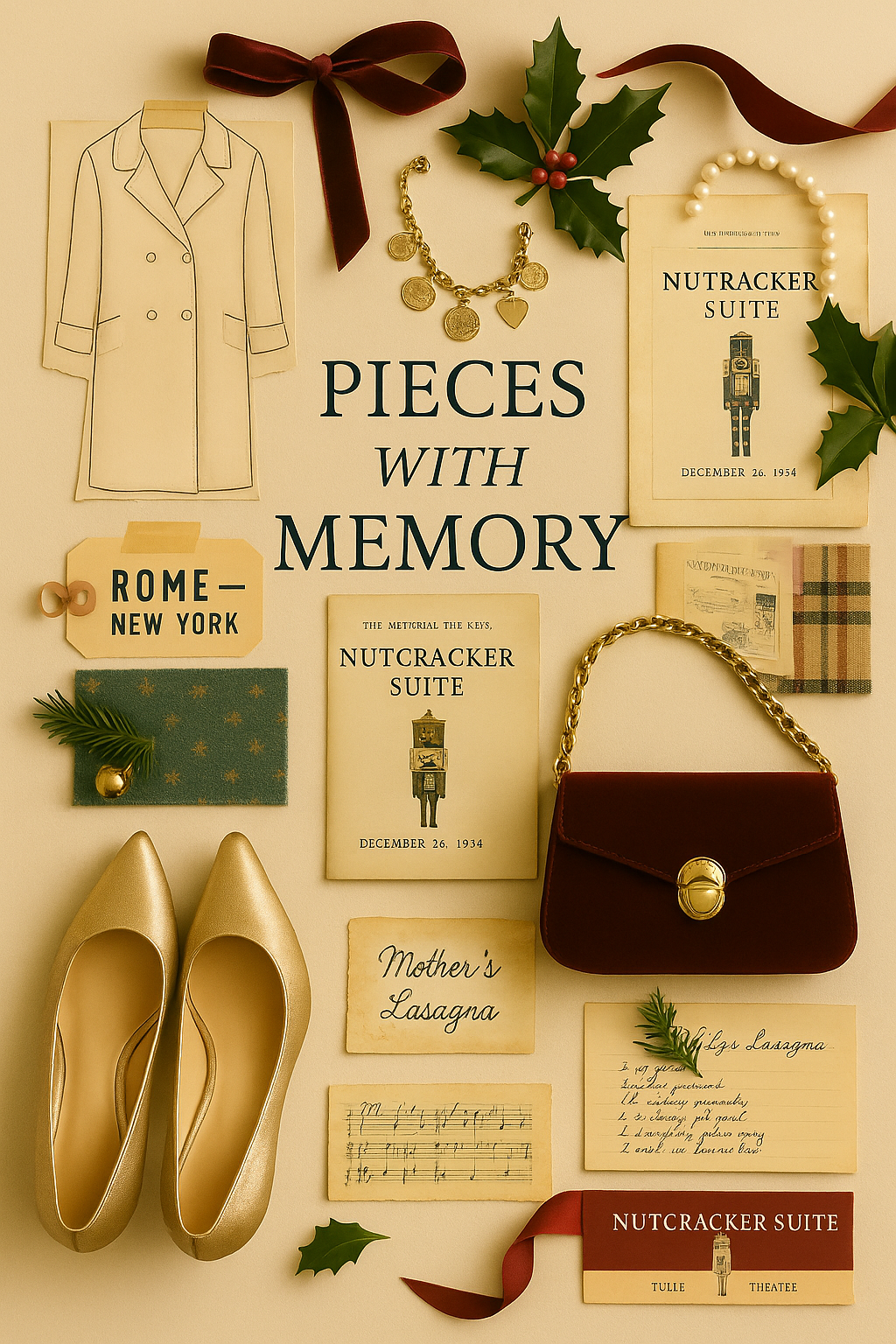
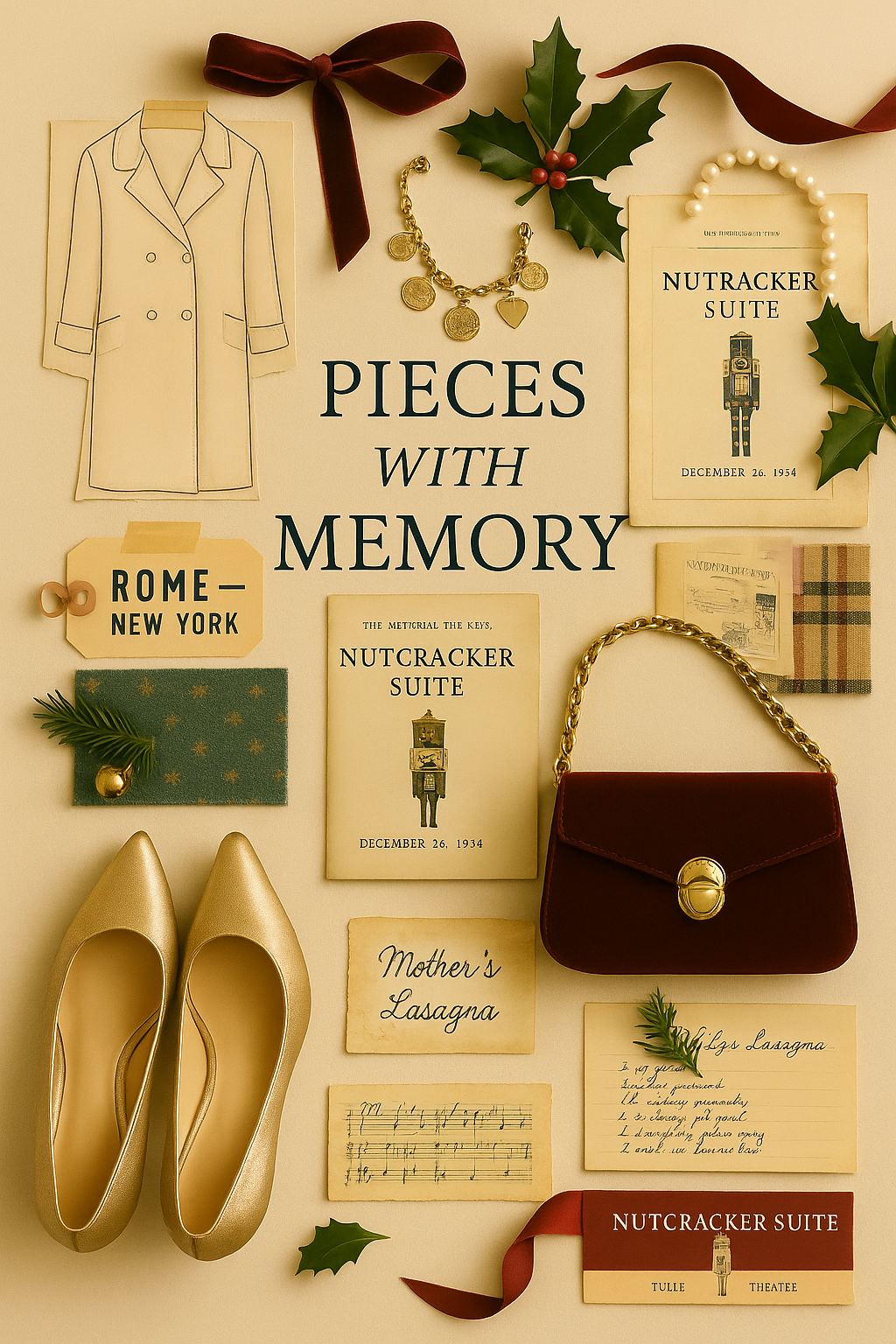
Pieces with Memory — a visual story of holiday traditions and the clothes that carry them.
Each year, the holidays bring a kind of nostalgia — memories of family traditions, the smell of recipes passed down from generations, and the sound of familiar songs that take you back to decorating the tree or opening gifts on Christmas morning.
In my family, Christmas meant an Italian dinner with lasagna, braciole, meatballs, antipasto, wine biscuits, Italian cookies, and gelato for dessert. We went to the Nutcracker or the Pops in the city, attended church on Christmas Eve, and spent Christmas Day with cousins. Even now, I try to keep some of those traditions alive with my own family.
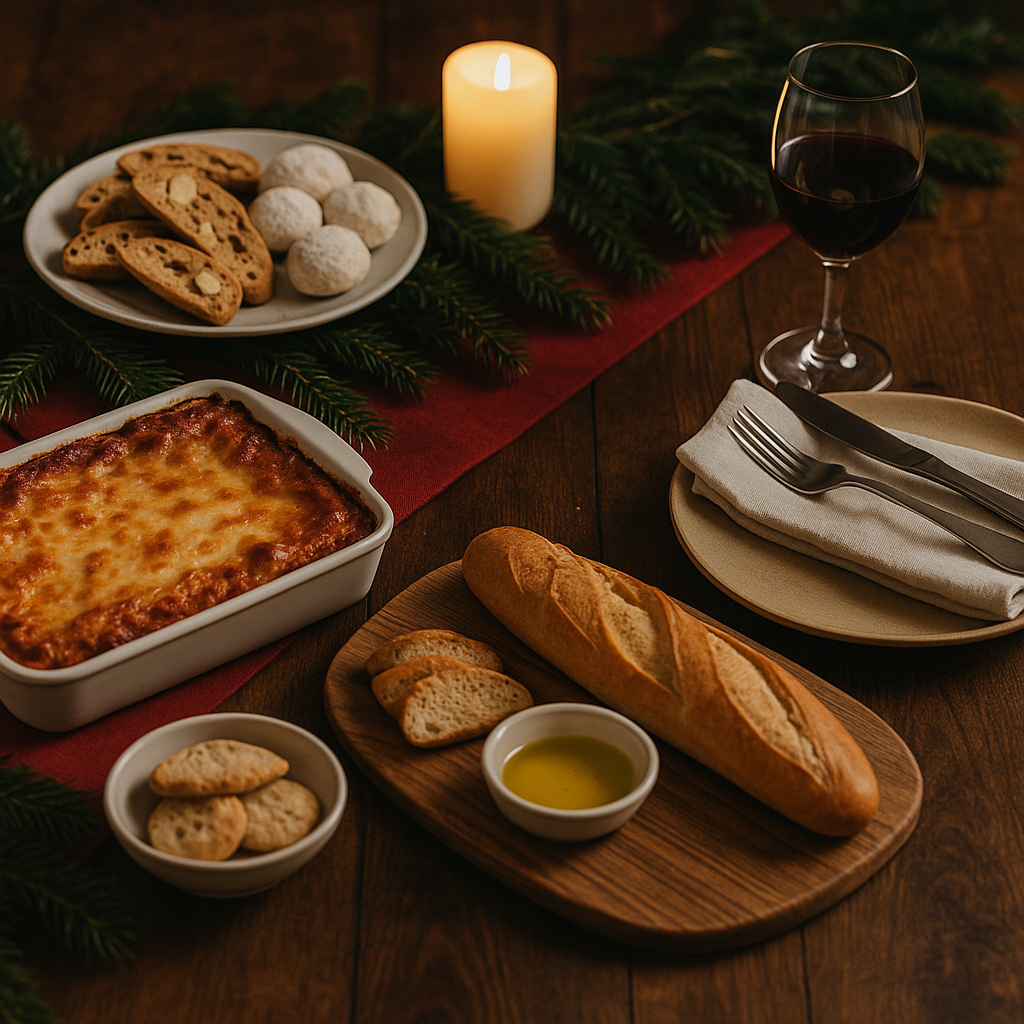
Our family Christmas dinner always included lasagna, bread, and Italian cookies — traditions I still try to keep alive
Looking through my closet this December, I realized I have traditions there too — pieces with memories and stories attached, pieces that have lasted through years of holidays and are still worth wearing now. Just like our family recipes or favorite songs, these clothes carry the past into the present. Sharing them here feels like another way to continue the nostalgia of Christmas — to show how clothing can hold meaning, connect us to the people and moments we love, and still be restyled to work for today. Each one can be updated with a new layer, accessory, or shoe and made part of this season’s celebrations.
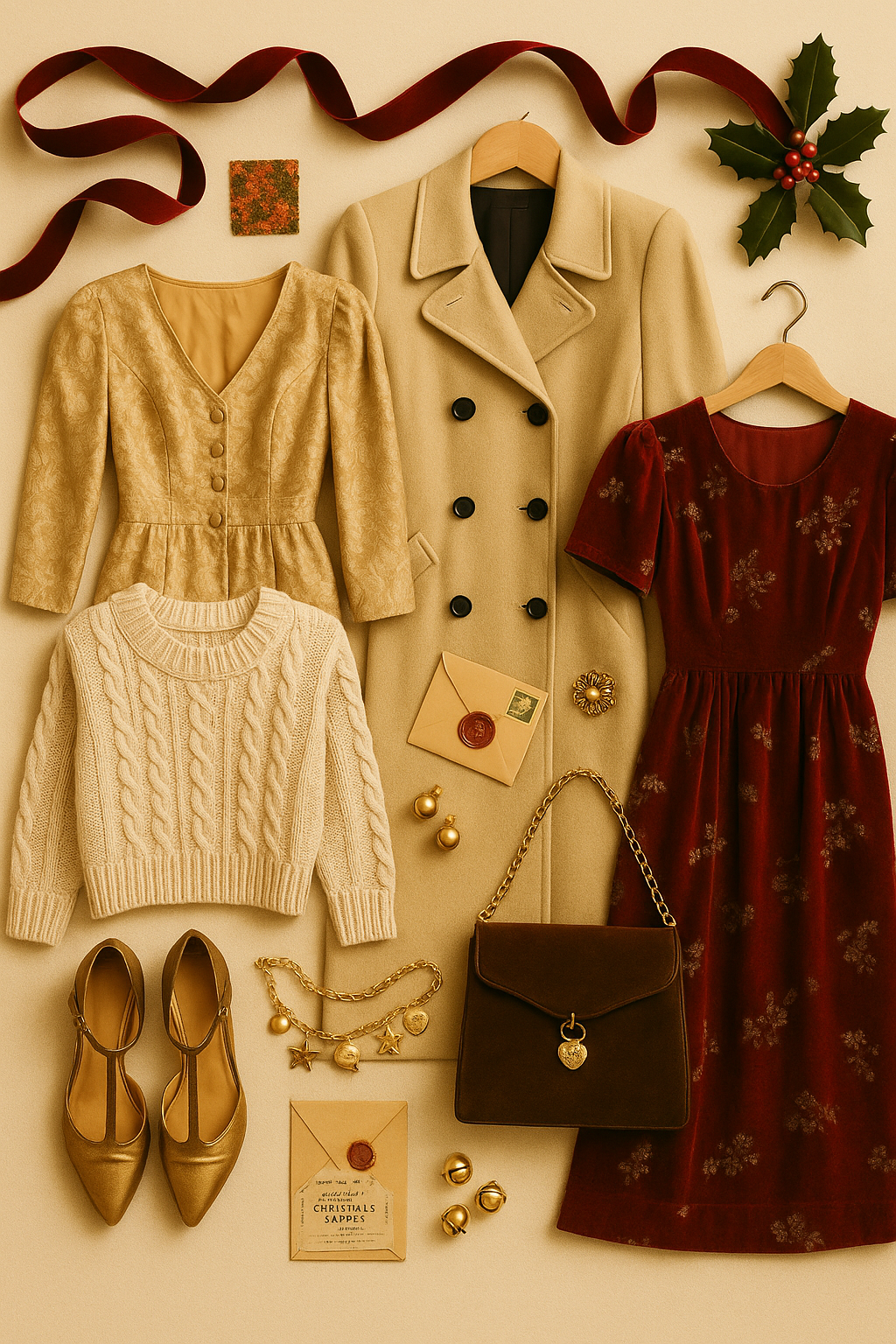
Outfits with history: cozy textures and rich colors that bring holiday traditions to life
Pieces with Memory
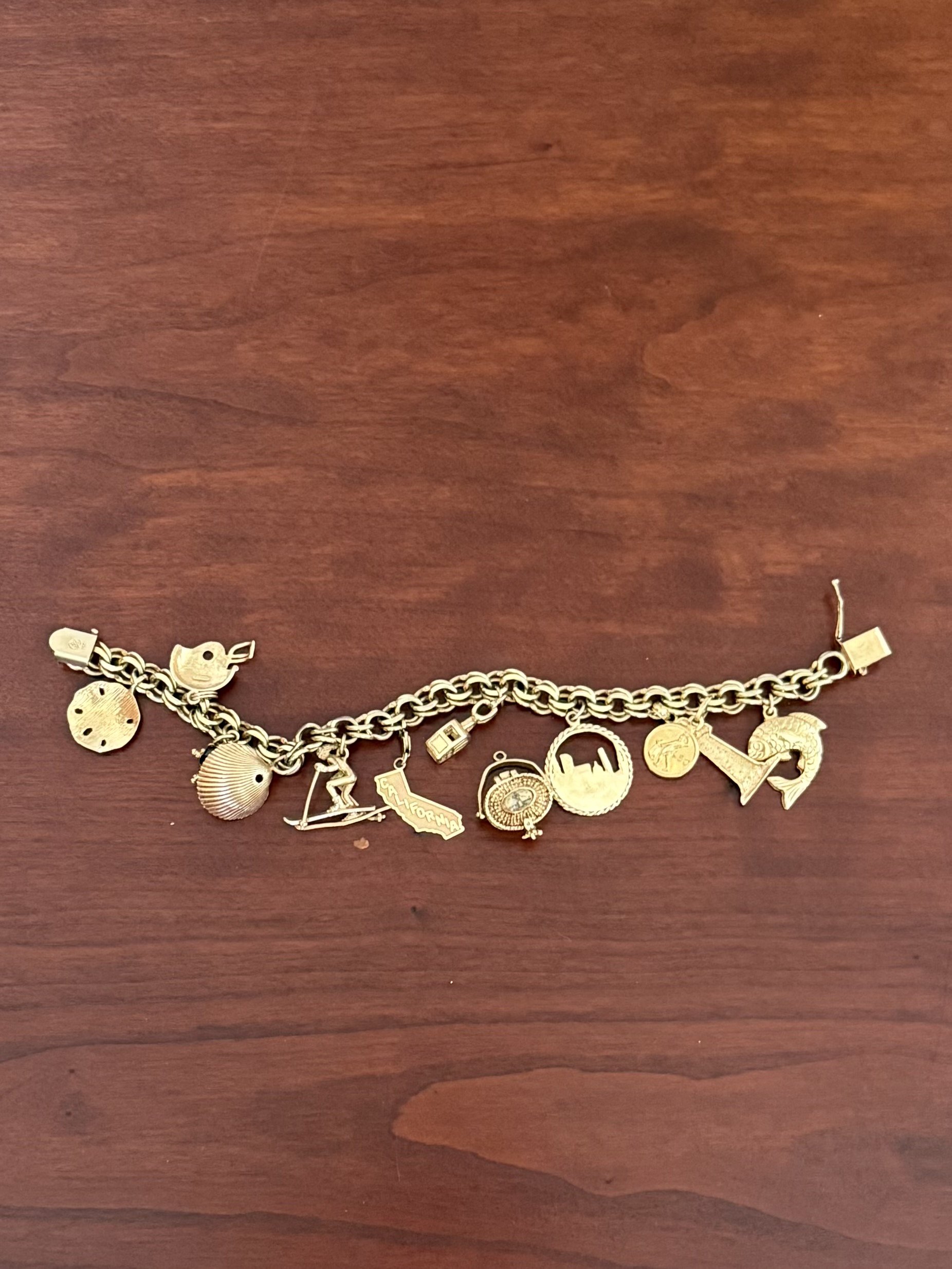
Charm Bracelet
I started this bracelet when I was twelve, and each charm marks a place I’ve visited, an activity I love, or something symbolic — like the tiny ladybug I added for good luck. Adding it to an outfit instantly makes what I’m wearing feel personal and reminds me of the moments I’ve collected along the way. Over time it has become a timeline I can wear, and it’s often a favorite accessory I reach for in December.
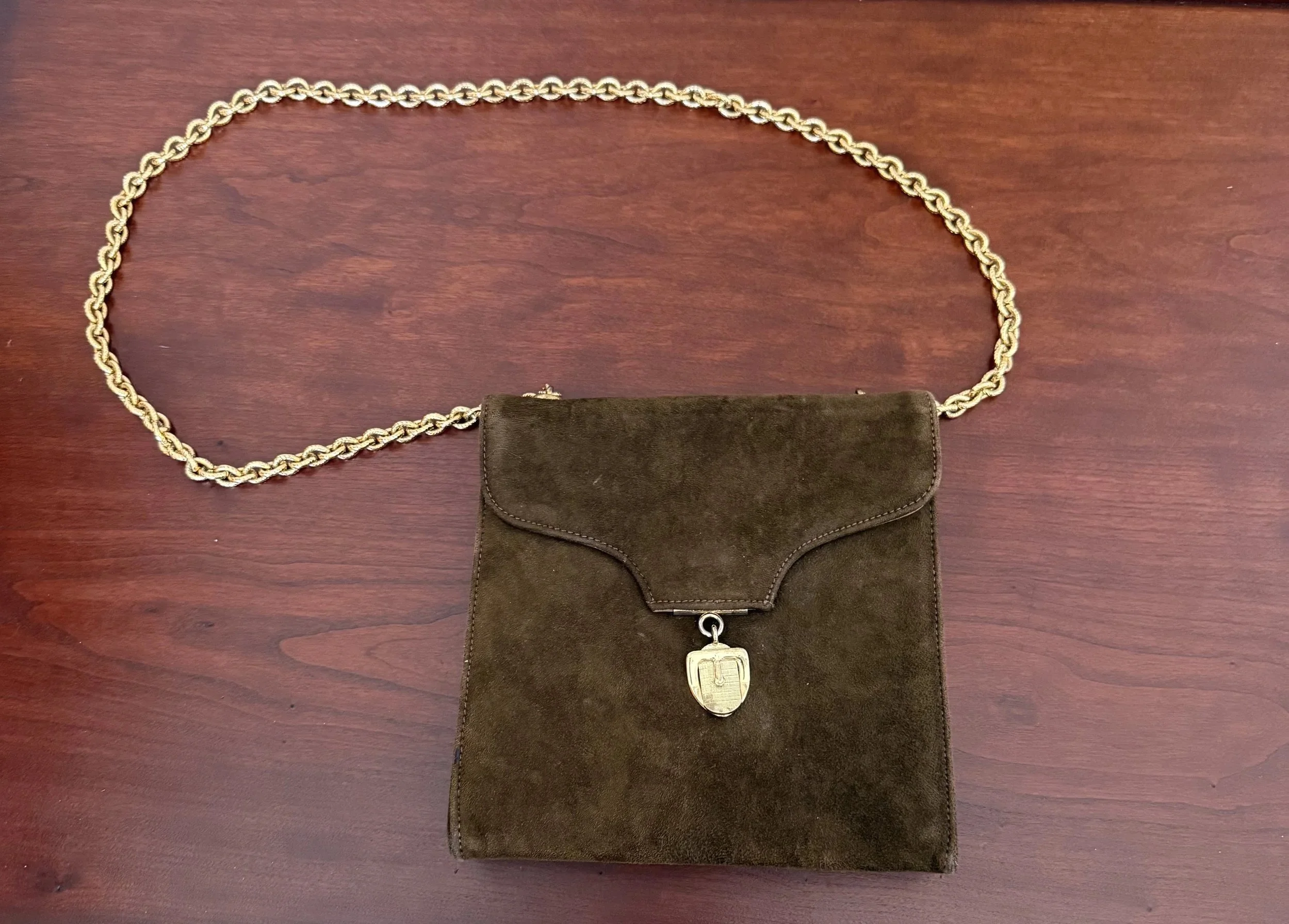
Suede Bag
This vintage suede bag, with its gold chain strap and clasp, belonged to my mom when she was dating my dad. Carrying it now feels like taking a piece of family history into the present — a small but powerful reminder that clothes can connect generations.
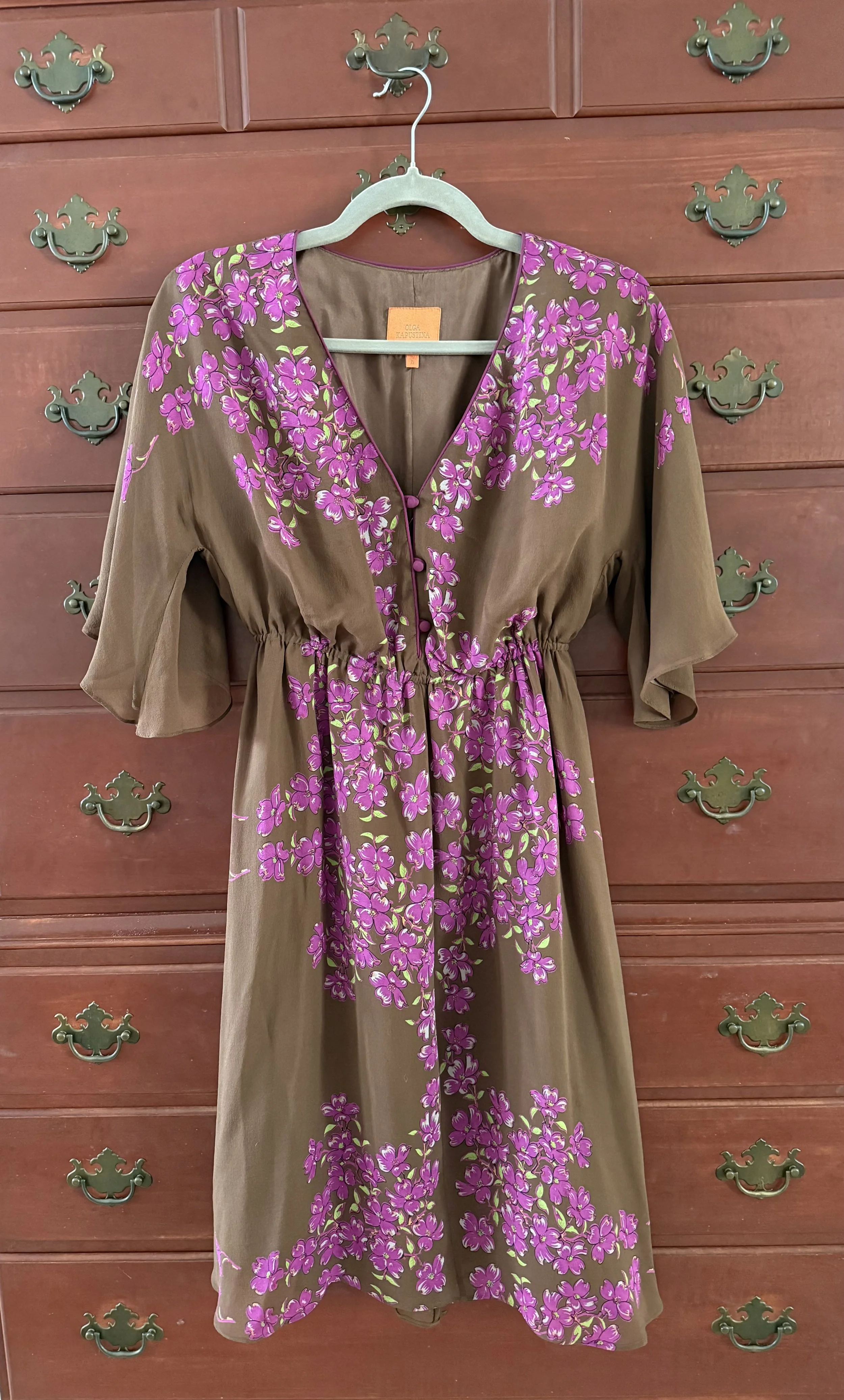
Brown Floral Silk Dress
This vintage silk dress has been worn to holiday dinners and events over many years. The silk lining, flattering silhouette, and rich floral print make it a piece that works across seasons. For the holidays, I’d pair it with gold shoes and jewelry for a dressier look, or more casually with tall suede or brown boots and a slouchy bag. If you love the style of my brown silk dress, I’ve linked a search on Poshmark so you can spot similar floral silk dresses by the same designer — just filter by your size and save what you like to watch if it pops up.
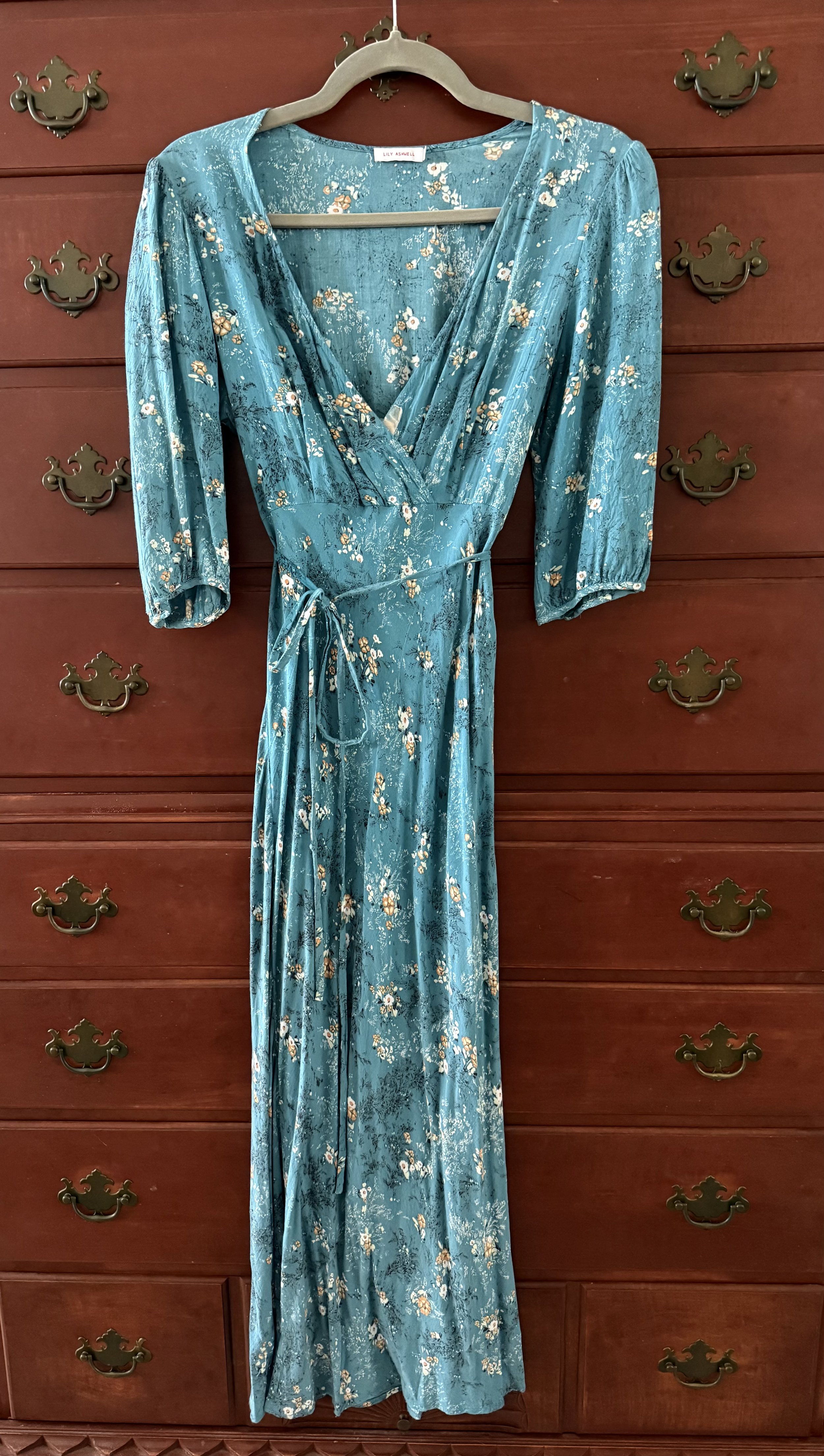
Lily Ashwell Silk Dress
This is from Lily Ashwell’s very first collection in Holiday 2012, a California-based designer who focused on local production, small-batch runs, and storytelling through vintage-inspired silhouettes. The delicate sleeve detail and floral print still make it one of my favorite pieces to bring out in December, and adding a simple heel or boot is all it needs to feel current. Her early pieces are hard to find, but that’s part of what makes them special. If you’d like to hunt for one yourself, I’ve linked a Poshmark search for Lily Ashwell — you never know what treasures might pop up.
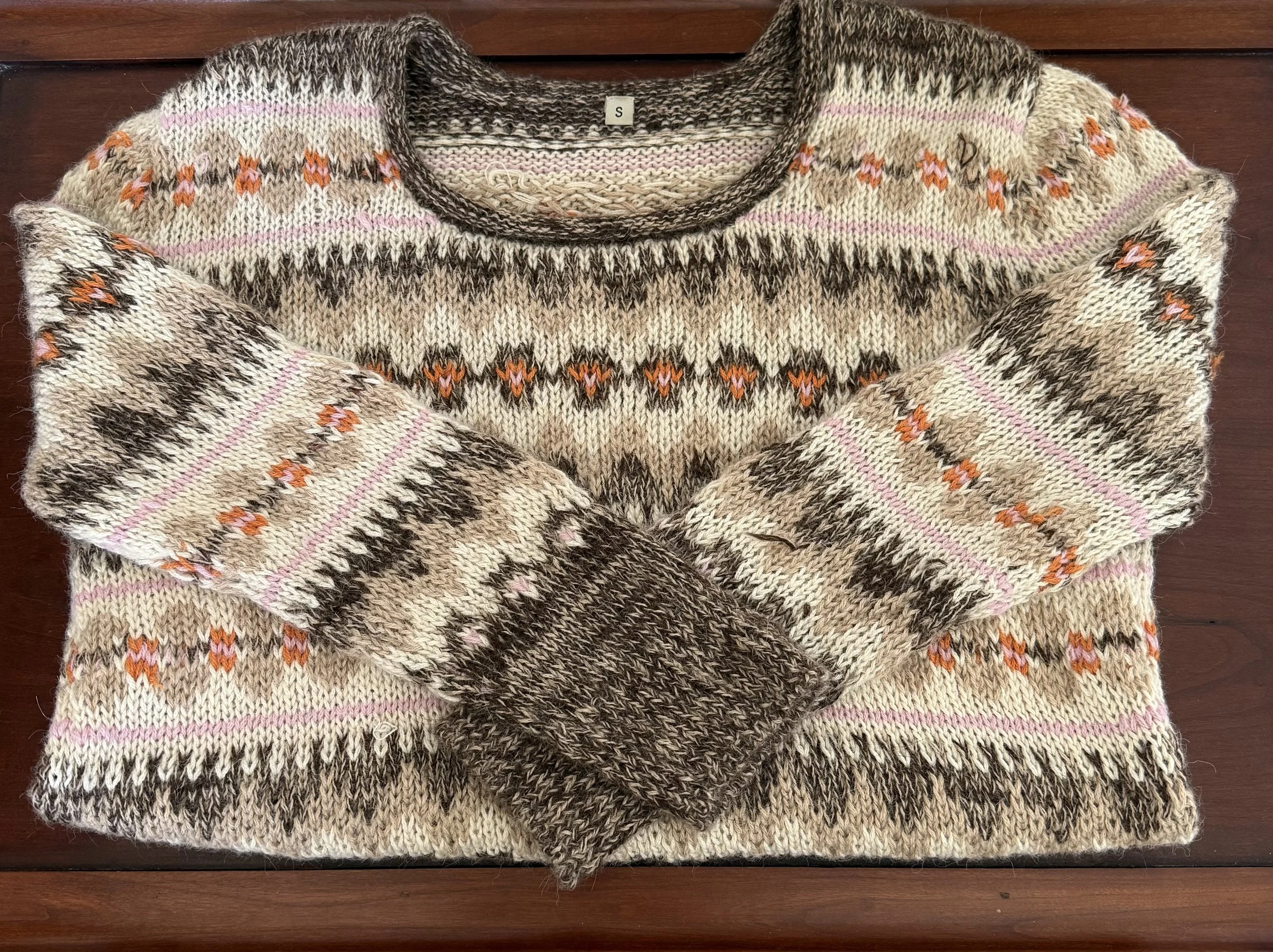
Lily Ashwell Fair Isle Sweater
A true Poshmark find and one of my favorite secondhand scores, this hand-knit fair isle sweater is beautifully constructed and timeless. I love styling it with wide-leg dark denim and ankle or lug boots for a modern look, or layering it over a silk skirt or slip dress to mix textures. I liked a Poshmark search above for Lily Ashwell items, but Lily Ashwell pieces can also be found on eBay as well.
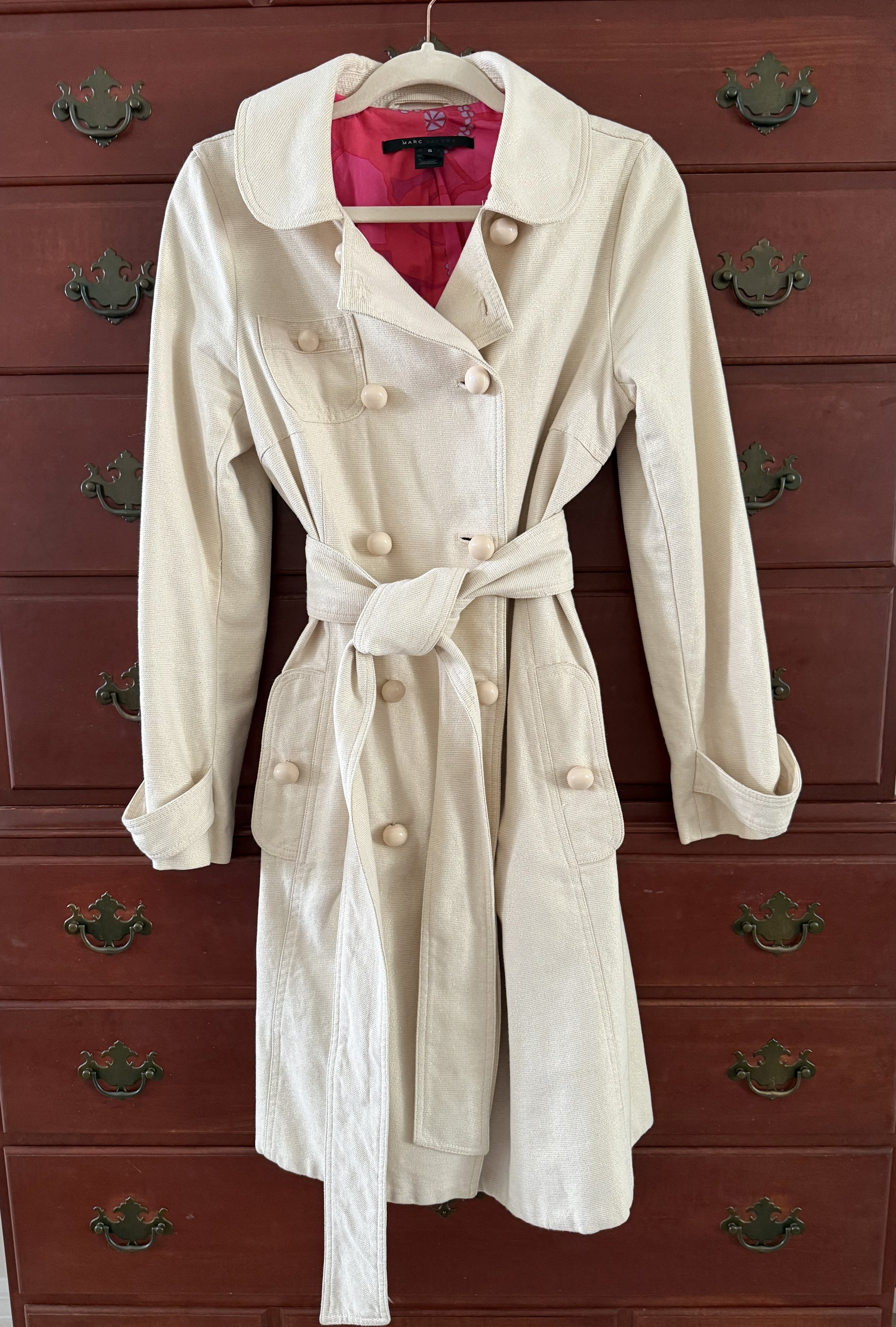
Marc by Marc Jacobs Metallic Trench
I bought this coat more than fifteen years ago, and it’s still one of the most versatile layers I own. The ivory buttons, vibrant pink print lining, and subtle metallic sheen make it perfect for holiday nights out — it elevates everything from denim to dresses. Marc Jacobs trenches show up regularly on resale sites. Here’s a Poshmark search and a RealReal search if you’d like to see what’s available right now. I did happen to see this exact trench on Poshmark in a few listings.
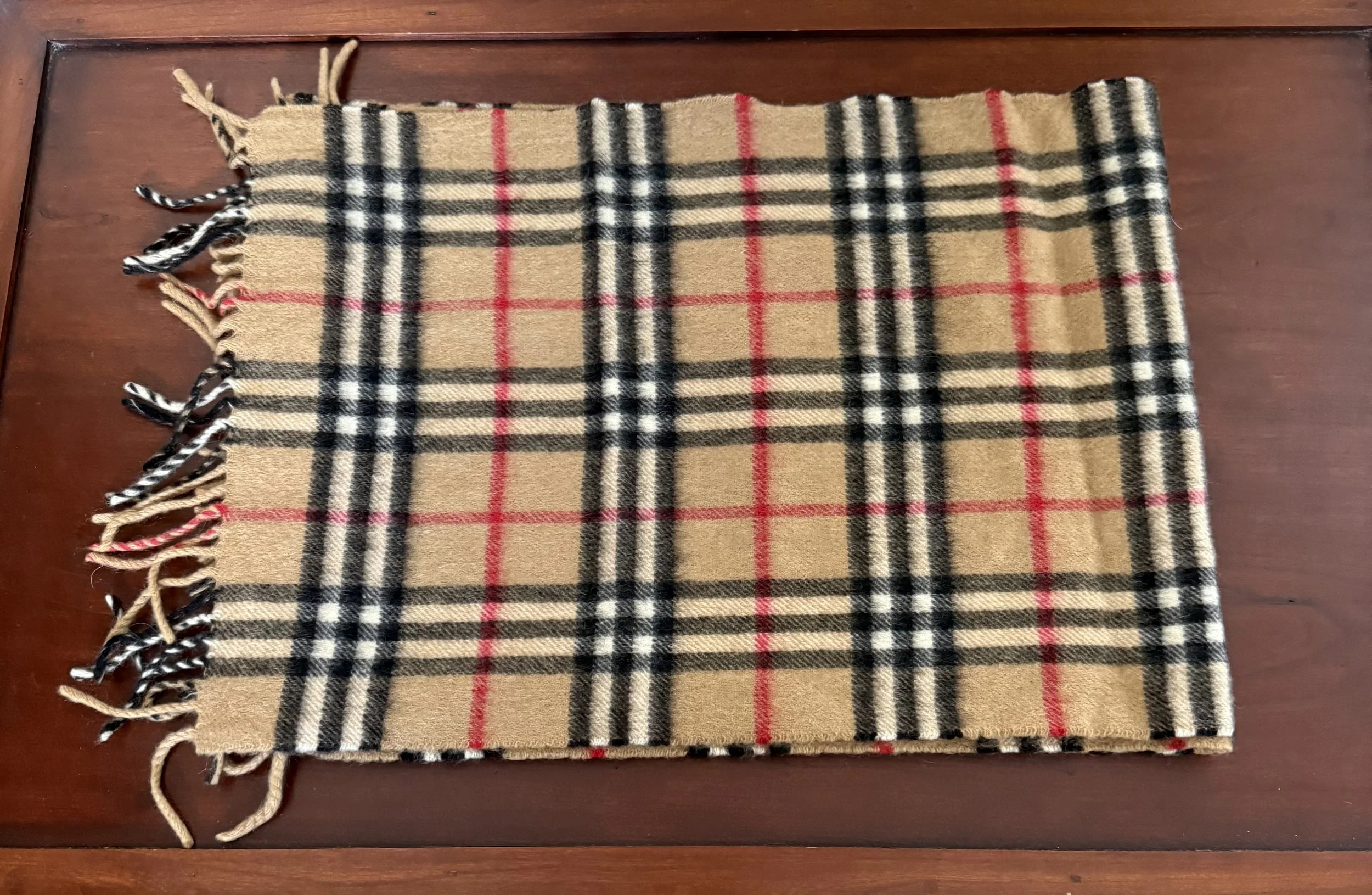
Burberry Scarf
A RealReal find that has quickly become part of my December rotation when I travel somewhere cold. I wear it with my camel coat or even a metallic puffer to add color. The classic plaid pattern means it will stay in my wardrobe for years and always remain in style. Burberry scarves are true classics, and you can often find them for much less secondhand. I’ve linked a RealReal search here if you’d like to browse.
If you want to start your own collection of pieces with history, I love Poppy’s Vintage Clothing. Everything is over 20 years old and carefully chosen, so every coat, dress, or bag already has a story. Finding something with that kind of character feels like adding a little piece of the past to your own wardrobe.
How I’m Styling Them This December
Even though I live in a tropical climate, I love bringing these pieces into rotation this time of year — and when I travel to a cold-weather destination, I style them a little differently. Here’s how I’m wearing (or planning to wear) them this season:
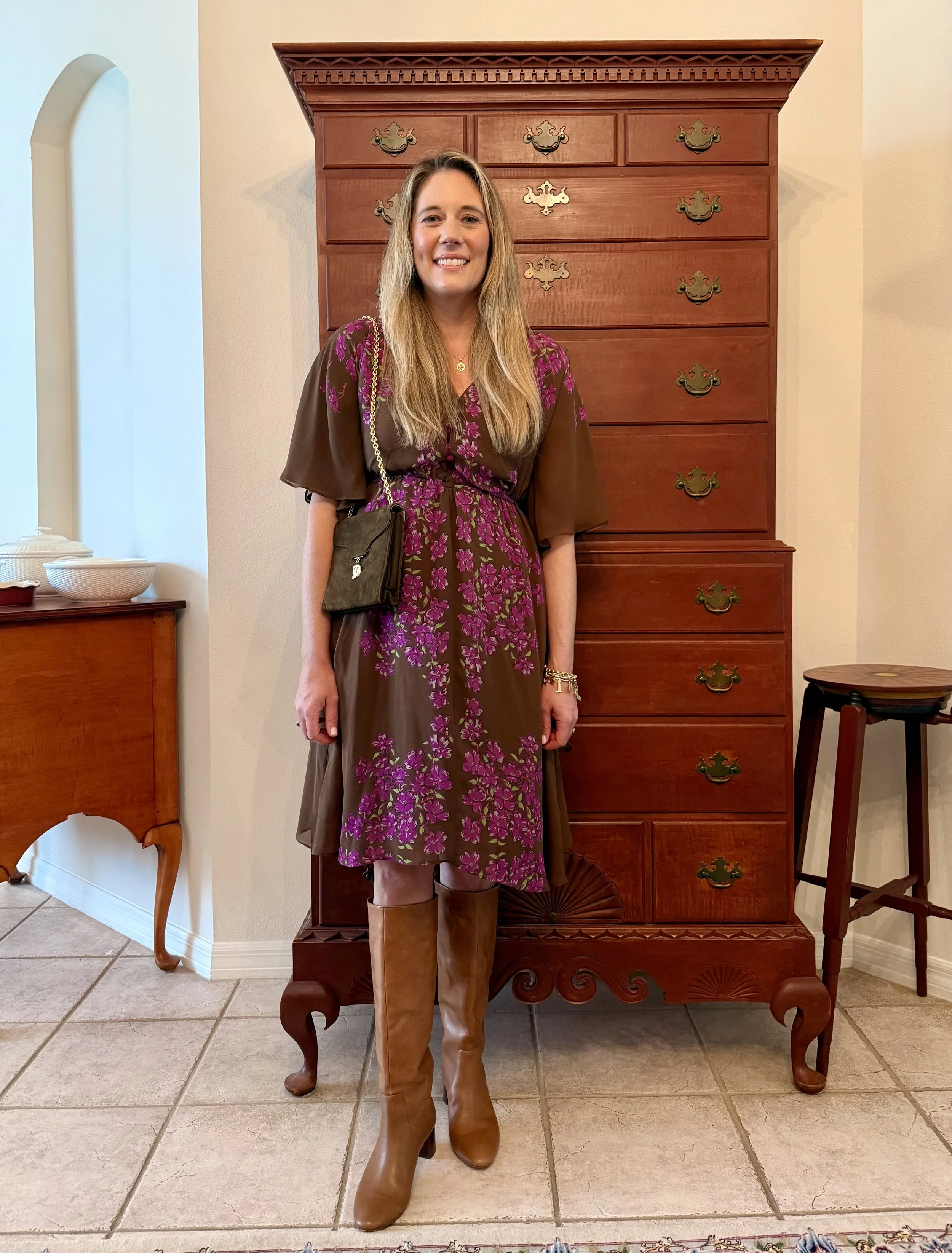
My 15-year-old vintage silk floral dress, styled with my charm bracelet, and my vintage suede gold-chain bag and paired with Loeffler Randall tall boots — proving timeless pieces never go out of style.

Marc Jacobs trench meets a Lily Ashwell dress, sparkly gold shoes, my vintage suede gold-chain bag, and my favorite charm bracelet — a classic look for the holidays
Charm Bracelet: Goes with everything from casual to dressy outfits — perfect with a sundress at home or with a cozy sweater when I travel to a cold-weather climate.
Suede Bag: Works year-round here; I love it with linen and sandals in warm weather and with tall boots + dresses if I’m heading somewhere cold.
Brown Floral Silk Dress: Gold sandals or block heels for holiday dinners here; suede boots + cardigan if I’m traveling to cooler weather.
Lily Ashwell Pieces: The silk dress pairs with strappy sandals for Florida evenings. The fair isle sweater is too warm for home but comes with me when we travel — I wear it with denim and boots for tree shopping or brunch.
Metallic Trench + Burberry Scarf: The trench is light enough to wear over holiday dresses for evenings here, and the Burberry scarf is my go-to cozy layer for cold-weather trip.
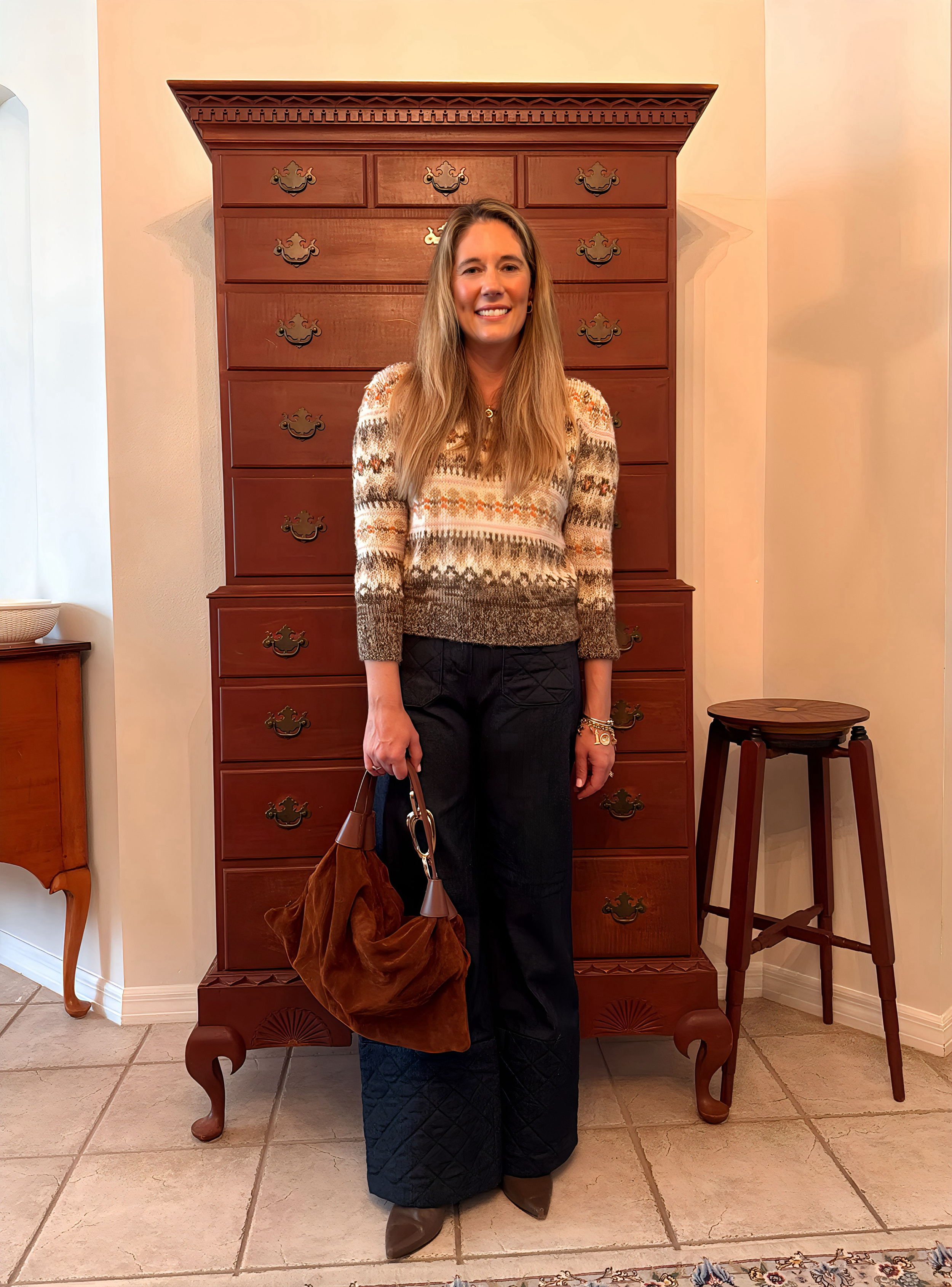
Hand-knit Lily Ashwell Fair Isle sweater paired with dark wide-leg denim,a brown suede slouchy bag, brown ankle boots and my charm bracelet.
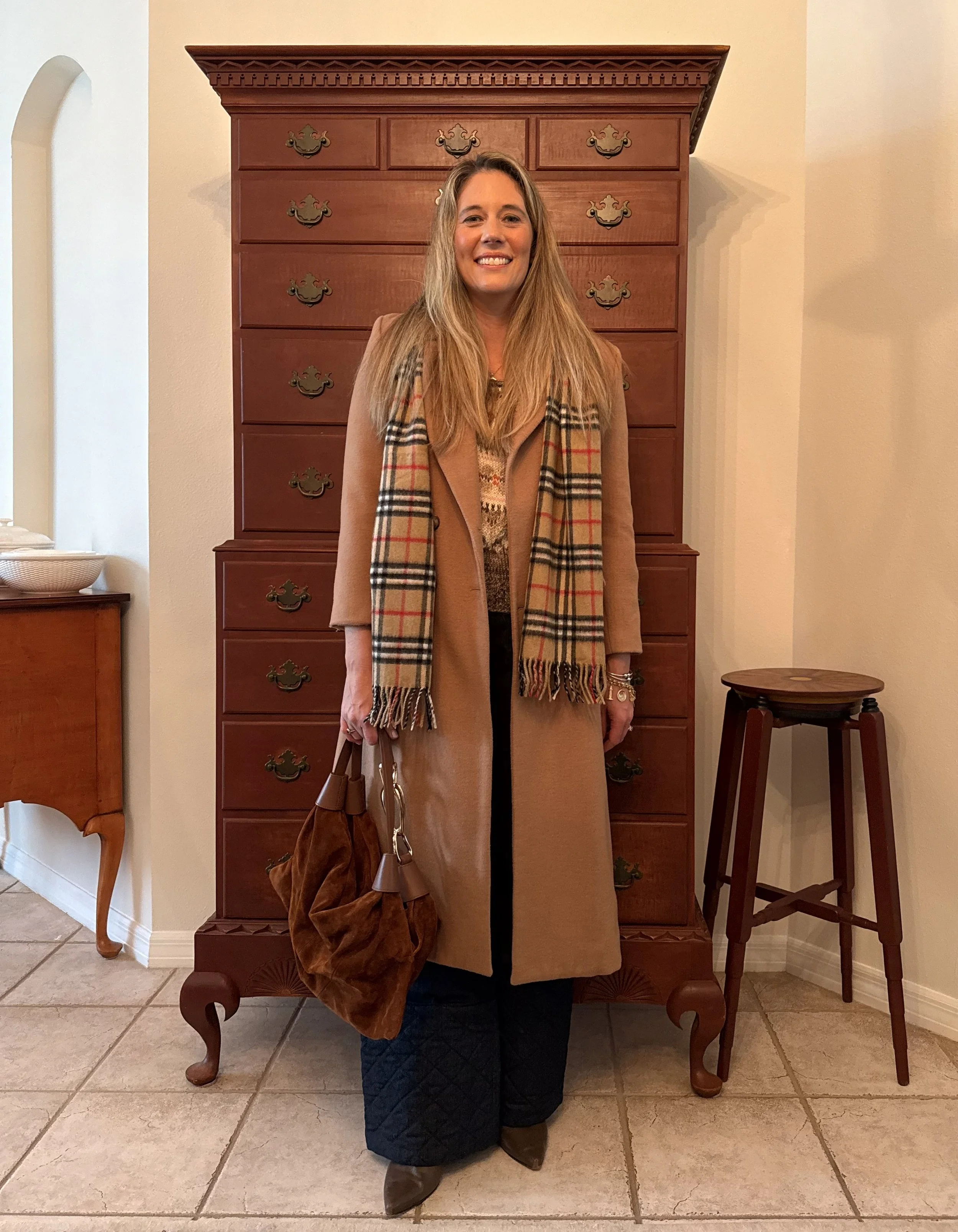
Timeless pieces from my closet-a wool camel coat, vintage Burberry scarf, Lily Ashwell sweater, dark quilted denim, brown ankle boots and my charm bracelet- updated with a brown suede slouchy bag.
Start Your Own Holiday Style Tradition
Looking through my closet this December reminded me that personal style is connected to memories and can tell your story. The same is true for you — your closet is full of pieces that carry your history. Some are family heirlooms, some you’ve worn to countless events, and some remind you of trips, milestones, or seasons of life.

Pieces with memory — my wardrobe favorites that carry family history and stories into the season.
This month, try building your holiday outfits around those pieces:
Choose What Tells Your Story: Pull out 3–5 items you’ve owned for years or that hold a memory — a bag from a family member, a dress you’ve worn to past holidays, or a bracelet from a trip.
Update Them: Add a new shoe, a different layer, or a fresh accessory to bring them into this season.
Wear Them to Create New Memories: Let at least one of these pieces be part of a gathering, dinner, or trip this month — and make it part of the memory you’re creating now.
✨ Want to plan your own? Download the Memory Based Holiday Workbook in the [Resources Library] to choose your core pieces and see how they set the tone for the rest of your outfits.
✨ Looking for holiday direction? Explore the [Holiday Inspiration Gallery] for seasonal color palettes, festive outfits, and mood boards to guide your December packing and read the guide Holiday Style: How to Look Festive Without Buying a Whole New Wardrobe. and the guide about Wardrobe Investments: How to Choose Pieces that Last.
✨Interested in reading more? Check out: How I Pack Layers for a 3 Day Weekend and ThreeThings I Pack for a Fall City Trip and The ThreeThings I Pack for Thanksgiving.

Holiday Style: How to Look Festive Without Buying a Whole New Wardrobe
Discover how to look festive this holiday season without buying a whole new wardrobe. From winter whites and gold accents to cozy details and timeless dresses, learn how to style your existing pieces for every holiday moment — tree lighting, cookie swaps, holiday concerts, and black-tie events. Make your wardrobe work for you while celebrating in style.

Heading into the holidays with favorite pieces packed for the season ahead.
Holiday style should feel fun, not stressful — and the truth is, you probably already own most of what you need to look festive.
Living in a warm climate, I’ve learned to make my summer dresses work for the holidays — adding metallic heels, a cream wrap, or a faux-fur shrug to make them perfect for the season. I’ve also kept a small collection of winter pieces from when I lived in a four-season climate, so when I travel somewhere cold, I can layer them and refresh my look from what I already own.
For winter trips, I reach for the pieces I love most — a dress I wore last Christmas in London, my go-to ankle boots, my favorite plaid scarf, and a shearling bag I’ve carried for years.
This guide is about creating a holiday capsule from what you already love — making the most of what’s in your closet, styling pieces in new ways, and thoughtfully bringing in any new items you’ll wear long after the season ends.
To do that, you can use a simple process that helps you focus and see what you already have. It’s an approach to planning holiday outfits from your own wardrobe — a way to highlight the pieces that already work and see that you have more options than you think.

Holiday details I’m loving right now — soft knits, a little shine, and something festive.
🎨 Start with the Mood
✨ Begin with Inspiration
Before you even open your closet, decide on the feeling you want your holiday wardrobe to have — cozy, glamorous, or a mix of both.
This year, I’m bringing in metallic gold, velvet, holiday florals, and plaid accents — but pairing them with summer dresses, light wraps, and gold sandals so they work for where I live.
A quick mood board — Pinterest, a few screenshots, or even a note in your phone — helps focus your ideas before you start pulling pieces.
Think about:
Textures: velvet, sequins, lace, cozy knits, or shearling
Palette: camel, cream, red, chocolate brown, and metallics
Details: gold jewelry, standout clutch, metallic heels, or a soft scarf
Once you have your mood in mind, open your closet and pull out the pieces that match — the ones that fit the look you just created — and make note of any gaps you might want to fill. You might be surprised by how much you already have that works.
This year, my holiday mood board is inspired by the effortless, cozy-yet-glamorous style of Amanda Woods in The Holiday. I’m not recreating her exact outfits, but I love her style — put together and relaxed at the same time — so I used that as my starting point. Then I added my own spin: layering in winter florals for cold-weather looks and reimagining her cozy style for a warm-weather Christmas.

Cold-Weather Holiday Mood
A cozy Surrey-cottage Christmas vibe — shearling coats, plaid scarves, soft knits, and a touch of gold sparkle for a festive night out.

Warm-Weather Holiday Mood
A warm-weather Christmas — breezy florals, raffia textures, gold sandals, and metallic accents for a little festive sparkle. The same effortless, cozy-yet-glamorous energy — just reimagined for sunshine.
🎁 Holiday Moments & Outfit Ideas
Here’s where I put my own mood board into action.
These are the looks I find myself reaching for in different moments throughout December — all built from pieces I already own. Your mood board might lead you somewhere completely different, and that’s the best part. Let it reflect your season, your plans, your style, and what makes you feel good.
Use these as ideas to spark your own combinations, not rules you have to follow. Whether you’re celebrating in a cold or warm climate, try putting your holiday outfits together starting with what you already have in your closet.
Tree Lighting & Holiday Shopping
Cold-Weather Look: When I’m traveling somewhere cold, I reach for cream jeans or corduroy with a soft knit, a plaid scarf, and boots. I throw on a camel coat for warmth and use a crossbody bag so my hands stay free. Your version might swap in darker denim, a different coat, or a favorite scarf inspired from your mood board.

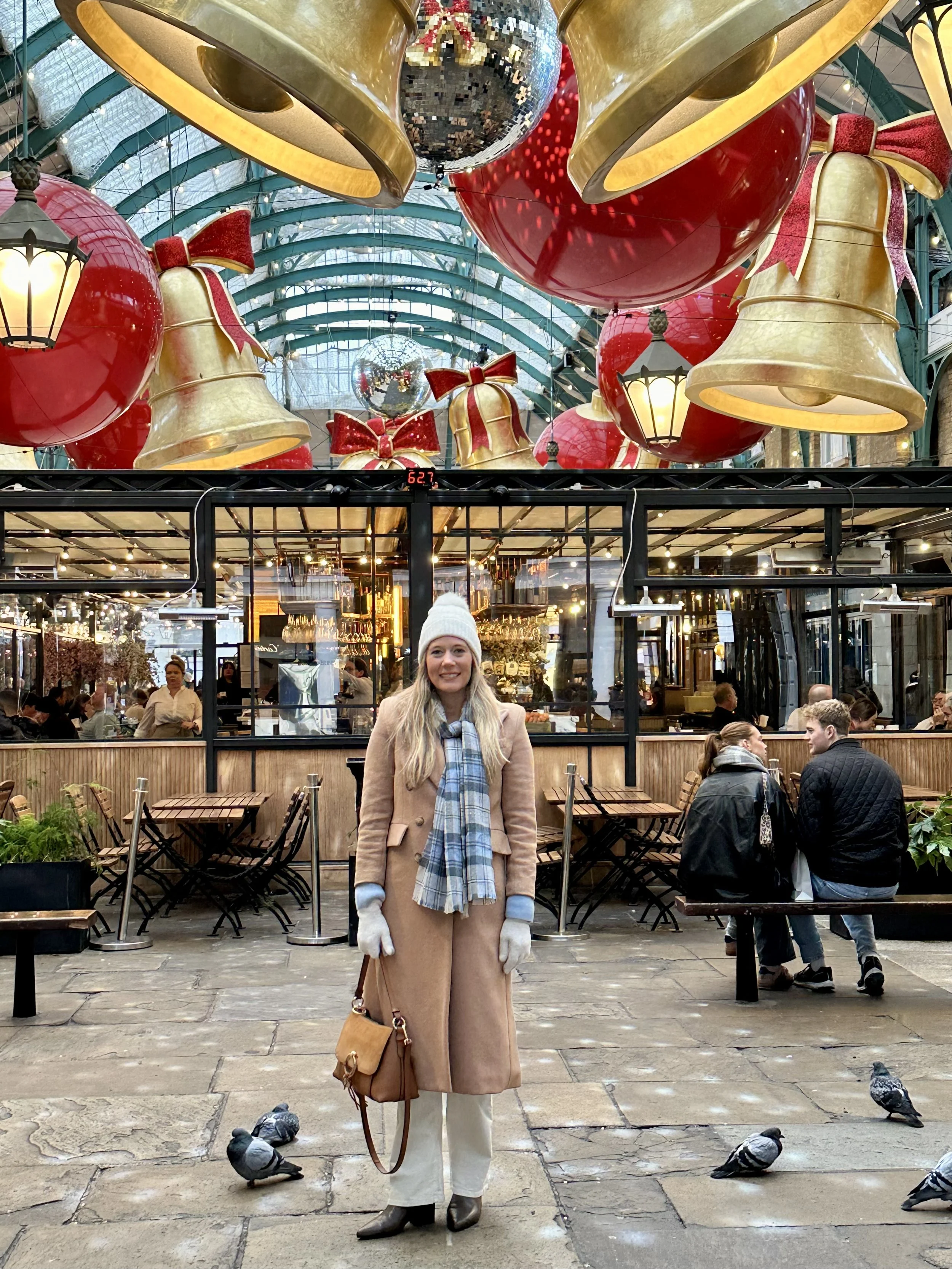
Putting the look into action: wearing my camel coat and cream jeans at Covent Garden during the holidays.
Warm-Weather Edit: When it’s warm, I go for a light sundress or linen set in one of my holiday colors, add gold sandals, and toss on a light scarf, wrap, cardigan or white jean jacket. I finish with a crossbody bag — yours might be a neutral woven style or metallic detail for a subtle festive touch.

Tropical tree-lighting look — palm-print slip dress, ivory cardigan, gold flats, and a chic raffia bag for a day of shopping and evening holiday events.
Cookie Swap or Decorating Night
Cold-Weather Look: I like dark denim with a feminine blouse or a velvet jean with a soft sweater for nights at home with friends or family. You might choose something brighter or more casual based on your board. Add a holiday headband, standout shoes, earrings, or a necklace. Little details make the outfit feel festive for December.
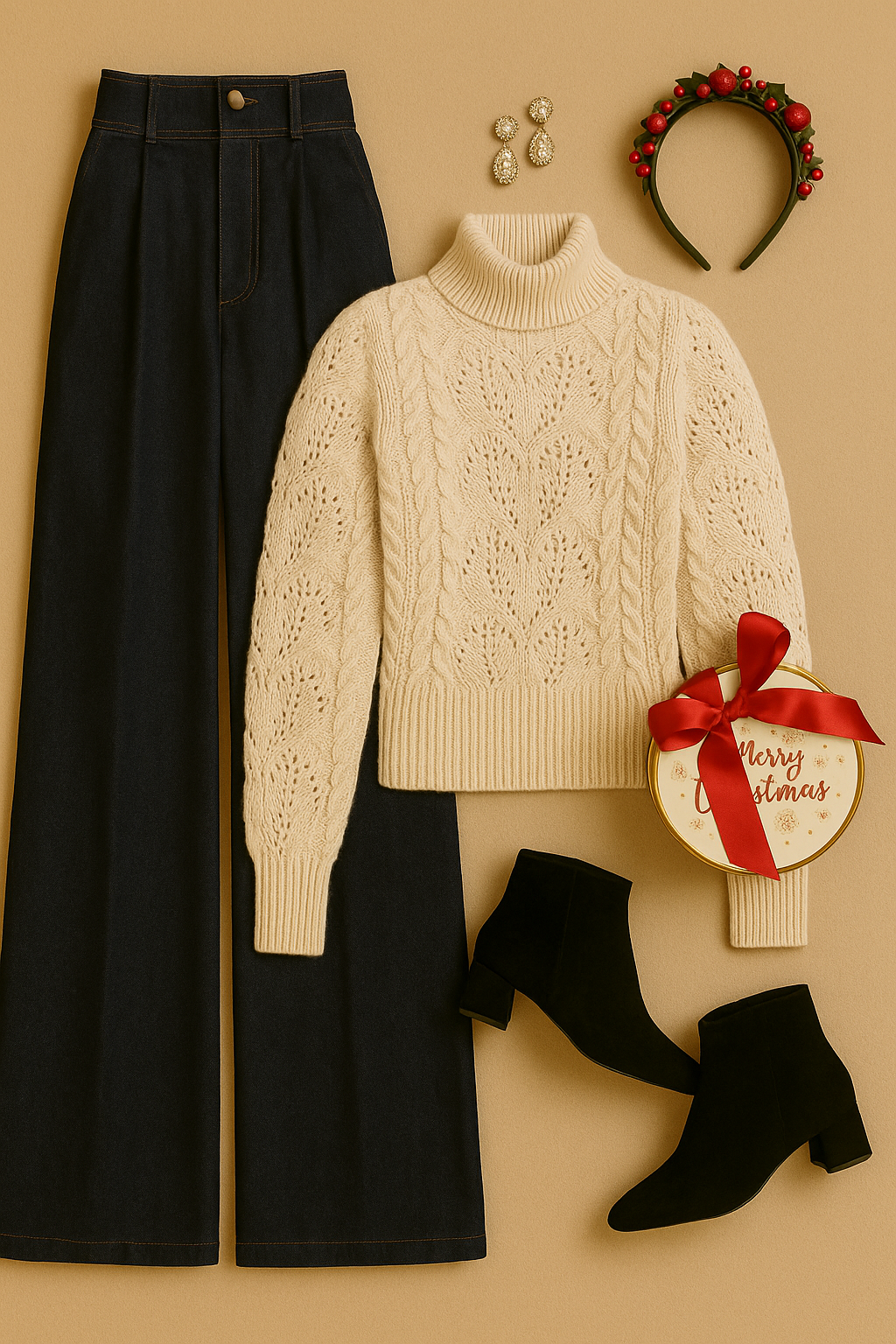
Dark denim, a soft sweater, and a few gold accessories — cozy but still festive for a cookie swap or decorating night.
Warm-Weather Edit: I would wear white or cream denim with a short-sleeve blouse, or a lightweight midi skirt with a crochet tank. Then I would add metallic sandals and gold jewelry for a hint of festivity without overheating.

Warm-weather holiday look — cream denim, pale tropical print blouse, gold sandals, and straw bag for a daytime cookie swap outfit.
Holiday Concerts & Parties

Holiday party ready: a mix of velvet, sequins, plaid, and gold — styled with layers and accessories to fit the night.
Cold-Weather Look: When I get dressed up, I lean toward dresses or a skirt-and-top set that looks like a dress. I love wearing a printed dress with a faux-fur wrap, or velvet, blush, or cream tones paired with gold accessories.

Chic holiday party style — a champagne velvet wrap dress with a cream wrap coat, gold pumps, and a faux-fur stole for an elegant winter look.
Warm-Weather Edit: Restyle a summer dress with gold jewelry and a cream wrap. Add heeled sandals or metallic flats so it feels holiday-ready.
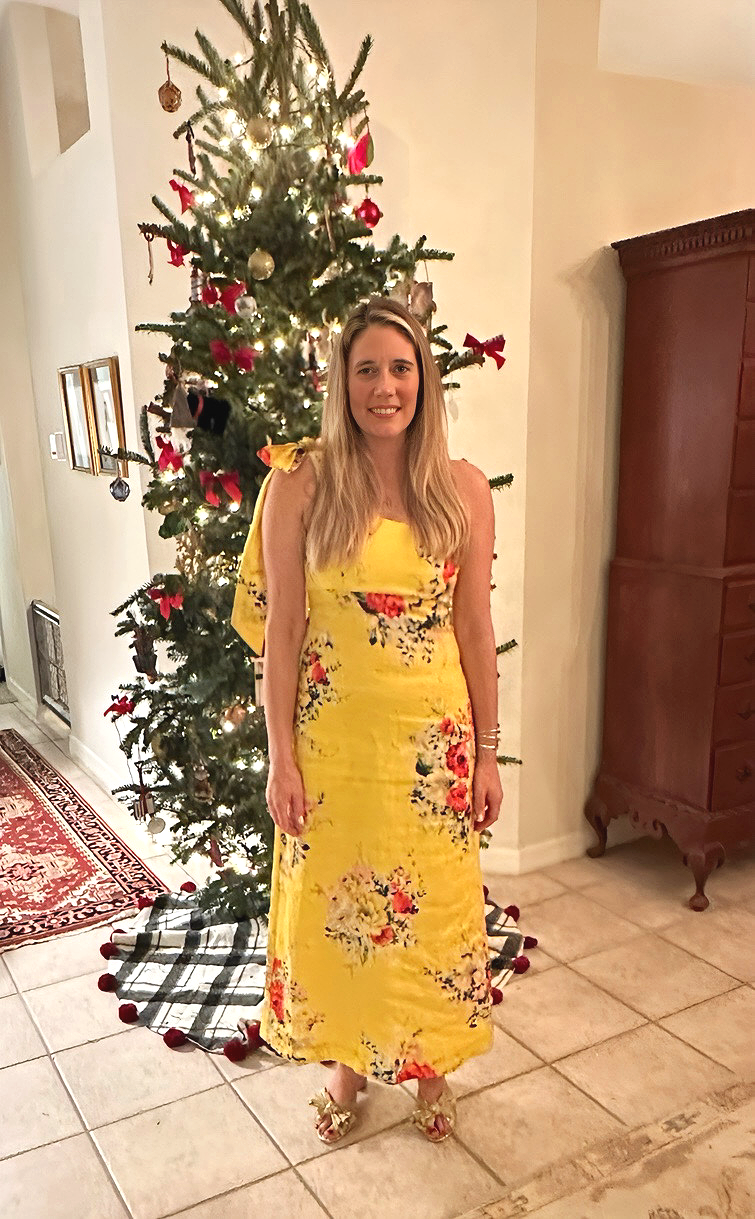
This yellow floral dress works in every season, and the touches of red and green make it perfect for a warm-weather Christmas. Add metallic accessories, and it becomes an easy, holiday-ready look.
Check your mood board and pull pieces that work together — your version might be a jewel-toned dress, a slip dress styled up with accessories, or a skirt and top you already own worn in a new way.
🎄 Christmas Eve
Cold-Weather Edit:
I love a look like this: a romantic dress layered with a camel coat, gold heels, and a small clutch — classic and timeless. If it’s very cold, I’ll add tights and swap the heels for tall boots.
Warm-Weather Edit:
In a warm climate, I keep it lighter — the same romantic dress with metallic sandals or block heels, a light wrap, and delicate jewelry.

Romantic holiday look — a floral dress with black ribbon, camel coat, gold heels, and clutch for a timeless Christmas Eve or Christmas Day outfit. Add tights and tall boots for extra warmth, or keep it light with sandals for a warm-climate celebration.
🎁 Christmas Day
Cold-Weather Edit:
I’d choose a knit dress or a matching set with boots or flats — something cozy but still cute for photos and gatherings. Add a scarf or plaid accessory for a festive touch.

Cozy and classic— a cream knit dress with simple gold jewelry for Christmas Day
Warm-Weather Edit:
Since it’s warm where I live, I usually go for a dress or set in cream, red, or green with metallic sandals and simple jewelry — something easy to wear all day.
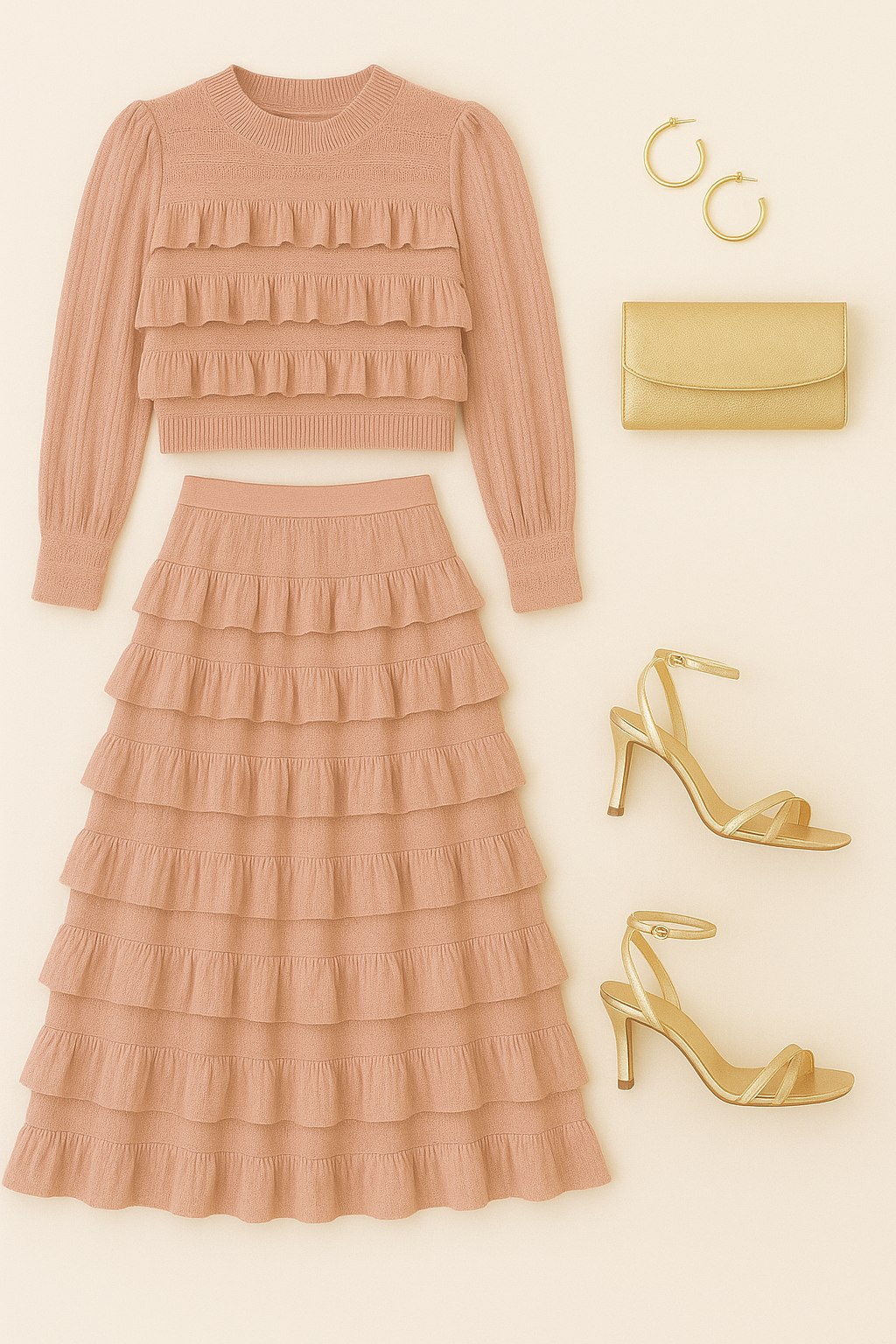
Blush ruffle set with gold sandals and clutch — a light, festive look perfect for Christmas Day gatherings in a warm climate.
🎩 Winter Formal or Black Tie
Cold-Weather Look:
If you already own a long dress, style it for the holiday season — add a faux-fur wrap, a metallic heel, or a statement earring to make it festive. For warmth, top it with a classic long wool or evening coat.

Black tie made simple — a sequin dress, faux-fur wrap, gold heels, and statement earrings
Warm-Weather Edit:
In warm climates, I would wear an embroidered floral gown and pair it with metallic sandals, a gold clutch, and simple jewelry . If you don’t already own a formal dress, renting is a thoughtful way to wear something special without buying a piece that may only get worn once.
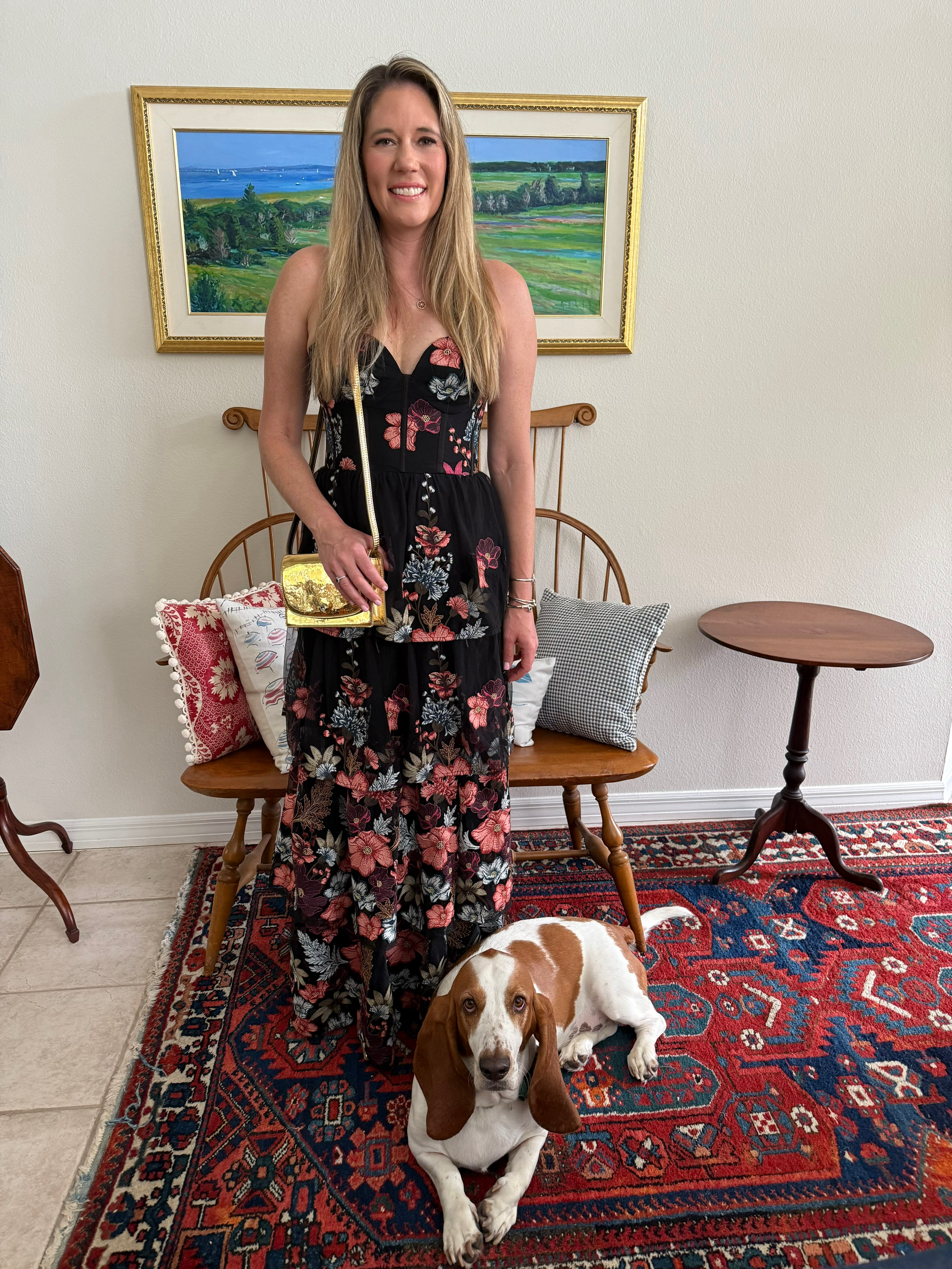
This embroidered floral gown is a piece that works beautifully in both warm and cool climates. The tropical-inspired embroidery makes it perfect for milder weather, while the black base and metallic accessories keep the look festive and holiday-ready.
✨ Styling Additions That Make a Difference

Plaid, faux fur, gold jewelry, and a few festive details — small additions that completely change the look.
These are the finishing touches that make what you already own feel fresh for the holidays:
Layer a cropped or soft knit over a sleeveless dress
Pair your favorite summer dress with gold accessories or a faux-fur wrap to make it feel seasonal
Mix textures: velvet with silk, knits with satin, leather with sequins
Choose tones you love — blush, cream, festive prints — and finish with gold jewelry, metallic shoes, or a standout clutch
Keep your mood board in mind here too — it can guide which textures, colors, and accessories make your outfits feel pulled together.
🥂 If You’re Shopping
Sometimes all it takes is one well-chosen piece — or even something borrowed — to pull your wardrobe together for the season. Renting or shopping secondhand is a thoughtful way to try something new without buying just for one event.
If you do buy something new, choose a piece that is timeless and you will wear again and again: a coat you’ll wear for years, a clutch that works with almost anything, or earrings you look forward to wearing every December or for special occasions throughout the year. Check out my post on Wardrobe Investments for more information on shopping for quality pieces.
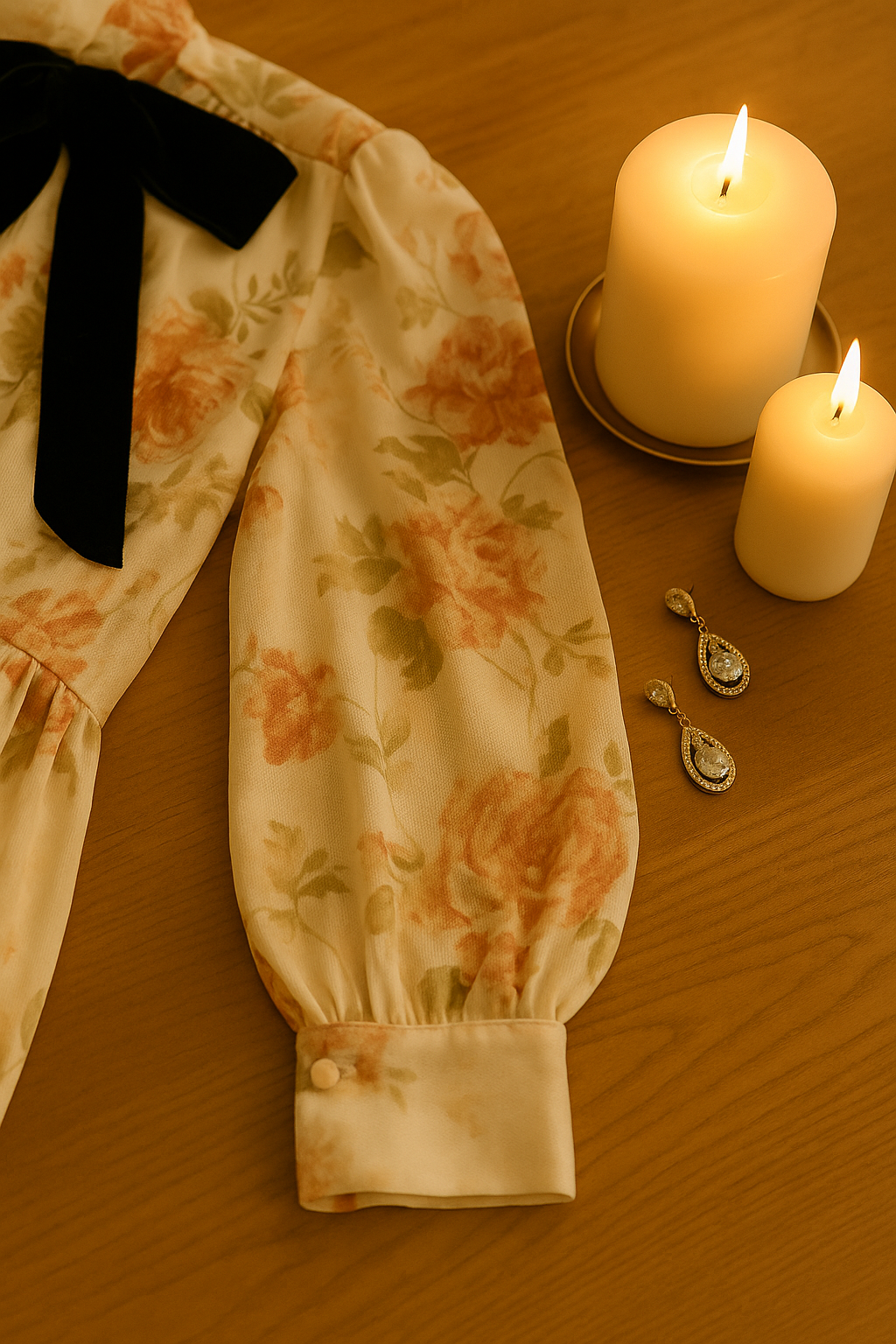
Favorite pieces and simple details — ready to wear again this season.
Your holiday wardrobe should tell your story — not just through what’s new, but through the pieces you reach for year after year. Use your mood board as a guide and start putting together outfits from what you already own.
✨Your Turn
Before you buy anything new this season, try creating your own holiday mood board.
Start with the feeling you want, then let your closet do the rest — you’ll be amazed by how much you already own that fits your vision.
If you’d like a guide, I’ve created a Holiday Mood Board Template to help you get started.
👉 Use the template here and build your own board.
You can also use the Inspiration Gallery for your holiday mood board ideas.
✨ Holiday Capsule Favorites
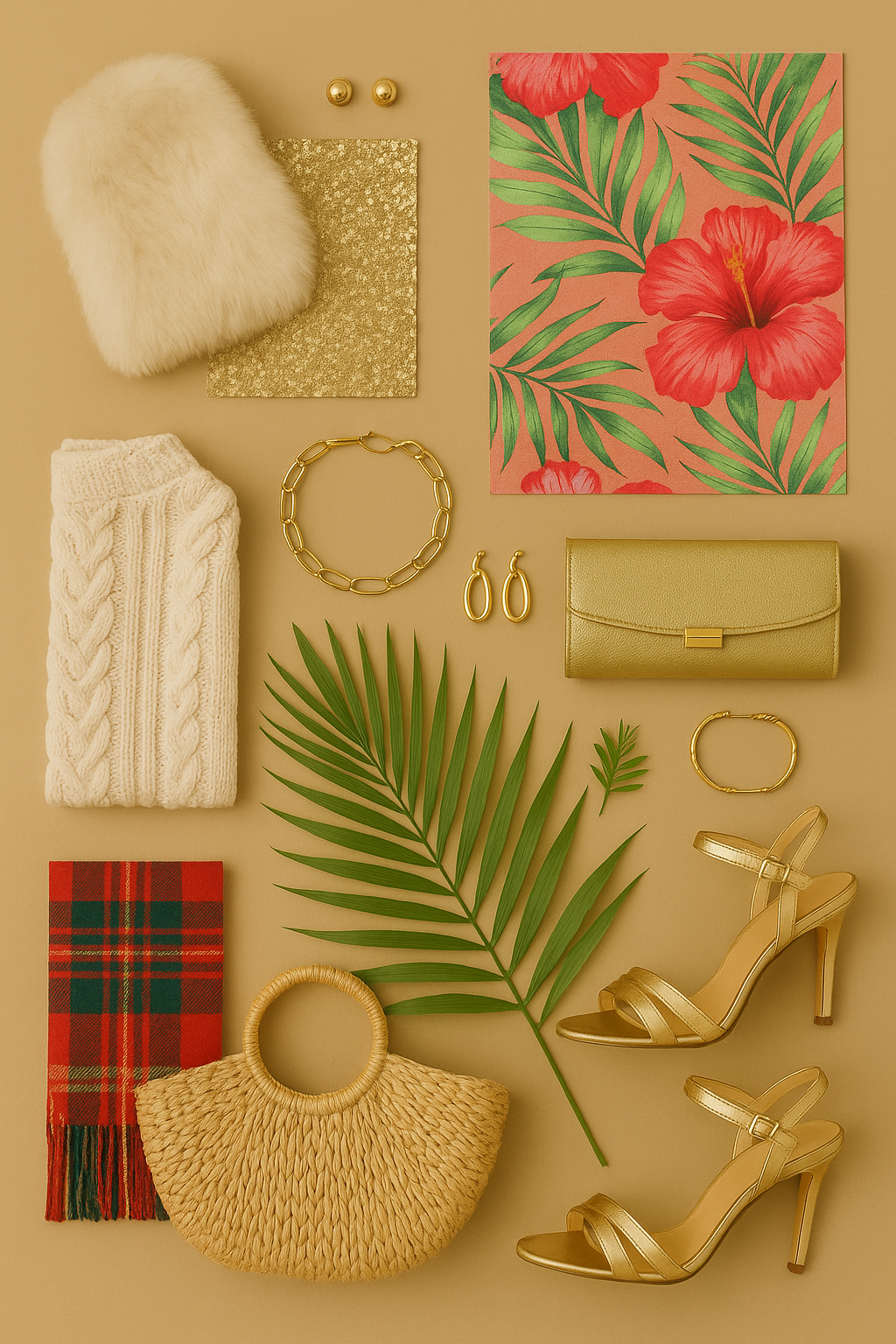
Amanda Woods–inspired holiday mood board with a tropical twist — a mix of cozy winter textures and breezy resort prints for a festive vibe wherever you celebrate..
Here are a few versatile pieces that match the outfits and mood board I shared above — perfect if you want to fill any gaps in your holiday capsule this season.
Dresses & Skirts
🛍️ Velvet wrap dress (classic & flattering)
🛍️ Gold sequin midi skirt (perfect for parties)
🛍️ Tropical-inspired holiday dress (warm-weather option)
Coats & Layers
🛍️ Camel coat (wear with everything)
🛍️ Faux-fur stole (adds instant glamour)
Shoes & Accessories
🛍️ Gold strappy sandals
🛍️ Closed-toe gold pumps
🛍️ Metallic clutch
🛍️ Festive statement earrings
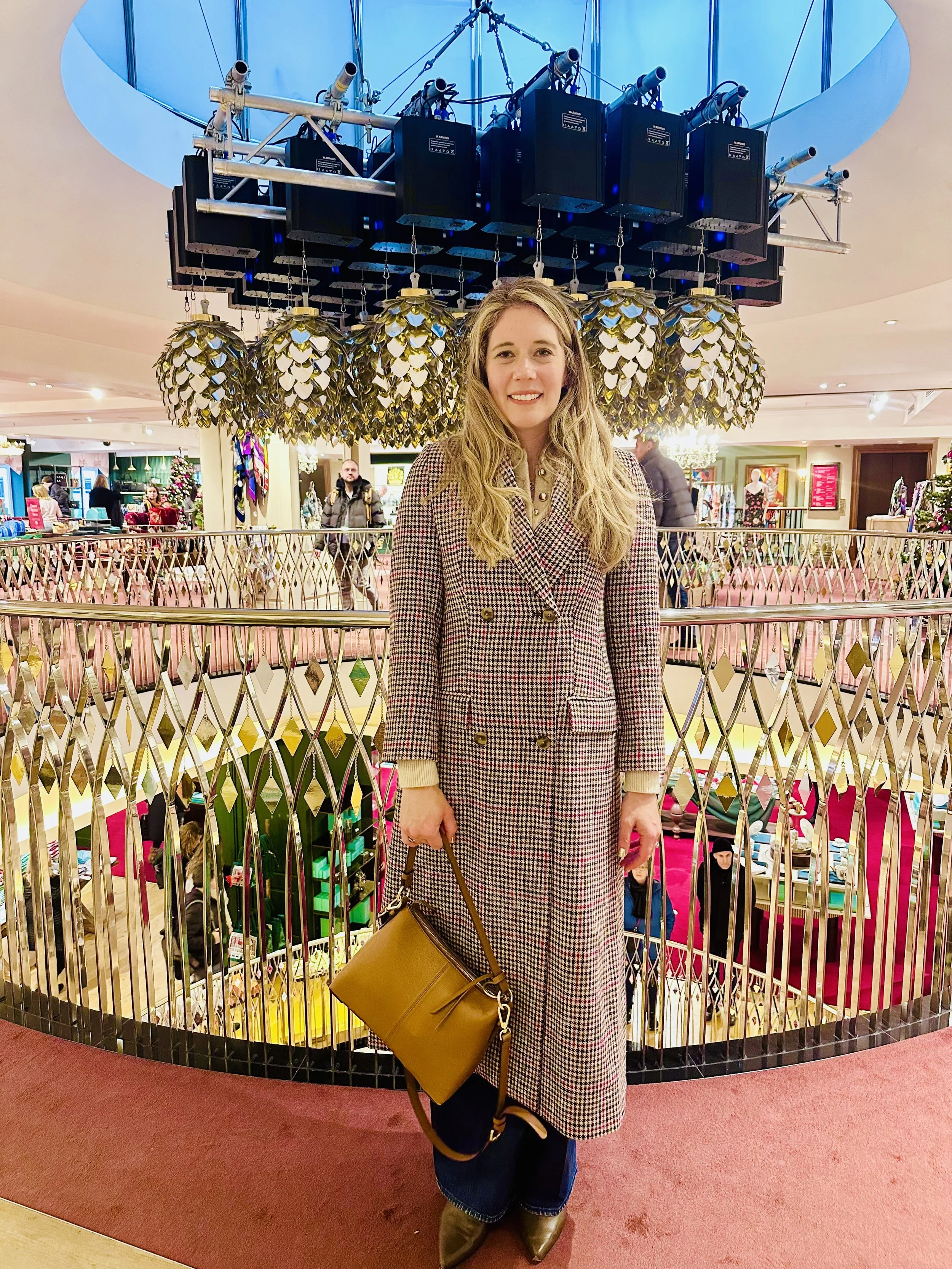
Celebrating the holiday season in London with my plaid wool coat, a soft beige sweater with gold buttons, my well-traveled Chloé crossbody, and my favorite walk-everywhere brown ankle boots.
✨ Looking for seasonal direction? Explore the Holiday 2025 Inspiration Gallery] for outfit collections and palettes that show how investment pieces can work across occasions and seasons. You may also enjoy this holiday style post about Holiday Style: Rewearing & Restyling Pieces with Memory, or for more style posts, click here.
Curating stylel is only one part of traveling thoughtfully. If you want to plan trips that feel less rushed and more intentional, you might also enjoy →How to Plan a Trip That Matches Your Travel Style.
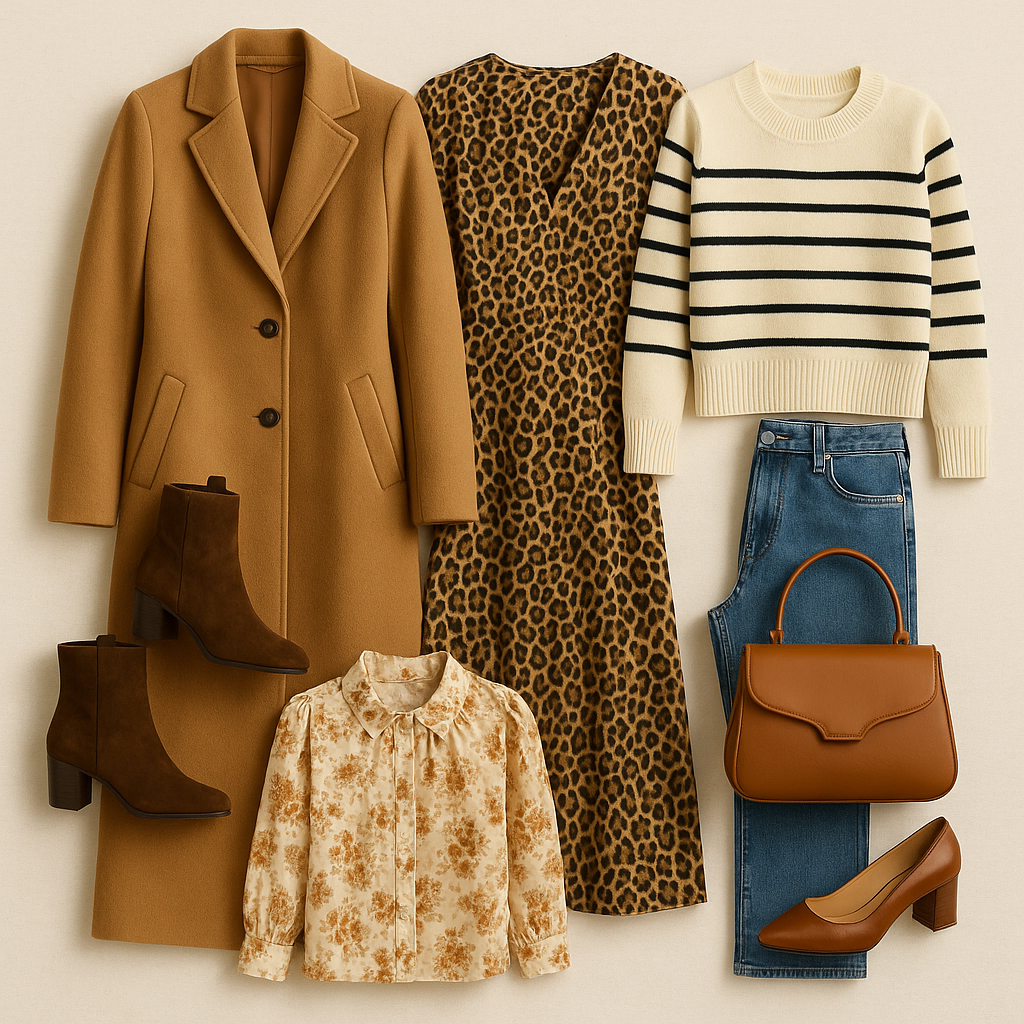
Wardrobe Investments: How to Choose Pieces That Last
Building a wardrobe that lasts isn’t about buying more — it’s about buying better. In this post, I share how to evaluate what you own, identify gaps, and choose high-quality pieces that work for your climate, lifestyle, and personal style. From a wool coat to versatile denim and a dress you’ll wear year after year, you’ll learn how to invest in clothes that earn their place in your closet and make getting dressed easier.
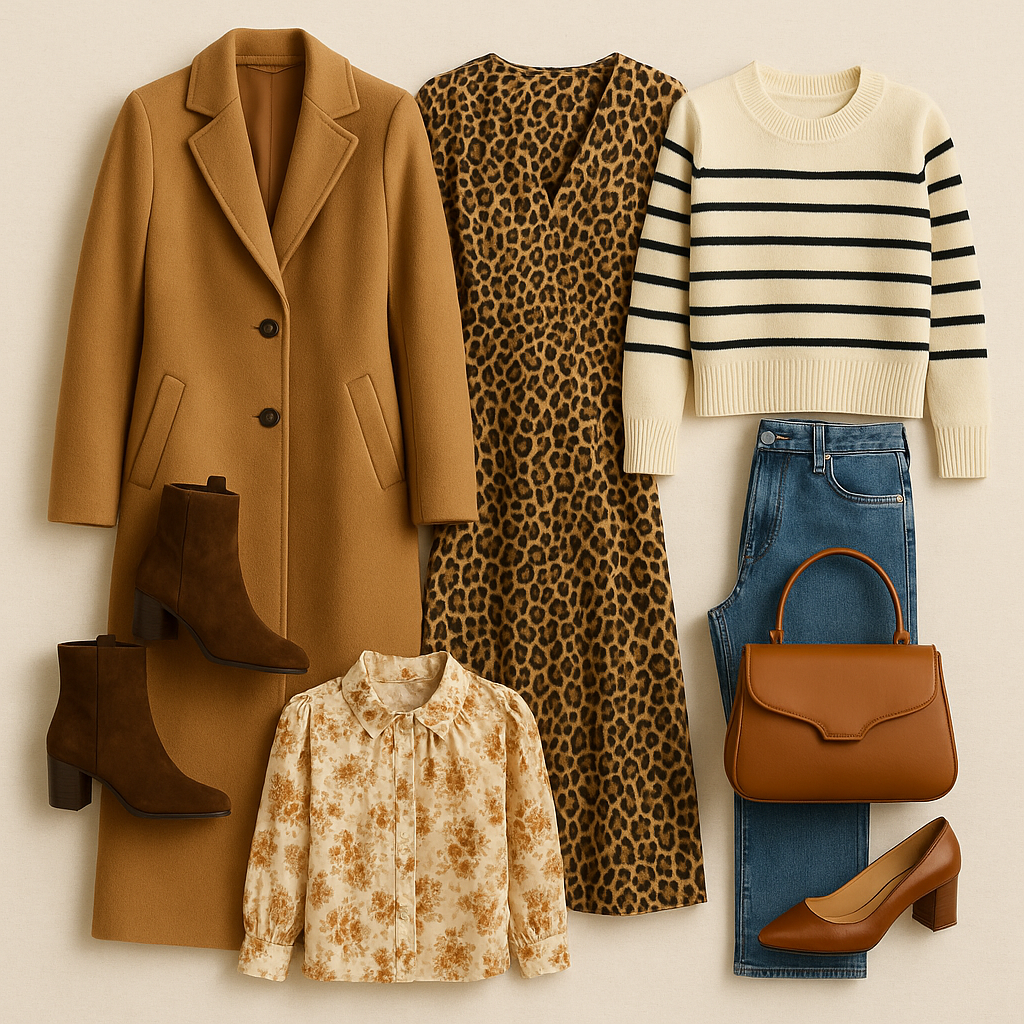
Every season brings a push to buy more — new trends, new colors, new “must-haves.” Today, with personalized feeds, reels, and constant targeted ads, that pressure is even stronger.
But the most valuable wardrobes aren’t built through constant replacement. They’re built piece by piece, thoughtfully curated with a focus on your lifestyle, your climate, and pieces that hold up over time. A great wardrobe is one you keep reaching for year after year because it works for you.
Here’s a process you can use to evaluate what you already own, fill in the gaps, and choose wardrobe investments that last.
1. Start With Climate and Lifestyle
Before you shop, step back and think about what you actually need:
Climate: Do you need a heavy 100% wool coat or a durable puffer for months of cold, or will a cashmere cardigan and dark denim be enough for a mild winter?
Lifestyle: Are you dressing for an office, working from home, traveling often, or preparing for upcoming events?
These questions help you focus on what you’ll actually wear on repeat — not what will sit in your closet unworn.

2. Do a Closet Audit
Pull out your fall and winter clothes and take a close look:
Keep: Pieces that still fit, feel good, and work with multiple outfits.
Repair: Tailor, clean, or re-sole what you love and want to keep wearing.
Let Go: Anything you skipped every time or that no longer fits your life.
Ask yourself why you wore some pieces constantly and ignored others. This helps you see the gaps — the missing coat, the pair of jeans that didn’t fit, the sweater you wished you had. That list becomes your priority for investing.

3. Choose 1–2 Key Investments
Start small and focus on the pieces that will make getting dressed easier right now:
Wool Coat: Look for 100% wool or wool/cashmere, fully lined, with no polyester blends. Choosing natural fibers means better drape, breathability, and longevity.
Denim: Aim for 100% cotton (or 99% with minimal stretch). Many brands now use lower-impact cotton and water-saving dye techniques — look for companies participating in programs like the Better Cotton Initiative or publishing sustainability reports.
Boots: Choose stitched (not glued) soles and quality leather that can be polished and re-soled. This allows you to repair instead of replace them season after season.
Knitwear: Select 100% cashmere or merino that’s tightly spun. Avoid acrylic blends, which pill quickly and don’t breathe. Some brands now share sourcing information or use certified fibers, reflecting a growing focus on transparency and sustainability.
Pants: Natural fibers with a clean drape. Have them hemmed to the shoes you wear most for maximum use.
Bag: Real leather with reinforced straps and a lined interior — a piece that can be conditioned and last for years.
Dress: One versatile style that can go from day to evening and across seasons — boots now, sandals later.
You don’t need to buy every category at once. Choose the one or two investments that will have the biggest impact on your wardrobe this year.
The brands I’ve linked in each category emphasize quality and are making strides toward more responsible production — though no brand is completely sustainable. Use these links as inspiration or a jumping-off point. You can also source similar pieces secondhand through ThredUp, Poshmark, The RealReal, or Vestiaire Collective, or by visiting local consignment shops and small boutiques to find items that fit your style and values.

4. Learn to Spot Quality
When shopping, check for these signs of quality:
Fabric: Dense, smooth wool that drapes well; sturdy cotton in denim and trousers; 100% natural fibers in sweaters.
Construction: Flat seams, strong stitching, smooth linings, and hems that hang straight.
Shoes & Bags: Stitched soles (not glued), solid heel construction, leather that feels substantial and can be conditioned.
Fit & Finish: Buttons securely attached, seams finished neatly, zippers that move smoothly, pockets that lie flat.
Pieces with these details will hold their shape, wear well, and be easier to repair when needed.

5. Think Cost-Per-Wear
Cost-per-wear is a simple way to see value beyond the price tag:
Example:
$500 coat worn 50 times = $10 per wear
$150 coat worn twice = $75 per wear
This perspective helps you justify spending more on the pieces you’ll actually wear — and skip the ones that won’t see enough use.

6. Care for What You Own
An investment only pays off if you keep it in rotation for years:
Clean coats before storing and hang on wide hangers in breathable bags.
De-pill and clean cashmere, then fold with cedar or lavender sachets.
Polish and re-sole boots before damage goes too far.
Stuff bags so they hold their shape and store away from direct light.
Small habits like these keep your clothes looking their best and extend their lifespan.

The Takeaway
Wardrobe investments aren’t about buying more — they’re about buying better.
Each purchase is a choice: choose pieces that fit your life, are made to last, and stay in use for years. Focusing on longevity, repair, and thoughtful buying is one of the most meaningful ways to reduce waste — and build a wardrobe that actually works for you.
✨ Flight 2 Fashion takeaway: A lasting wardrobe is built piece by piece — with investments that fit your lifestyle, hold their quality, and stay in use for years.
✨ Want to evaluate your own closet? Download the Wardrobe Investment Template in the Style & Wardrobe section of the [Resources Library] to audit what you own and identify the pieces worth adding next. For more style posts, click here.
✨ Looking for seasonal direction? Explore the [Fall 2025 Inspiration Gallery] for outfit collections and palettes that show how investment pieces can work across occasions and seasons. Curating stylel is only one part of traveling thoughtfully. If you want to plan trips that feel less rushed and more intentional, you might also enjoy → How to Plan a Trip That Matches Your Travel Style.

How to Restyle a Summer Dress for Fall and Winter
One dress, three seasons. This crochet dress proves that quality pieces can be styled year-round. Learn how to layer, rewear, and rethink your closet.
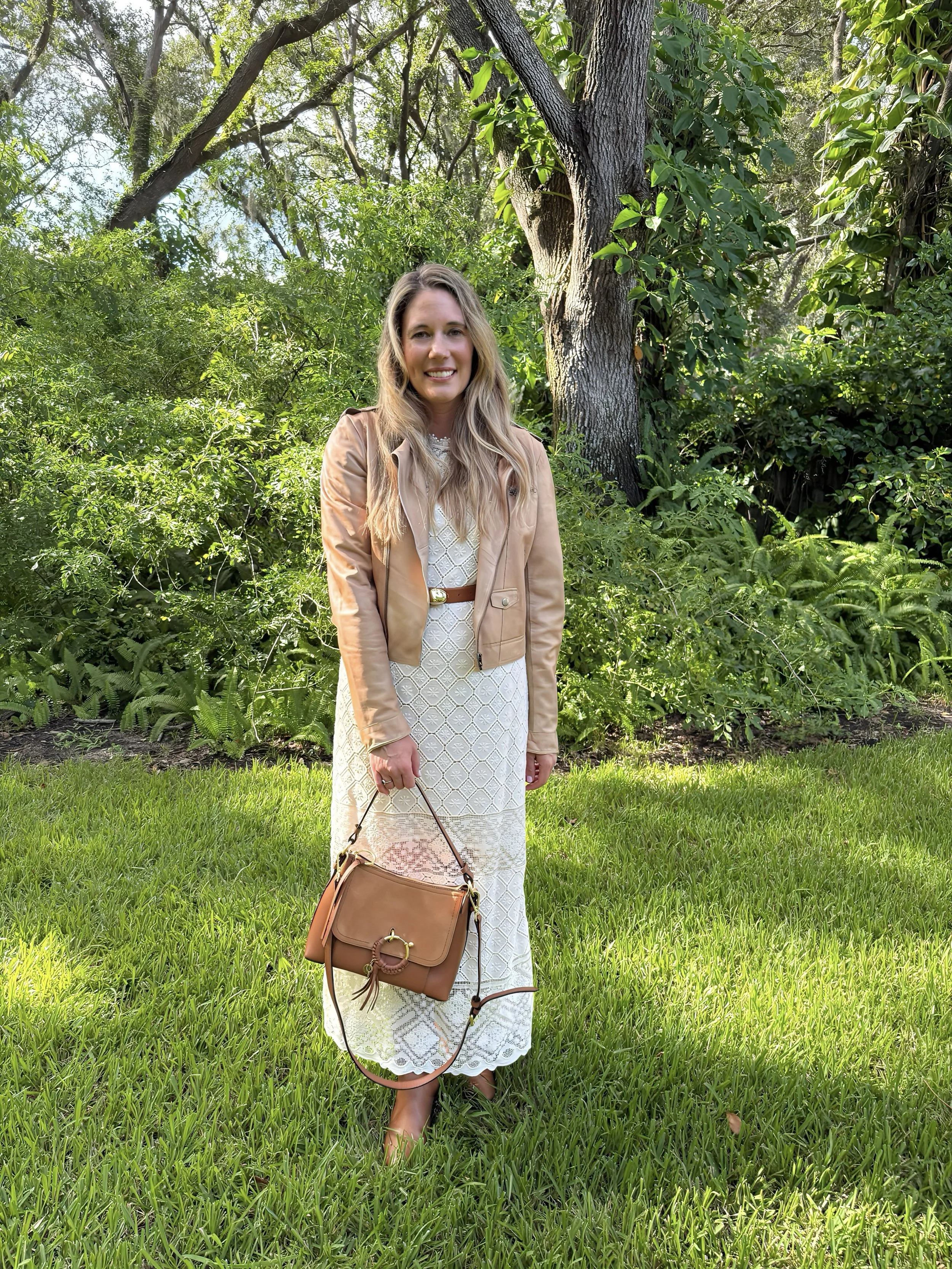
One dress, styled for fall 🍂 A cream crochet dress layered with a camel leather jacket, brown boots, and a structured bag. With thoughtful layering, your favorite summer pieces can carry you through every season.
Why investment pieces matter beyond one season
Before I add a dress to my wardrobe, I ask myself whether it can work across seasons, be dressed up or down, and still be a piece I’ll reach for a year from now.
Living in a warm climate, it doesn’t make sense to buy cold-weather dresses I’ll only wear once or twice. Instead, I look for well-made pieces I can wear at home most of the year and adapt with layers and accessories when I travel — so a summer dress can become a winter outfit with just a few thoughtful changes.
This ivory crochet dress is a perfect example. In summer, I pair it with sandals and a straw tote. For cooler destinations, I layer it with boots, a jacket, and a coat. It works for casual days, evenings out, and even holiday gatherings. Because of its quality and construction, it holds its shape and beauty season after season — making the cost per wear truly worthwhile.
Rather than seeing summer dresses as limited, I think about how to make them work year-round — and you can too.
Ask yourself:
• What layers would make this work for cooler months?
• Which shoes or accessories could change the mood?
• Will I still be excited to wear it next year?
The Dress I Chose

One dress styled for summer: an ivory crochet dress with knotted espadrilles, oversized sunglasses, and my woven Naghedi tote.
I found this Zimmermann crochet dress on sale, and its timeless fabric and construction make it a piece I’ll keep wearing for years.
Zimmermann, founded in the 1990s by sisters Nicky and Simone Zimmermann, is an Australian resort brand celebrated for its attention to detail — from airy, breathable fabrics like linen and cotton to intricate crochet and embroidery that make each piece feel special. The brand manages to be both distinctive and forward-thinking while remaining enduring, which is why the pieces I own remain some of my most-loved and most-reworn.
Zimmermann pieces are investments, but there are smart ways to find them for less. End-of-season sales on the Zimmermann site and major retailers like Nordstrom, Saks, and Net-a-Porter often include significant markdowns, and beautiful past-season styles can be found on The Outnet, The RealReal, Vestiaire Collective, and Poshmark.
Here’s how I style this one through different seasons. In my tropical climate, it’s perfect for casual days with flat Greek sandals. It can easily be dressed up with espadrilles or metallic heels and a clutch for the holidays. When I travel to cooler places, I layer it with boots, a jacket, and a coat — proof of how seamlessly it transitions across settings and seasons. That versatility defines a true investment piece: one that feels special, works across occasions, and lasts beautifully over time.
While those are ways I’ve styled my own Zimmermann dress, I also wanted to illustrate how a similar ivory crochet dress could transition through the seasons. I created these styling collages to show one dress, styled for summer, fall, and winter.
Collages were created with AI to visualize how a similar crochet dress could be styled through different seasons.

One Dress, Three Seasons: Proof that a well-chosen dress can work from summer to winter with just a few key swaps.
🌞 Summer: Easy & Wearable

In summer, I’d keep this dress simple. I’d wear it with flat Greek sandals and a straw tote for everyday, or pair with espadrilles and a smaller bag if I want it to feel a little more dressed up.
🍂 Fall: Layered for Cooler Weather

For fall, I’d add layers. A camel leather jacket makes it warmer, and tall boots or ankle boots change the look completely. I can swap the rope belt for a brown leather belt , which gives the dress more shape and makes it feel like a new outfit instead of just repeating the summer look.
❄️ Winter: Warmer & Practical


One Dress, Three Seasons: Styled with sandals for summer, a jacket and ankle boots for autumn, and a coat and tall boots for winter.
You’ll notice I’ve linked a few neutral accessories — pieces that may work with any of your summer favorites. You can use them to recreate this look with what you already own, or add something new if it fills a gap.
When you invest in quality and versatility, a dress becomes more than a seasonal purchase — it becomes a reliable piece you reach for again and again, across occasions and climates.
Think about your own closet:
• Do you have dresses that can work in more than one season with a few simple changes?
• Can you dress them up for special occasions and down for everyday?
• Do they fit the way you actually live?
• Will you still be excited to wear them a year or two from now?
For me, that’s what makes a piece worth having — it’s not about buying more, but about investing in well-made clothing you can wear year-round, style in different ways, and appreciate for years to come.
✨ Flight 2 Fashion takeaway: Lasting style comes from versatility, quality, and the kind of pieces you reach for year after year.
✨ Want to try this yourself? Download the One Dress, Four Seasons organizer in Style & Wardrobe section of the [Resources Library] to map out how a favorite piece in your closet can work year-round. For more styling posts, click here.
✨ Looking for inspiration? Explore the [Fall 2025 Inspiration Gallery] for seasonal palettes, layering ideas, and travel mood boards that make summer-to-fall styling effortless.

With Wally, my basset hound puppy.